Two attacks in Khyber Pakhtunkhwa within three days, a bombing and gun assault on Kohat's Old Police Lines on September 18, and an exchange of fire in Hangu district on September 20, have reignited a familiar dispute between Islamabad and Kabul over who is responsible for militant violence inside Pakistan. Casualty figures, claims of responsibility and even the legal basis for Pakistan's warnings to Afghanistan have been reported inconsistently across outlets. This is an attempt to separate what is established from what is claimed or still disputed, with each point dated and sourced.
What happened in Kohat
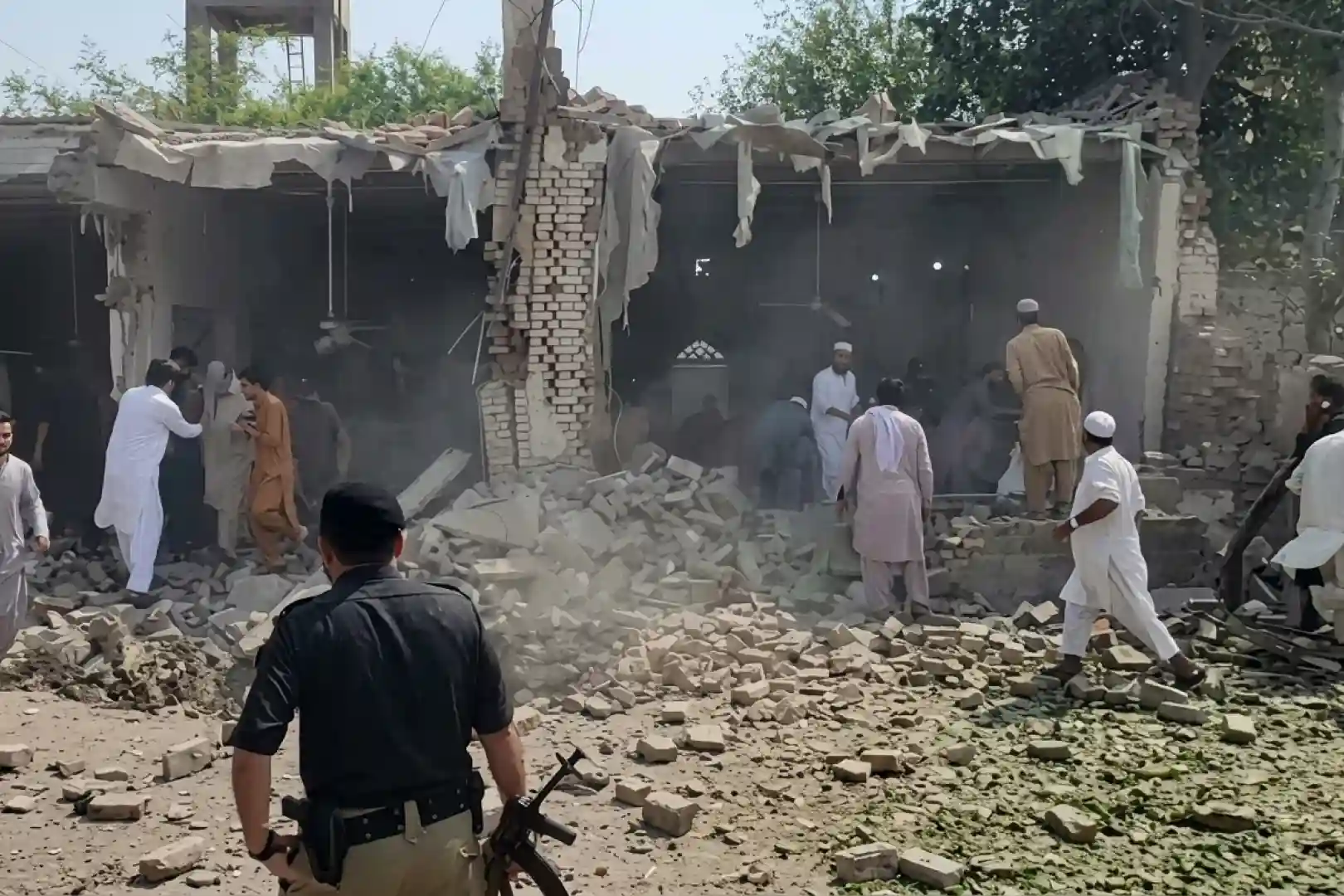
On the afternoon of September 18, a suicide bomber detonated an explosives-laden vehicle at the entrance of a mosque inside the Old Police Lines compound in Kohat during Friday prayers. Gunmen then entered the compound and exchanged fire with police and security forces in a clearance operation that continued into the following day. Police said the compound houses the Counter Terrorism Department's Special Branch, whose officers had been involved in operations against militants elsewhere in the province.
Authorities said all eight attackers were killed by the time the operation concluded on September 19.
The casualty count, reconciled
The number of people killed in Kohat has been reported differently at different points since September 18, as rescue operations continued and figures were updated. Rather than settle on one number, here is how the count has moved, with each figure's source and date:
| Figure reported | When | Source |
|---|---|---|
| 16–20 killed, 57–78 injured | Sept 18, early evening | Initial police-sourced reports (accounts vary within this range) |
| 21 killed (15 police, 6 civilians), 100–103 injured | Sept 18–19 | DHQ Hospital Kohat's initial incident report, widely carried by AP, BBC, Dawn and Express Tribune |
| 23 killed (17 police, 6 civilians), 130 injured | Sept 19–20 | Police and Counter-Terrorism Department officials, cited by Dawn and The Nation |
| 24 killed, over 130 injured | Sept 19 | Khyber Pakhtunkhwa police statement, cited by MM News |
| At least 31 killed, 103 injured | Sept 20 | A senior police official, cited by AFP |
Current reporting still gives different casualty figures. Reuters reported on September 21 that 24 people had been killed, while an Associated Press report put the toll at at least 21 and AFP reporting had earlier cited 31. No single final tally could be established consistently across the sources reviewed. The toll should therefore be treated as unsettled, with each figure dated and attributed rather than presented as final.
Who claimed responsibility
Ittihad-ul-Mujahideen Pakistan (IMP), an alliance of militant factions led by Hafiz Gul Bahadur, claimed responsibility for the Kohat attack. This claim was widely and consistently reported by outlets including Al Jazeera and the New York Times between September 18 and 20, and is corroborated across multiple independent sources. Separately, the Tehreek-e-Taliban Pakistan is reported to have issued a statement disowning the attack.
Neither claim carries independent government confirmation. Both remain the groups' own statements rather than verified findings, although IMP's claim is well established in the reporting record.
What happened in Hangu
On September 20, a security forces convoy came under fire from militants in Hangu district. The military's media wing, ISPR said in a statement, that eight fighters it described as belonging to the "Indian-sponsored Fitna-al-Khwarij", the state's designation for the banned TTP, were killed.
Six security personnel were also killed, including two officers who were leading their troops: Captain Abuzar Farooq, 23, of Gujranwala, and Lieutenant Sheraz Babar, 22, of Chakwal, along with four other soldiers. Unlike Kohat, the casualty figures for Hangu have been reported consistently across outlets. The "Indian-sponsored" characterisation is ISPR's own designation and has not been independently verified.
Pakistan's position and the Doha Agreement
Pakistan's Information Ministry said in a statement on September 19 that Pakistan has "both the will and the capability to eliminate terrorist threats wherever they are," and called on the Afghan Taliban government to take credible, verifiable and sustained action to dismantle militant sanctuaries it says exist on Afghan soil.
The ministry said Kabul could not evade what it called its counterterrorism obligations under the 2020 Doha Agreement, under which, it said, the Taliban committed not to allow Afghan territory to be used by groups threatening other countries.
This characterisation needs a caveat. The 2020 Doha Agreement was signed between the United States and the Taliban, and its published text obligates the Taliban specifically with respect to al-Qaeda and threats to the United States and its allies. It does not name Pakistan or the TTP. Pakistan's reference to the agreement as covering its own security is an extension of that text, not a literal citation of it.
Separately, reports from October 2025 describe a distinct Pakistan-Afghanistan agreement, also negotiated in Doha, said to include a ceasefire and provisions on ending cross-border terrorism, but its full text has not been publicly released, and it is not clear from available reporting which "Doha Agreement" Pakistani officials were referring to in their September 2026 statements.
Kabul's position
Afghanistan's Foreign Ministry condemned the Kohat attack and expressed condolences to victims' families, according to Pakistan's own account of the statement. Taliban spokesman Zabihullah Mujahid rejected Pakistan's accusation that Afghan territory is being used to shelter or support militant groups targeting Pakistan, and called instead for dialogue and stronger intelligence-sharing between the two countries.
Pakistan's information ministry described Mujahid's remarks as failing to amount to concrete action.
How we got here: a 2026 timeline
The September attacks follow a year of escalating incidents and cross-border tension between the two countries:
| Date | Event |
|---|---|
| Feb 6 | A suicide bombing at a mosque in Islamabad's Tarlai Kalan area killed at least 31 worshippers; ISIS-K claimed responsibility. |
| Feb 16 | An attack on a security checkpoint in Bajaur district killed 11 security personnel and a child; Pakistan attributed it to the TTP. |
| Feb 22 & 26 | Pakistan carried out airstrikes on targets in Afghanistan's Nangarhar and Paktika provinces. Pakistan said militants were killed; Afghan sources said at least 18 civilians died. |
| Late Feb | Cross-border clashes escalated sharply after Afghanistan launched attacks in retaliation for the airstrikes. |
| March | Pakistan and Afghanistan agreed a ceasefire at peace talks, halting weeks of violence. |
| April | Both countries reported new cross-border attacks, straining the ceasefire. |
| May 9 | A car bomb and shootout in Bannu killed at least 21 police officers; Ittihad-ul-Mujahideen Pakistan claimed responsibility. |
| May 12 | A market bombing in Lakki Marwat killed at least 10 people; no group claimed responsibility. |
| June | Pakistan said it had killed 26 Afghan fighters in Kunar, Khost and Paktika; Taliban officials said the dead included children and elderly civilians. The UN separately reported at least 372 Afghan civilians killed in cross-border fighting in the first quarter of 2026. |
| Sept 18 | The Kohat Police Lines attack. |
| Sept 19 | Pakistan's Information Ministry issued its statement demanding Kabul act, invoking the Doha Agreement. |
| Sept 20 | The Hangu exchange of fire. |
The dispute between Islamabad and Kabul over responsibility for militant violence in Pakistan remains unresolved, with each side continuing to reject the other's account.