
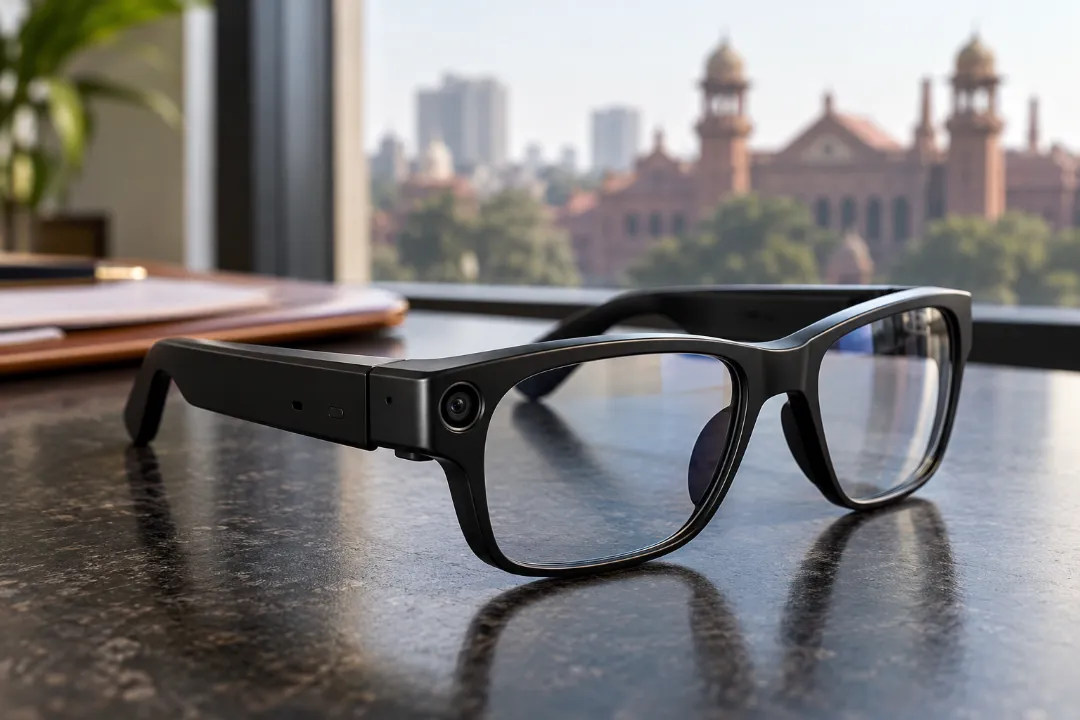
LAHORE — Punjab has imposed a 30-day ban on the use and sale of smart glasses with hidden recording capabilities and miniature cameras disguised as everyday objects, under a Section 144 order that took effect on October 20, 2026.
The Punjab Home Department issued the order across the province, prohibiting people from wearing or operating the specified devices. Retailers, wholesalers, traders and distributors are also barred from selling or offering them for sale, whether in physical shops or online.
According to Dawn's October 21 report, which examined a copy of the notification, the restriction was introduced over concerns about covert recording, individual privacy, public order and the security of sensitive information.
The order does not amount to a general ban on all smart glasses or camera-equipped electronics. It expressly excludes mobile phones, laptops, handheld tablets and terminal equipment approved by the Pakistan Telecommunication Authority (PTA).
Which Smart Glasses and Hidden Cameras Are Banned?
The restriction covers camera-enabled smart glasses with hidden recording capabilities, along with miniature recording cameras concealed inside objects that appear to serve an ordinary purpose.
Examples given in the reported order include pens and keychains fitted with concealed cameras. Similar disguised recording devices are also covered where they fall within the notification's description.
Such equipment can make it difficult for people nearby to recognise that their images, conversations or surroundings are being recorded.
The wording is important because smart glasses are not all identical. Some models contain cameras and microphones, while others provide different features without the same recording capability.
The published notification does not establish a blanket ban on every type of smart eyewear, prescription glasses or wearable device. Nor does it name a particular manufacturer whose entire product range has been prohibited.
Whether an individual product falls within the restriction depends on the capabilities described in the order. Anyone uncertain about a specific model would need clarification from the relevant authorities.
Are Shops and Online Sellers Also Affected?
Yes. The Punjab Home Department's order prohibits retailers, wholesale dealers, traders and distributors from selling or offering the covered devices for sale.
The restriction applies both to physical outlets and online platforms. Businesses dealing in the specified equipment are therefore affected even when they offer products through websites or other online sales channels.
Express Urdu also reported the province-wide prohibition on the use and sale of concealed-recording equipment.
The Punjab government had first announced plans for the restriction on October 19, referring more broadly to the use, purchase and sale of devices designed for secret recording.
However, the operative provisions quoted from the October 20 order specifically address wearing, operating, selling and offering covered equipment for sale.
The published provisions do not clearly establish whether merely keeping a previously purchased device at home constitutes a separate violation. The reports also do not provide a confirmed fine or prison term specific to this order.
Those unanswered questions should not be interpreted as permission to disregard the restrictions that have been expressly imposed.
Are Smartphones, Laptops and Tablets Exempt?
Mobile phones, laptops, handheld tablets and PTA-approved terminal equipment are expressly excluded from the new restriction.
This means the order should not be interpreted as a general prohibition on smartphone cameras or the ordinary use of the excluded equipment.
However, an exemption from this particular order does not mean that unlawful recording, harassment or misuse of personal information is permitted under other applicable laws.
The Home Department has also exempted authorised law-enforcement personnel from the restriction involving the specified devices.
That exemption should not be extended to every government employee or treated as a general exemption for all users.
The published accounts do not provide a complete classification of every smart-glasses model or every type of camera. The exact scope of the order remains important when assessing individual products.
Why Did Punjab Introduce the Smart Glasses Ban?
The Punjab government says the temporary measure is intended to protect privacy, public safety and sensitive information from unauthorised recording.
The Home Department highlighted risks to women and children, warning that concealed recording devices could be misused to capture or transmit images, video, audio and other information without people's knowledge.
The order identifies airports, examination centres, government establishments, healthcare facilities, shopping malls and court premises among places where such devices could create particular concerns.
These locations are examples of areas considered sensitive. The restriction itself applies throughout Punjab, not only within the buildings mentioned.
During the government's initial announcement on October 19, officials also referred to complaints involving unauthorised surveillance, harassment and blackmail through concealed recording equipment.
Those concerns are the government's stated justification for the measure. They do not establish that every smart-glasses owner or user has engaged in unlawful activity.
What Is the Connection to the Lahore High Court Case?
The provincial order comes amid separate proceedings in the Lahore High Court concerning the unregulated import and sale of smart glasses equipped with cameras and microphones.
At a hearing on October 15, Chief Justice Aalia Neelum directed the federal government to forward a prepared summary concerning regulation of the devices to the federal cabinet.
According to Dawn's report on the hearing, the petition raised privacy concerns and questioned the existing regulatory arrangements for the devices.
The next hearing was scheduled for November 12.
The court proceedings and Punjab's temporary restriction are separate matters. The court case concerns possible regulation at the federal level, while the 30-day ban was imposed by the provincial Home Department under Section 144.
The Lahore High Court did not itself issue the Punjab order, and the provincial notification does not establish a nationwide ban.
How Long Will the Ban Remain in Force?
The restriction took immediate effect on October 20 and is intended to remain in force for 30 days unless the Punjab government withdraws it earlier.
As of October 21, no subsequent withdrawal or extension had been established in the reports reviewed. The exact expiry time should be confirmed against the signed notification rather than assumed from the calendar date.
For residents and businesses, the key distinction is between the specified devices with concealed recording capabilities that are restricted under Section 144 and the ordinary electronic equipment expressly excluded from the order.