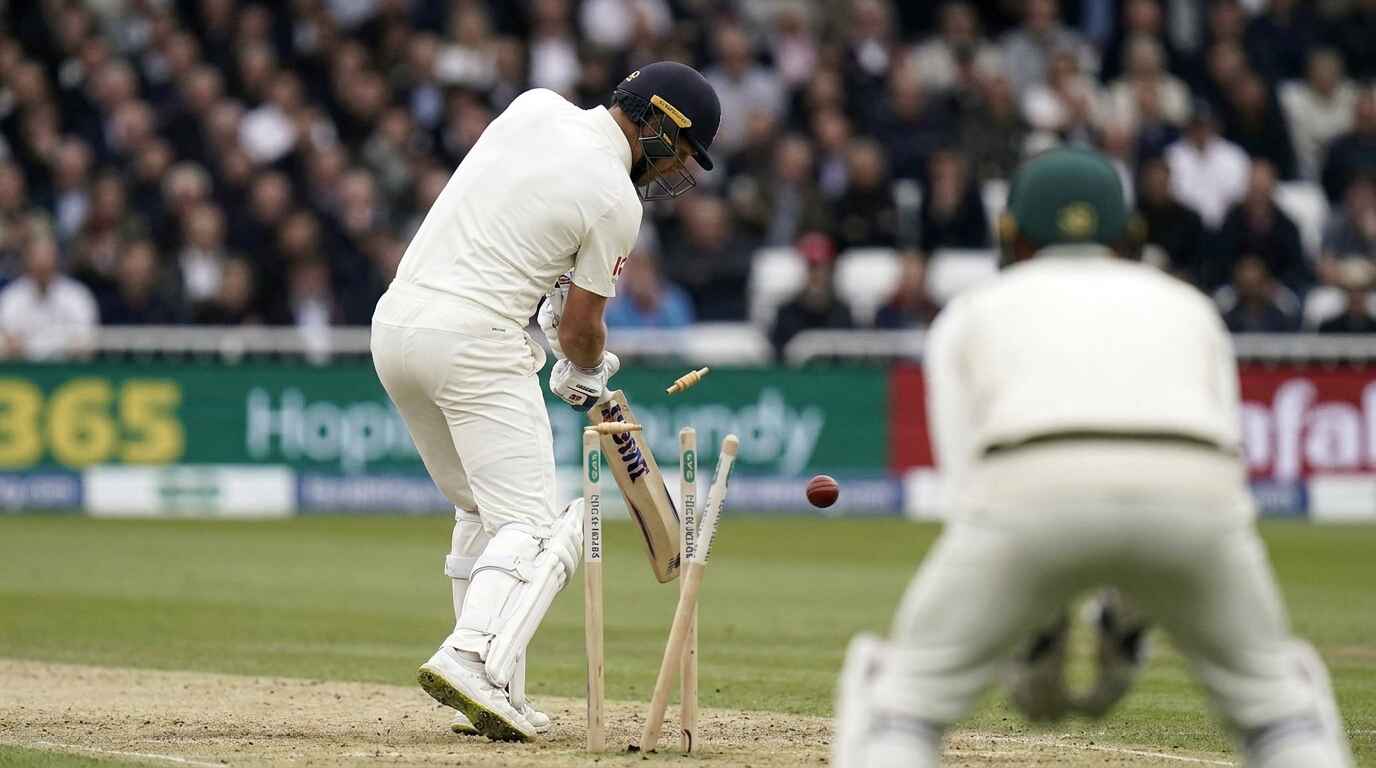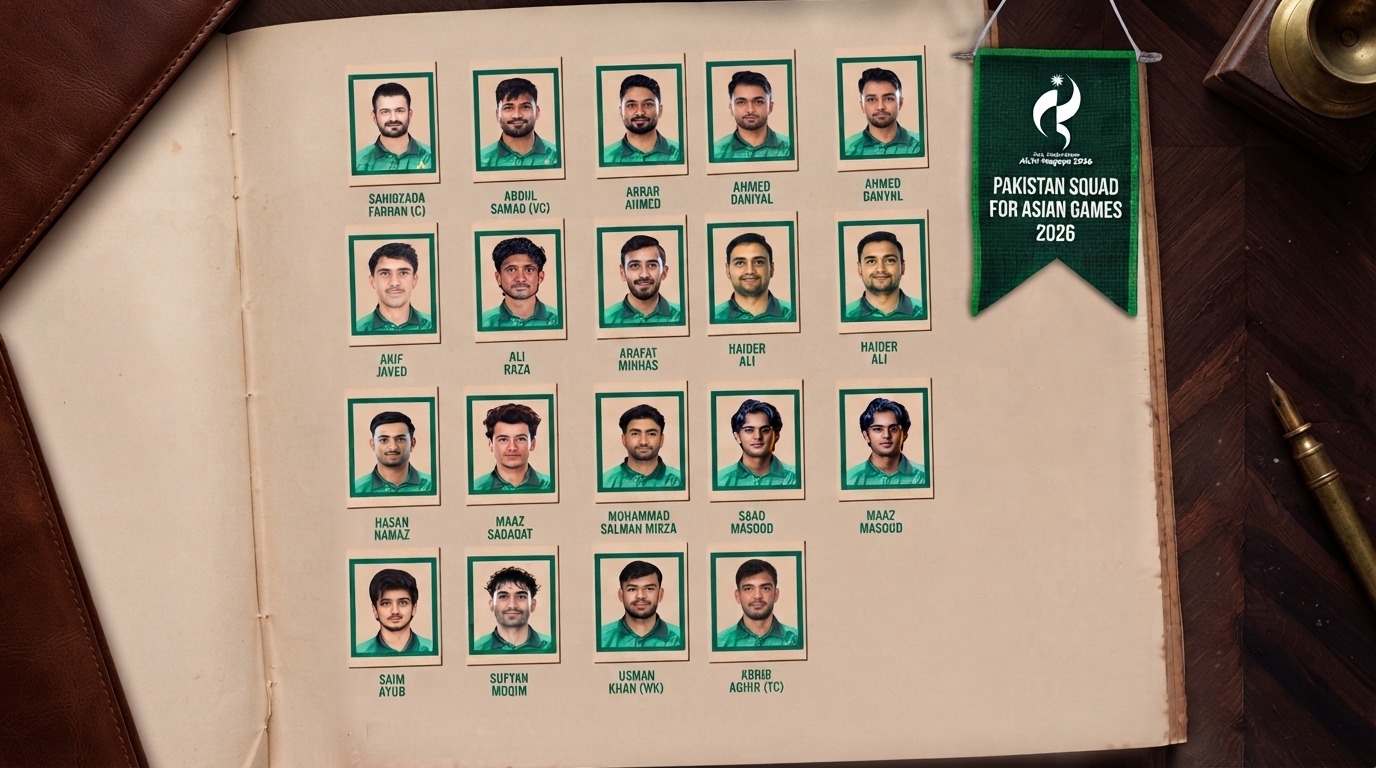

England's two successive Test victories over Pakistan - by an innings and 103 runs at Headingley and by 194 runs at Lord's - have done more than confirm a difficult tour. Placed alongside results against Bangladesh, West Indies, and South Africa over the past year and a half, they form part of a documented batting crisis that has no single cause, no single match, and no quick fix in sight.
The numbers are now too consistent and too damaging to be explained away by opposition quality, pitch conditions, or the absence of one senior player.
What the two Tests against England showed
At Headingley, Pakistan were bowled out for 171 in their first innings - the first time this decade they had failed to reach 200 in the opening innings of a Test match. Their second innings produced 135. The match ended inside three days, with England winning by an innings and 103 runs. Combined, Pakistan faced just 1,053 balls across both innings, making it among the fastest wins of Joe Root's captaincy tenure.
The first innings trajectory was the one Pakistan supporters have seen before. The side reached 117 for 3 with Abdullah Shafique batting steadily on his way to a top score of 61. Then came the collapse: the final seven wickets fell for just 54 runs, with Ollie Robinson and Josh Tongue taking five wickets each.
At Lord's, Babar Azam returned from the finger injury that had kept him out of Headingley. It made no difference to the result. Set 389 to win in the fourth innings, Pakistan were bowled out for 194. Saud Shakeel's 97 was the only significant resistance, and Robinson took a four-wicket haul as England sealed a 2-0 lead in the three-match series.
The collapse pattern: 16 consecutive innings
What happened at Headingley was not an exceptional bad day - it was a continuation of a documented trend. Since the start of 2025, Pakistan have failed to add 100 runs after losing their fifth wicket across 16 consecutive Test innings. That sequence includes some of the worst lower-order contributions the team has produced in recent memory.
Against Bangladesh, the bottom half contributed just 11 runs after the fifth wicket fell. Against South Africa, the side produced three successive five-wicket collapses that added 16, 17, and 17 runs in each instance. Across all 16 innings in that run, the most Pakistan's tail has managed in any single innings is 76 runs.
What complicates any straightforward explanation is that these collapses frequently follow periods of genuine promise. At Headingley, Imam-ul-Haq and Abdullah Shafique had built a partnership of more than 90 runs before the middle order fell apart. Against West Indies earlier in the year, a 168-run second-wicket stand between Babar Azam and Abdullah Shafique similarly preceded a rapid capitulation. The pattern points less to the quality of bowling Pakistan have faced and more to a fragility in temperament and planning once a wicket falls under pressure.
The opening partnership problem
The structural weakness does not begin in the middle order. Since the start of 2024, Pakistan's average opening partnership in Tests sits at just above 23 - the worst figure for any Test-playing nation bar Ireland across that period.
The Headingley match illustrated the point from the opening delivery. Azan Awais was trapped LBW off the first ball of the series, the first time in Pakistan's 74-year Test history that a wicket fell on the opening delivery of a series. Even when an opening stand does develop, the conversion rate has been poor, and the team has repeatedly found itself repairing early damage rather than building from a platform.
The fourth-innings average that reveals the full picture
The most telling single statistic in Pakistan's recent Test record may be their fourth-innings batting average: 19.9, the lowest figure of all nine teams in the current World Test Championship cycle. When matches reach their most demanding stage - when Pakistan need to bat long to save a game or chase a target - the order has shown a consistent inability to respond.
The Lord's defeat confirmed this pattern at the highest level. With Babar Azam restored to the lineup and a clear target in front of them, Pakistan still fell well short. Their combined fourth and second-innings totals across the England series - 135 at Headingley and 194 at Lord's - sit comfortably within the range that has become normal for this batting order under pressure.
Where this leaves Pakistan in the WTC standings
The consequences in the World Test Championship 2025-27 have been severe. After eight matches in the current cycle, Pakistan sit ninth and last in the standings with 16 points and a points percentage of 16.67%. Six of those eight Tests have been lost. A further eight championship points have been deducted for slow over-rate violations.
The table above them reflects how far Pakistan have fallen behind the leading Test nations. Australia lead at 77.78%, with South Africa at 75.00%, New Zealand at 72.22%, and Bangladesh - who defeated Pakistan at home earlier this year before recording a first-ever Test win in Australia - sitting fourth at 66.67%.
The 2027 WTC Final is scheduled for The Oval in London. Based on Pakistan's points percentage and the number of matches remaining in the cycle, a place in that final would require a reversal in batting performance that the past 18 months of Test cricket have given no sign of producing.