Pakistan has called for diplomacy, dialogue and consensus-based decision-making at the Organisation for the Prohibition of Chemical Weapons (OPCW), as the international watchdog examines how artificial intelligence and other emerging technologies could affect chemical weapons prevention and verification.
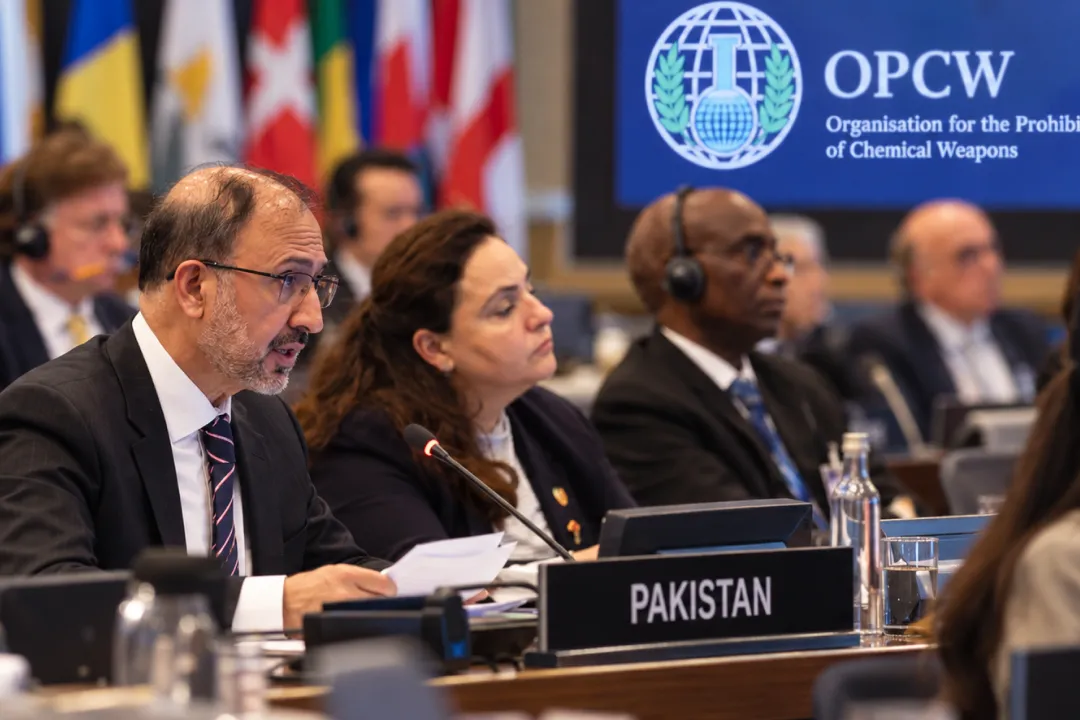
The position was outlined during the OPCW Executive Council's 113th session, held in The Hague from October 6 to 9, 2026. Pakistan's delegation was led by Ambassador Syed Haider Shah, the country's Permanent Representative to the organisation.
According to reporting published on October 9, Ambassador Shah reaffirmed Pakistan's commitment to the Chemical Weapons Convention and stressed the importance of multilateral cooperation, discussion of emerging technologies and decisions reached through consensus.
The remarks came as OPCW leadership separately highlighted the opportunities and risks associated with artificial intelligence, including the need to consider appropriate safeguards within the Convention's framework.
Pakistan calls for dialogue and consensus at OPCW
Addressing the Executive Council, Ambassador Shah drew attention to challenges facing multilateral diplomacy and emphasised the importance of dialogue in addressing international disagreements.
He reiterated Pakistan's commitment to the Chemical Weapons Convention, which prohibits the development, production, acquisition, stockpiling, transfer and use of chemical weapons.
Pakistan also supported discussion of emerging technologies and called for consensus-based decision-making to help the organisation achieve its objectives.
The position reflects Islamabad's preference for cooperation among member states on matters involving disarmament, treaty implementation and international security.
The OPCW's Executive Council comprises 41 member states and oversees important aspects of implementing the Convention, including the work of the Technical Secretariat.
Pakistan's reported remarks focused on the organisation's broader approach to cooperation and decision-making. They did not identify a formal Pakistani proposal to change the OPCW's verification procedures.
Why artificial intelligence is becoming an OPCW concern
Artificial intelligence is receiving increasing attention within the OPCW because advances in scientific and computational technologies can create both opportunities and new risks for chemical weapons prevention.
In her opening statement on October 6, OPCW Director-General Sabrina Dallafior highlighted the implications of emerging technologies, particularly AI, for the organisation's work.
She stressed the need to examine the opportunities and risks associated with AI and consider safeguards within the framework of the Chemical Weapons Convention.
Artificial intelligence could support scientific analysis and other technical activities relevant to chemical safety and security. However, rapidly developing computational capabilities also raise concerns about potential misuse and the ability of existing oversight systems to respond to new technological developments.
The OPCW has been examining these questions through scientific assessments and international cooperation.
In March 2026, the organisation released a scientific report examining the implications of artificial intelligence for the Chemical Weapons Convention.
The OPCW also reported on an AI-focused workshop held in China in September 2026, where participants discussed responsible use, governance, risk management and the implications of AI for chemical safety and security.
These activities provide context for the growing discussion of emerging technologies at the organisation. They should not be interpreted as a specific AI safeguards programme introduced by Pakistan at the October session.
What does verification governance mean under the Chemical Weapons Convention?
The OPCW implements the Chemical Weapons Convention through an international system that includes declarations, inspections and other verification measures.
These arrangements are intended to help establish whether member states are fulfilling their treaty obligations and to support the global prohibition on chemical weapons.
The Executive Council considers matters relating to implementation, compliance and the activities of the OPCW Technical Secretariat.
As scientific capabilities change, the organisation must assess how new technologies may affect its existing responsibilities and whether further technical guidance or safeguards are needed.
However, scientific assessments, diplomatic discussions and formally adopted decisions are not the same thing. Changes to verification arrangements must follow the relevant provisions and procedures of the Convention.
Pakistan's emphasis on consensus concerns the broader diplomatic approach to decision-making. The available account of its statement does not establish that the country demanded a new consensus requirement specifically for AI-related verification measures.
OPCW reports challenges in meeting inspection target
The 113th Executive Council session also examined the organisation's ongoing verification responsibilities.
In her October 6 statement, Dallafior reported that the OPCW had conducted 166 industry inspections so far in 2026, against an annual target of 210.
She warned that operational constraints could prevent the organisation from meeting its target and called for greater flexibility from member states in arranging inspections during the remainder of the year.
The inspection figures concern the OPCW's existing industrial verification activities and are separate from the wider debate over artificial intelligence.
The Director-General also stressed the importance of ensuring that the verification system remains effective as the organisation prepares for future challenges.
The official documentation for the 113th Executive Council session provides further information about the meeting and its agenda.
Pakistan welcomes Syria decision and international cooperation
Ambassador Shah also welcomed the restoration of Syria's rights and privileges at the OPCW, according to the October 9 report on Pakistan's participation.
The decision was adopted by consensus at the Executive Council's 112th session on July 9, 2026, before the October meeting.
The OPCW confirmed the earlier decision in its official announcement.
Pakistan's representative also thanked China and Japan for arranging a September visit by an Executive Council delegation to abandoned chemical weapons sites in China.
The visit concerned another longstanding area of the OPCW's work, which involves international cooperation on the management and destruction of abandoned chemical weapons.
Pakistan's comments placed its support for diplomacy and multilateral cooperation within the organisation's broader responsibilities under the Chemical Weapons Convention.
What happens next for AI safeguards and OPCW governance?
The October meeting highlighted two related but distinct priorities: Pakistan's support for dialogue and consensus, and the OPCW's continuing examination of emerging technological risks.
For the organisation, the challenge is to assess how artificial intelligence may affect chemical weapons prevention while maintaining the effectiveness of established verification activities.
Scientific assessments and technical discussions may inform future policy deliberations, but any formal changes would need to be supported by the relevant OPCW decisions and Convention procedures.
The Director-General has also linked the need to maintain an effective verification system with preparations for the next Chemical Weapons Convention Review Conference in 2028.
The available reporting does not establish that Pakistan submitted a formal AI safeguards proposal or secured changes to verification rules during the 113th session.
Pakistan's intervention nevertheless adds to the wider diplomatic discussion about how international chemical weapons governance should respond to technological developments while preserving cooperation among member states.