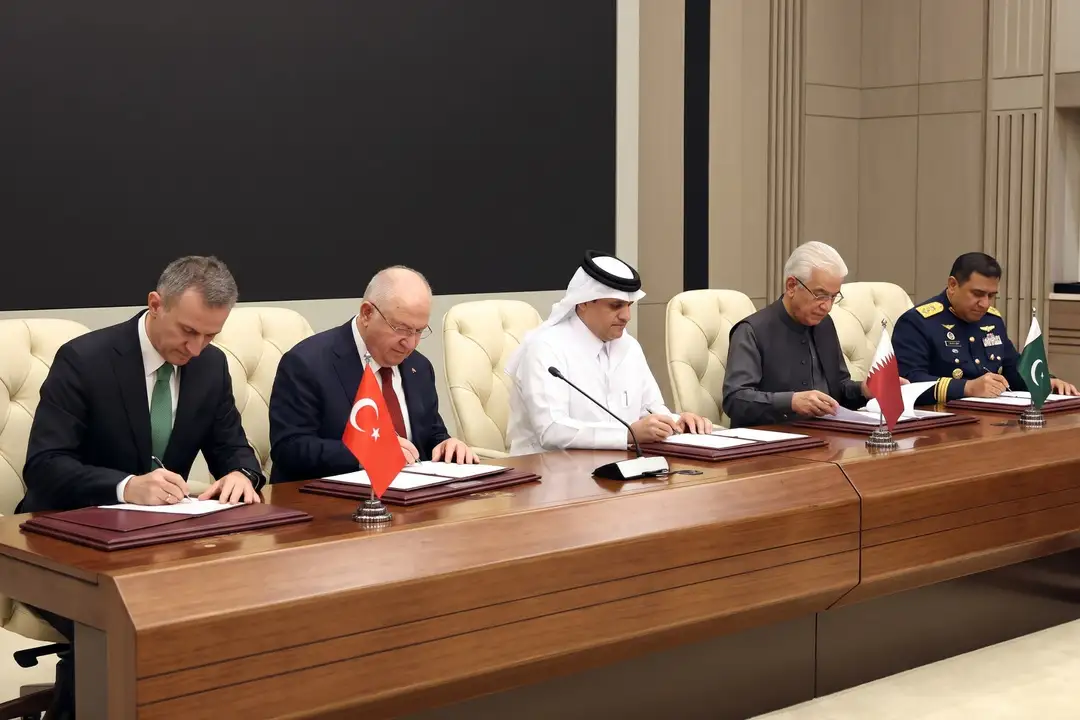
The Badr defence MoU (memorandum of understanding) was signed in Doha on 21 October 2026 by Pakistan, Türkiye, Qatar and Indonesia, according to official announcements. Their public summaries describe cooperation in defence industries, training and research.
The announcements set out broad areas of cooperation. They do not name a specific weapons programme or public funding amount, and the full signed MoU is not reproduced in the pages reviewed.
What cooperation do the announcements describe?
Qatar’s announcement says the MoU aims to support defence manufacturing, improve defence capabilities and encourage technical training and research and development. Read the Qatar News Agency announcement.
Indonesia’s Ministry of Defence describes three areas: research and development with technology transfer, industrial cooperation and manufacturing, and development of defence-industry skills. These are the ministry’s descriptions of the MoU’s scope. Read the Indonesian Ministry of Defence announcement.
Which Pakistani bodies and officials are named?
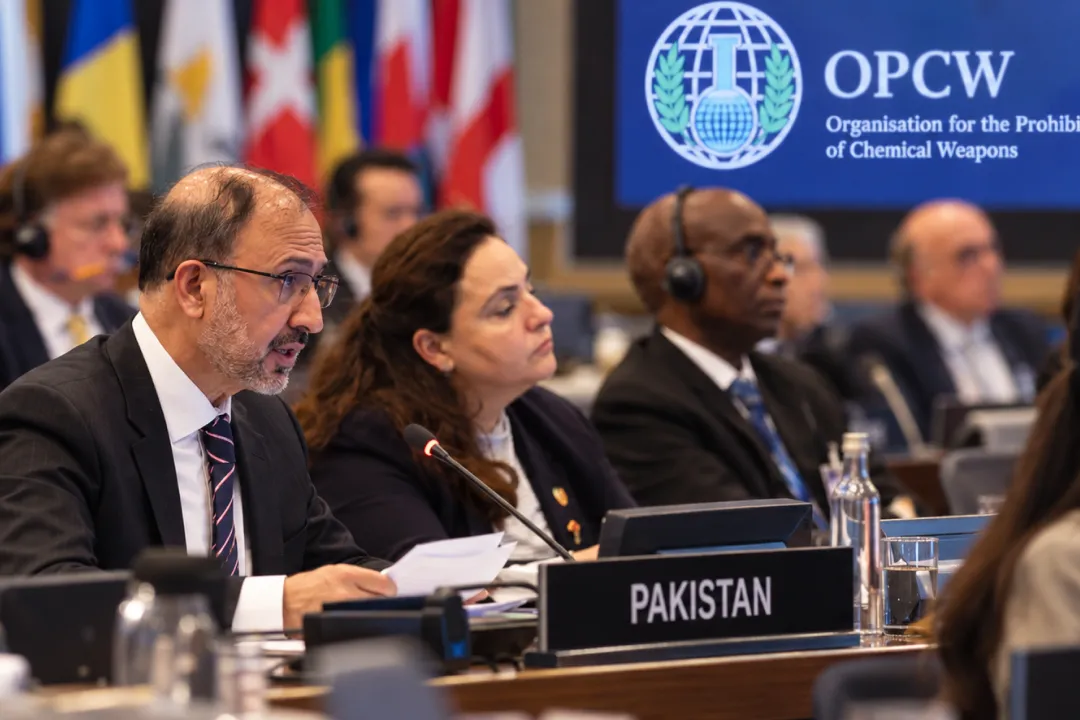
Qatar’s announcement identifies Pakistan’s Ministry of Defence and Defence Industrial Production Organization among the institutional parties. It lists Pakistan’s Defence Minister, Khawaja Muhammad Asif, among officials attending the ceremony. Indonesia’s ministry says its Deputy Defence Minister, Yusuf Jauhari, signed on Indonesia’s behalf. The announcements describe institutions and people in different roles, so the attendee list should not be treated as a complete list of signatories.
What could happen next?
Indonesia’s ministry says the participants agreed to hold regular Defence Industry Meetings. It says that after the first three months of implementation, the forum may explore further cooperation with other friendly countries. Qatar’s announcement also says other countries may join under criteria agreed by the four participants.
QNA separately reported that on 21 October, after the signing, Qatar’s Deputy Prime Minister held talks with defence officials from Pakistan, Türkiye and Indonesia. QNA said they discussed ways to operationalise the MoU. The report describes talks about implementation mechanisms; it does not name a production project that has begun.
What remains unclear?
The announcement pages reviewed do not state a project budget, procurement order, production site or delivery schedule. They describe areas of cooperation but do not reproduce the full agreement. Its full terms and legal effect cannot be determined from those summaries.