Punjab University inaugurated a Human-Inspired Artificial Intelligence Laboratory at its Faculty of Computing and Information Technology (PUFCIT) in Lahore on October 7, 2026, with support from the Turkish Cooperation and Coordination Agency (TİKA).
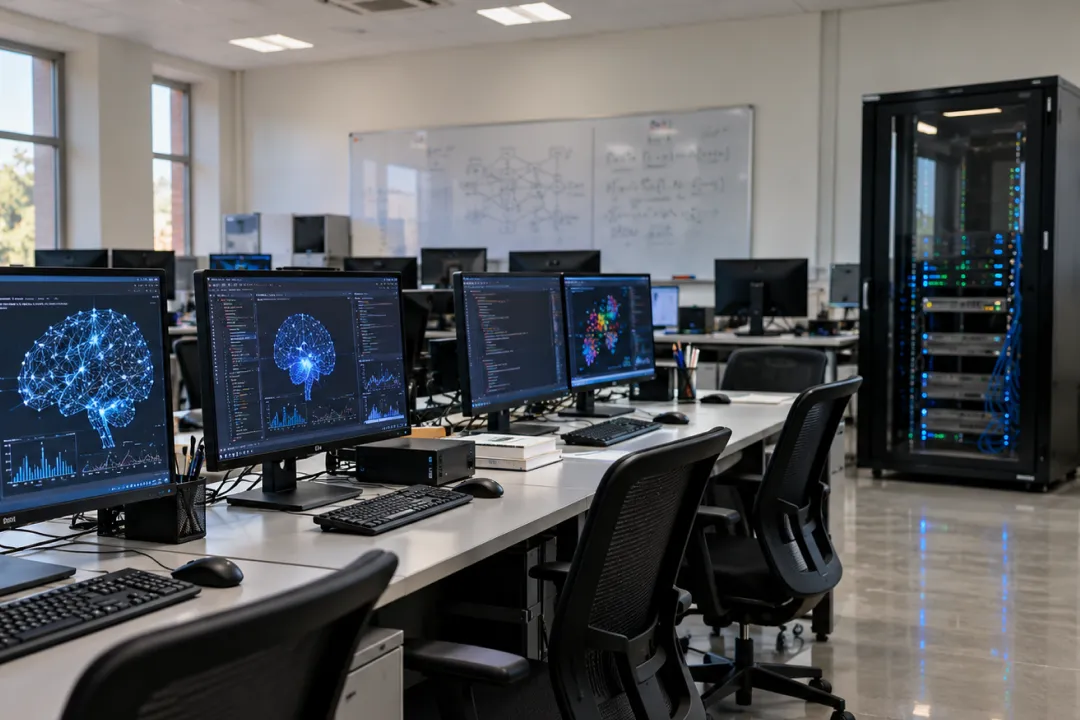
The laboratory is intended to support AI research and education through modern computing and server facilities, with an emphasis on developing technologies that consider human needs, ethical responsibilities and their effects on society.
According to Punjab University's official announcement, TİKA Vice President Ali Erjan formally inaugurated the facility. The ceremony was attended by Turkish Consul General Mehmet Eymen Şimşek, Punjab University Pro Vice Chancellor Prof Dr Mahmood Saleem, Dean of the Faculty of Computing and Information Technology Prof Dr Shahzad Sarwar and other university representatives.
What computing facilities does the AI laboratory provide?
Prof Dr Shahzad Sarwar said the new laboratory is equipped with modern computing and server facilities intended to support artificial intelligence research and academic activities.
In a September 16 announcement, TİKA also described advanced computing and server infrastructure associated with the laboratory.
However, the available announcements do not identify the installed processors, GPU models, number of servers or computing performance. They also do not establish that the facility contains a formally specified high-performance computing cluster.
TİKA said the laboratory's planned remote-access infrastructure was expected to allow researchers from Punjab University's departments and campuses, along with partner institutions in Pakistan and Türkiye, to participate in collaborative academic activities. The announcement did not confirm that this access was already operational.
Why does the laboratory focus on human-centered AI?
The laboratory aims to combine technical artificial intelligence research with consideration of how AI systems affect individuals and communities.
According to a PUFCIT faculty announcement, the initiative emphasizes ethics, privacy, responsibility and the human consequences of emerging technologies.
During the inauguration, Turkish officials discussed AI's potential applications in education, healthcare, research and public services. They also stressed the importance of considering who benefits from AI systems and how those technologies influence people's lives.
The laboratory's human-centered approach represents its stated research direction. The university has not yet published specific completed research results from the new facility.
What does the Pakistan-Türkiye AI research agreement cover?
The inauguration follows a tripartite cooperation agreement signed by TİKA, Punjab University and Türkiye's Yıldız Technical University, announced by TİKA on September 16, 2026.
According to the Turkish agency, the agreement provides a framework for joint AI research, educational resource sharing, faculty development and exchanges involving students and academic staff.
TİKA also outlined five-year objectives that include more than 10 joint academic publications, at least five externally funded collaborative projects, support for more than 20 PhD and MPhil theses, training for over 100 students, researchers and faculty members, and support for at least five innovation or startup initiatives.
These figures are targets under the cooperation framework, not results that have already been achieved. The agency has not announced specific completed projects or research outputs under these five-year objectives.
How is Türkiye supporting the project?
TİKA is Türkiye's official development cooperation agency and has supported the establishment of the laboratory as part of its educational cooperation with Pakistani institutions.
At the inauguration, Ali Erjan said the agency intended to strengthen its cooperation with institutions in Pakistan and support educational development.
Turkish Consul General Mehmet Eymen Şimşek also highlighted opportunities for academic cooperation between universities in the two countries.
The announcements reviewed did not provide a project-specific funding amount or a detailed breakdown of equipment and operating costs.
What happens next for the AI laboratory?
The next stage will depend on how the participating institutions put their cooperation agreement into practice, including joint research projects, academic exchanges, course development and opportunities for students and researchers to use the laboratory.
Details of student access procedures, remote-access availability and the timetable for individual research projects have not yet been publicly confirmed.
The inauguration marks a step in Pakistan-Türkiye academic cooperation on artificial intelligence. The laboratory's longer-term impact will depend on the research, training and innovation activities delivered under the partnership, rather than the opening of the facility alone.