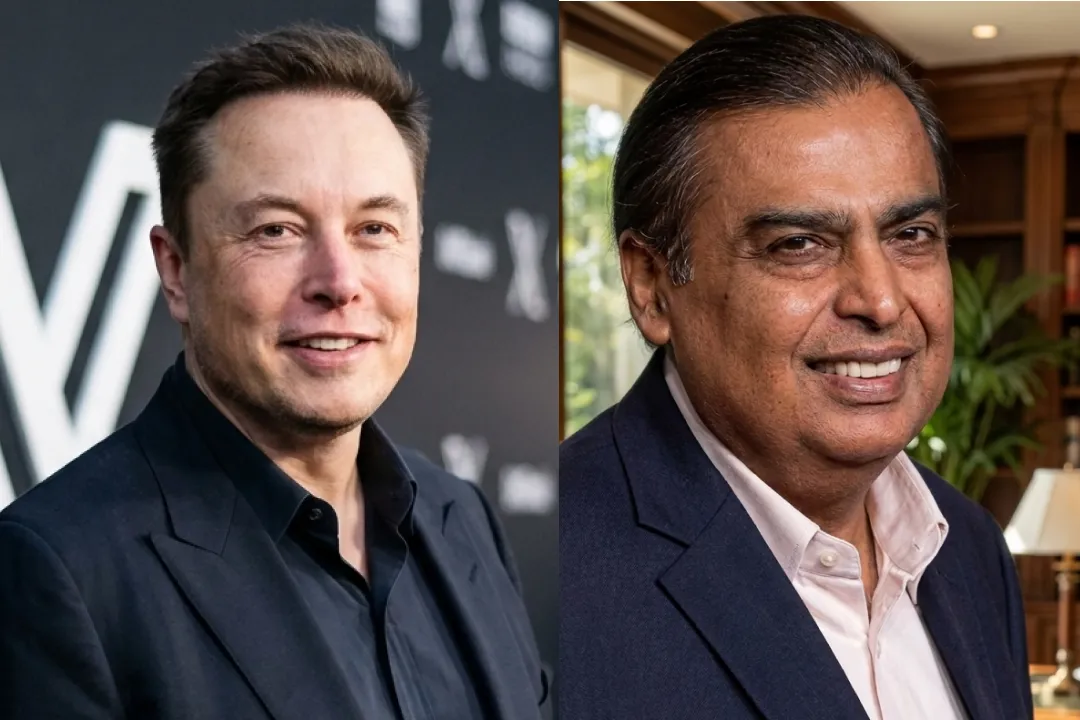
Elon Musk has intensified his criticism of the delays facing Starlink's commercial launch in India, directly questioning billionaire Mukesh Ambani's influence and suggesting that established business interests are obstructing competition in the country's telecommunications market.
India's government has rejected allegations of discriminatory treatment, maintaining that Starlink and other licensed satellite communications operators must complete applicable security requirements and spectrum procedures before launching commercial services.
The dispute escalated on October 8 and 9, 2026, when Musk used posts on X to challenge India's regulatory process and criticise Ambani, whose Reliance Industries controls telecom operator Reliance Jio. Musk has not provided evidence establishing that Ambani personally interfered with Starlink's regulatory approvals.
The confrontation has an unusual commercial dimension. Reliance Jio signed a distribution agreement with SpaceX in March 2025 to make Starlink services available in India, subject to regulatory approvals. The companies therefore have potential business interests in common even as they compete in the emerging satellite broadband market.
Musk Escalates Criticism of Ambani Over Starlink Delay
Musk's latest remarks have brought renewed attention to the relationship between India's telecommunications industry, business competition and government regulation.
On October 8, Musk questioned why Starlink was still unable to launch commercial services despite what he described as years of efforts to comply with Indian requirements. He also publicly questioned Ambani's influence over decisions affecting the country's telecom market.
In further comments on October 9, Musk sarcastically referred to Ambani as India's prime minister and challenged whether Starlink would be permitted to compete with established providers.
According to TechCrunch's October 9 report, Musk argued that satellite connectivity could help underserved communities, support education and provide businesses with access to wider markets.
His comments represented an escalation from criticism of regulatory delays to direct allegations about the influence of a prominent Indian businessman.
However, Musk's statements do not establish that Ambani directed, influenced or improperly interfered with Starlink's approval process.
Reliance Jio did not respond to Reuters' request for comment on Musk's allegations, according to the news agency's October 9 report.
Indian Government Rejects Claims of Unfair Treatment
India's Communications Minister Jyotiraditya Scindia rejected suggestions that the country was protecting an existing telecommunications monopoly.
Speaking on October 9, Scindia said India does not permit monopolies in any sector, according to Reuters.
Indian authorities have maintained that the satellite communications framework is intended to provide fair and non-discriminatory treatment to licensed operators.
Officials identified Starlink, Jio Satellite Communications and Eutelsat OneWeb as being at broadly the same regulatory stage, rather than stating that every company has exactly the same outstanding approvals.
The government says the remaining processes involve applicable security compliance and the assignment of spectrum required for commercial satellite communications.
These explanations contrast with Musk's allegations of business influence. The available public reporting does not establish that India's regulatory delays were caused by improper intervention from Ambani or Reliance Jio.
Why Starlink Has a Licence but Still Cannot Launch in India
One of the main sources of confusion surrounding the dispute is the difference between obtaining a telecommunications licence and receiving all the permissions needed to begin commercial service.
Starlink secured a key satellite communications authorisation from India's Department of Telecommunications in June 2025, an important step towards entering the market.
However, that authorisation did not automatically allow the company to begin selling satellite broadband services nationwide.
As Reuters reported when the licence was granted, Starlink still faced additional regulatory requirements before a commercial rollout.
These include applicable security conditions, spectrum assignment and other operational requirements relevant to its network.
Satellite communications involve infrastructure that can operate across national borders, including satellites, ground stations and communications gateways. Regulators therefore examine how operators comply with national security and telecommunications rules.
An outstanding security assessment should not be confused with a confirmed security breach or a permanent government ban.
Although Musk has questioned why Starlink still lacks permission to launch, the company's earlier licence and its remaining commercial approvals are separate regulatory matters.
The Spectrum Dispute Behind India's Satellite Internet Market
The disagreement over Starlink's entry is connected to a longer debate about how India should assign satellite communications spectrum.
Reliance Jio previously supported auction-based allocation, arguing that spectrum policy should ensure fair competition between different telecommunications providers.
Satellite operators, including Starlink, favoured administrative assignment under government-defined conditions, reflecting the technical characteristics of satellite networks and their use of shared frequencies.
India moved towards administrative assignment for relevant satellite services, but questions about pricing, implementation and operational requirements remained subject to regulatory consideration.
On May 9, 2025, the Telecom Regulatory Authority of India (TRAI) issued recommendations concerning the terms and conditions for assigning spectrum to certain satellite-based commercial communications services.
The regulator subsequently responded in December 2025 to questions referred back by the Department of Telecommunications. Further consultation on satellite network authorisation and spectrum assignment followed in April 2026.
These proceedings show that spectrum policy has involved several stages of regulatory decision-making rather than a single approval.
Importantly, Reliance Jio's earlier preference for spectrum auctions is not evidence that the company caused Starlink's outstanding security requirements or prevented its commercial launch.
Why Reliance Jio and Starlink Are Both Partners and Competitors
The public dispute is complicated by an existing commercial relationship between SpaceX and Reliance Jio.
In March 2025, Jio announced an agreement with SpaceX to distribute Starlink equipment and services in India, subject to the necessary regulatory approvals.
Bharti Airtel also announced a separate agreement with SpaceX around the same period.
These arrangements could allow established telecom operators to offer satellite connectivity in areas where mobile networks or fibre infrastructure are difficult to extend.
Satellite broadband may be particularly useful for remote communities, isolated businesses and locations where conventional communications infrastructure is limited.
However, distribution partnerships do not eliminate competition between the companies.
Jio has its own satellite communications interests, while Starlink is seeking a commercial position in India's broadband market.
The companies may therefore cooperate on distribution while pursuing different commercial strategies and holding different positions on regulation.
What the $1.9 Billion Satellite Broadband Forecast Means
India represents a potentially significant market for satellite internet providers, although the scale and speed of future adoption remain uncertain.
A Deloitte projection cited in Reuters' earlier reporting on India's satellite broadband competition estimated that the market could reach approximately $1.9 billion by 2030.
The estimate is a forecast of potential market size, not current revenue, a confirmed investment commitment or the value of the distribution agreement between Reliance Jio and Starlink.
Satellite broadband could help extend connectivity to places where building conventional telecommunications infrastructure is expensive or technically challenging.
Potential applications include internet access for remote settlements, communications for businesses operating outside reliable network coverage and backup connectivity during disruptions to terrestrial infrastructure.
However, commercial adoption will depend on factors including subscription prices, customer equipment costs, network capacity and competition from existing broadband services.
The projected market size therefore does not guarantee that satellite internet will become affordable or widely available immediately after regulatory approval.
What India's Starlink Dispute Means for Pakistan and South Asia
India's handling of satellite broadband regulation may attract attention from other South Asian markets seeking to expand internet connectivity while maintaining oversight of communications networks.
Low-Earth-orbit satellite systems can offer lower latency than traditional geostationary satellite services, although actual performance depends on network conditions, equipment and service availability.
For Pakistan, the broader issues include how satellite connectivity could serve underserved regions, how regulators manage security requirements and how new operators compete with established telecommunications companies.
However, India and Pakistan operate under separate regulatory systems. Developments affecting Starlink's approvals in India do not automatically determine the company's licensing or commercial status in Pakistan.
The regional significance of the dispute lies in the balance between expanding connectivity, encouraging competition and enforcing national telecommunications requirements.
What Happens Next for Starlink in India?
The immediate question is when Starlink will complete the outstanding requirements necessary to begin commercial satellite broadband operations.
India's government maintains that the regulatory process applies fairly to licensed operators, while Musk continues to question whether established business interests are influencing the pace of approval.
Further official decisions on security compliance, spectrum assignment and operational requirements will determine when Starlink can proceed towards a commercial launch.
As of the reporting reviewed through October 10, 2026, no confirmed nationwide commercial launch date or final consumer pricing announcement has been established.
The dispute highlights both the commercial opportunities in India's satellite broadband market and the regulatory challenges facing companies seeking to enter it.
Frequently Asked Questions
Has India banned Starlink?
No. Starlink has received a key satellite communications licence in India, but commercial operations remain subject to additional regulatory requirements, including applicable security conditions and spectrum assignment.
Did Mukesh Ambani block Starlink's launch?
Elon Musk has suggested that Ambani and powerful business interests are obstructing Starlink's entry. However, he has not provided evidence establishing that Ambani personally interfered with the approval process. Indian officials reject claims of discriminatory treatment.
Why is Starlink still waiting despite receiving a licence?
A satellite communications licence is not the same as final permission to begin commercial operations. Starlink must complete the remaining applicable regulatory and operational requirements before launching services.
When will Starlink launch in India?
No confirmed commercial launch date was established in the reporting reviewed through October 10, 2026. The timing depends on completion of the remaining approval processes.