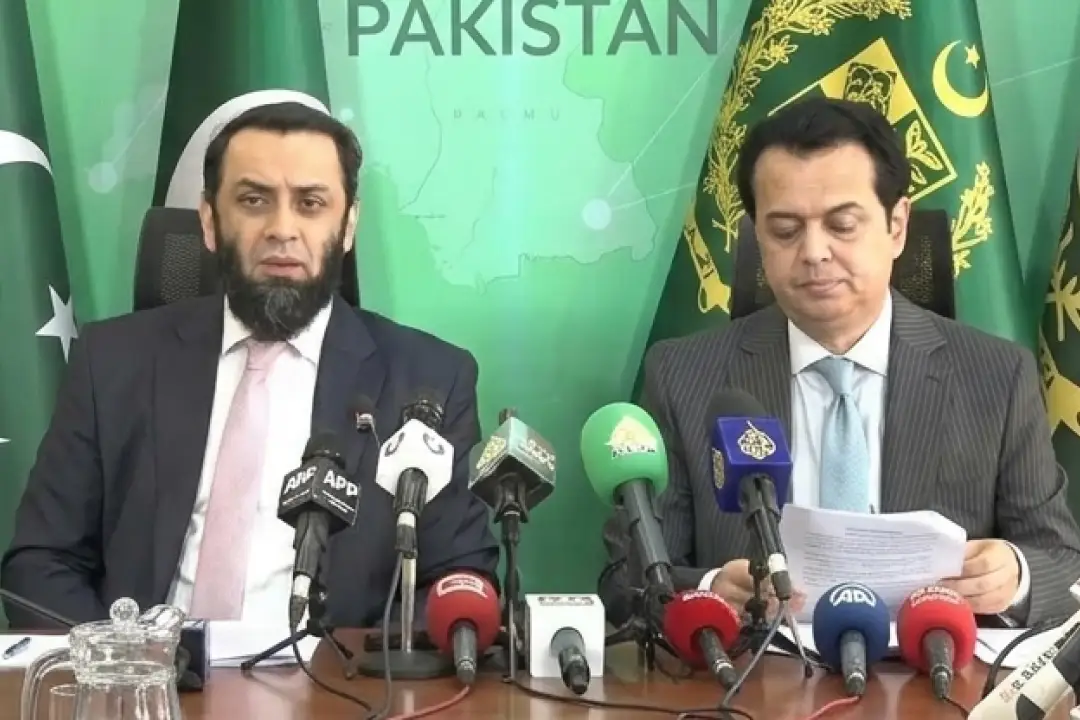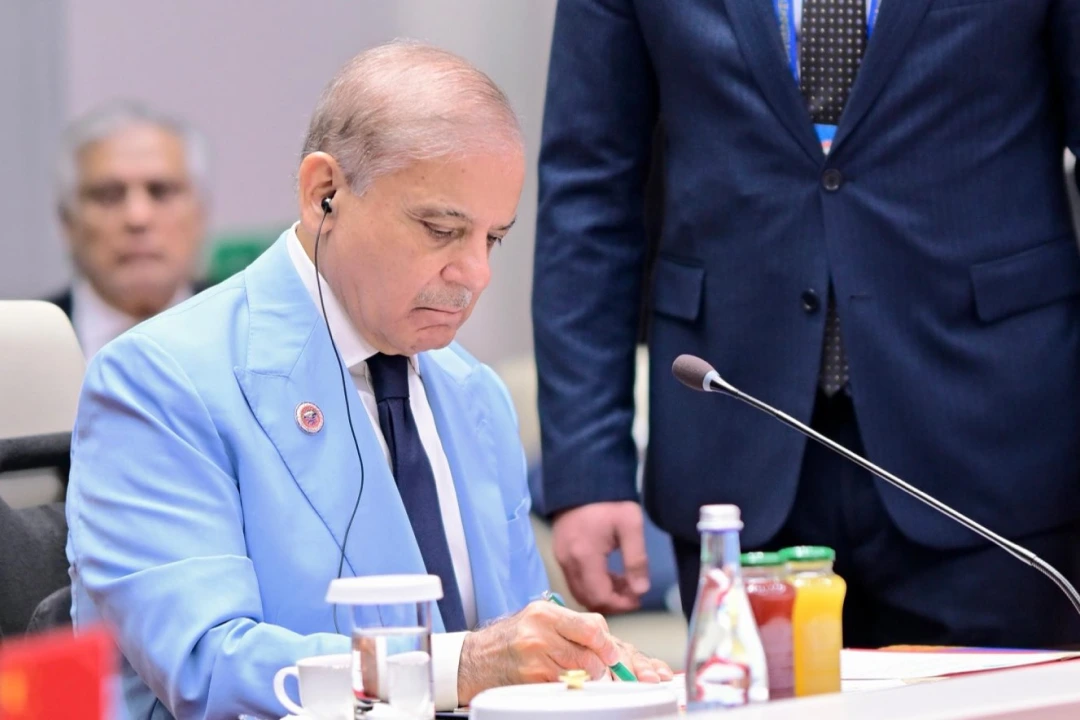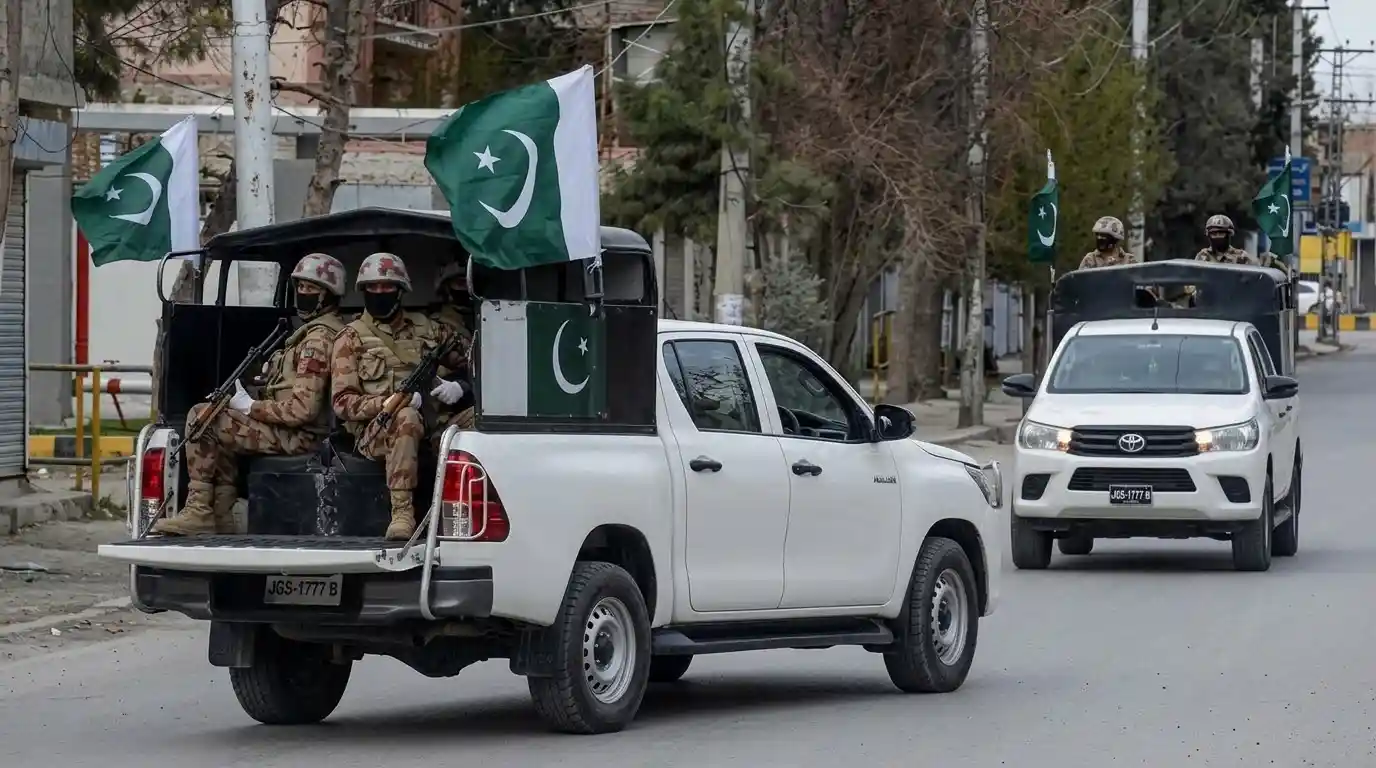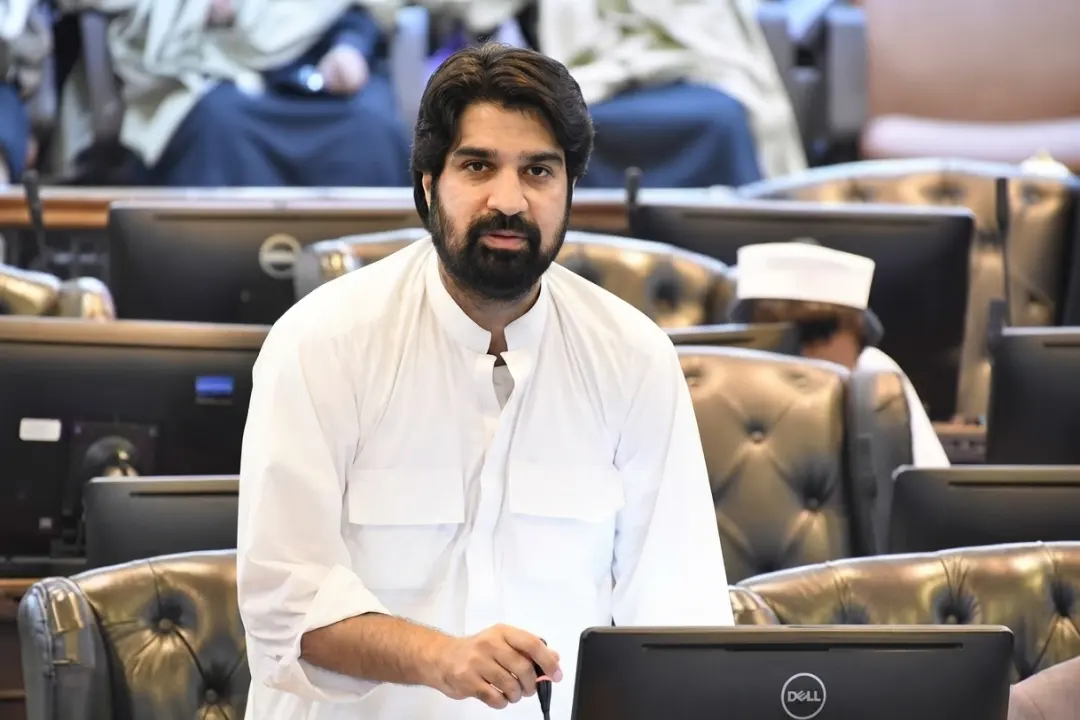

Federal ministers have raised the possibility of governor's rule or an emergency in Khyber Pakhtunkhwa as tensions with the provincial government grow ahead of PTI's planned 4 October march on Islamabad. Federal Law Minister Azam Nazeer Tarar said on 29 September that either step would have to meet the conditions laid down in the Constitution. As of 29 September 2026, no proclamation imposing governor's rule or an emergency in KP had been reported.
The debate involves two different constitutional mechanisms. Article 232 deals with a proclamation of emergency, while Article 234 deals with a situation in which the government of a province cannot be carried on in accordance with the Constitution. The requirements, parliamentary procedures and consequences are not identical.
Where things stand
Federal Minister Amir Muqam said the legal requirements for imposing governor's rule had been fulfilled, citing what he described as unlawful actions by Chief Minister Sohail Afridi. Federal Law Minister Azam Nazeer Tarar said the Constitution provides procedures for both governor's rule and an emergency and that any such action would have to satisfy the constitutional conditions.
KP Governor Faisal Karim Kundi has also warned about the possibility of governor's rule if conditions deteriorate. In an official statement on 28 September, he said the province could not afford the planned long march while terrorism continued to claim lives and urged the provincial government to focus on security and governance. He said governor's rule was an extraordinary measure and that the President could impose it on the advice of the Prime Minister if the required circumstances arose.
Chief Minister Sohail Afridi has rejected the warnings and says the province should be involved in developing a new counterterrorism policy. PTI's march, originally planned for 27 September, was postponed to 4 October. The party says the mobilisation is intended in part to demand the release of its jailed founder and former prime minister Imran Khan.
Article 232 and Article 234 are different routes
The current Constitution contains separate provisions for an emergency and for failure of constitutional machinery in a province.
| Point | Article 232: Proclamation of Emergency | Article 234: Failure of constitutional machinery in a Province |
|---|---|---|
| Trigger | The President is satisfied that a grave emergency exists in which the security of Pakistan, or any part of it, is threatened by war, external aggression or internal disturbance beyond the power of a Provincial Government to control. | The President, after receiving a report from the Governor, is satisfied that a situation has arisen in which the Government of the Province cannot be carried on in accordance with the Constitution. |
| Provincial Assembly | For an emergency based on internal disturbance beyond the Provincial Government's power to control, the first proviso to Article 232(1) requires a resolution from that Provincial Assembly. | Article 234 does not require a resolution of the Provincial Assembly. It allows a proclamation to declare that the Assembly's powers are exercisable by or under the authority of Parliament. |
| Initial parliamentary role | The second proviso to Article 232(1) says that if the President acts on his own, the proclamation must be placed before both Houses for approval by each House within ten days. | Article 234 says the President may issue a proclamation after receiving the Governor's report and reaching the required satisfaction. If each House separately passes a resolution in this behalf, the President shall issue the proclamation. |
| Further parliamentary approval | The proclamation must be laid before a joint sitting summoned within 30 days. It expires after two months unless approved by the joint sitting. | The proclamation must be laid before a joint sitting and expires after two months unless approved by the joint sitting. |
| Duration | Article 232 says the proclamation expires after two months unless approved by the joint sitting. Article 232 does not contain the six-month maximum that appears in Article 234. | Once approved, it may be extended by the joint sitting for periods of up to two months at a time, but it cannot remain in force for more than six months. |
| Provincial functions | While an emergency is in force, the Federal Government may by order assume provincial government functions, or direct the Governor to assume them on its behalf, subject to constitutional limits. | The President may assume provincial government functions or direct the Governor to assume them on the President's behalf. |
| High Courts | The Federal Government cannot assume the powers of a High Court or suspend constitutional provisions relating to High Courts under the relevant Article 232 power. | The President cannot assume High Court powers or suspend constitutional provisions relating to High Courts under Article 234. |
Article 232 contains an important textual issue. Its first proviso requires a Provincial Assembly resolution for an emergency based on internal disturbance, while the next proviso describes what must happen if the President acts on his own. The article does not attempt to resolve the legal relationship between those two provisos. Lawyers have expressed different readings of how they operate, and any dispute would ultimately depend on constitutional interpretation.
Article 234 is more specific about the route for failure of provincial constitutional machinery. Its present wording requires a report from the Governor. The words "or otherwise", which previously appeared alongside that requirement, were removed by the 18th Amendment. Article 234(2) also says Article 105, which generally governs a Governor acting on advice, does not apply to the Governor's functions under Article 234(1).
What can happen under Article 234?
An Article 234 proclamation may allow the President to assume all or some functions of the provincial government or direct the Governor to exercise them on the President's behalf. It may also declare that the powers of the Provincial Assembly will be exercisable by or under the authority of Parliament.
The proclamation can contain incidental and consequential provisions necessary to give it effect, including suspension of constitutional provisions relating to provincial bodies or authorities. The Constitution expressly protects High Courts from this power: their powers cannot be assumed and constitutional provisions relating to High Courts cannot be suspended under Article 234.
If the Provincial Assembly's legislative powers are placed under Parliament, Article 234(5) allows Parliament in joint sitting to confer on the President power to make laws on matters normally within the Provincial Assembly's competence. It also provides mechanisms for provincial expenditure while such an arrangement is in force.
A proclamation normally expires after two months unless the joint sitting approves it. Parliament may then extend it for periods not exceeding two months at a time, but Article 234 sets an absolute maximum of six months.
There is a different rule if the National Assembly is dissolved when the proclamation is issued. In that situation, Article 234(4) allows it to continue for three months. If a general election to the National Assembly is not held within that period, the proclamation expires unless the Senate has approved it earlier.
Can a proclamation be challenged in court?
Article 236(2) contains unusually direct language: it says the validity of a proclamation issued or order made under Part X shall not be called in question in any court.
Pakistan's legal history nevertheless shows that litigation concerning an Article 234 proclamation has reached the courts. After governor's rule was imposed in Punjab in February 2009, petitions challenging the proclamation came before the Lahore High Court. The proclamation was revoked on 30 March 2009 before the court decided its validity. The court then disposed of the petitions because no live issue remained, while observing that questions concerning the validity of such a proclamation could be considered in appropriate proceedings if such an occasion arose.
The judicial structure has also changed since then. The 27th Amendment, enacted in November 2025, created the Federal Constitutional Court. Article 175E now gives that court significant jurisdiction over constitutional matters, including exclusive original jurisdiction in disputes between the federal and provincial governments and power to call for the record of a case involving a substantial question of constitutional interpretation.
Those provisions do not by themselves settle how a future challenge to a Part X proclamation would interact with the express wording of Article 236(2). No conclusion on that unresolved question is assumed here.
Governor's rule has been used before
Article 234 is not an unused provision.
On 25 February 2009, President Asif Ali Zardari issued an Article 234 proclamation in Punjab after a Supreme Court decision disqualified Chief Minister Shahbaz Sharif from the Provincial Assembly. The proclamation directed the Governor to assume the functions of the provincial government on the President's behalf and stated that the Chief Minister and provincial ministers would cease to hold office. The proclamation was issued for two months but was revoked on 30 March 2009.
Contemporary reporting noted that the Punjab Provincial Assembly itself was not suspended by the proclamation.
Article 234 was used again in Balochistan in January 2013 after a severe security crisis and deadly attacks in Quetta. Governor's rule was imposed and Governor Zulfiqar Magsi was authorised to assume provincial government functions. A joint sitting of Parliament was subsequently called to consider approval of the proclamation, illustrating Article 234's parliamentary-control mechanism.
Article 232 has also been used in relation to the territory now called Khyber Pakhtunkhwa. Constitutional annotations refer to a federal order concerning the then North-West Frontier Province dated 16 February 1975, later rescinded on 3 May 1975. That historical order arose under Article 232 rather than Article 234.
The security dispute behind the current confrontation
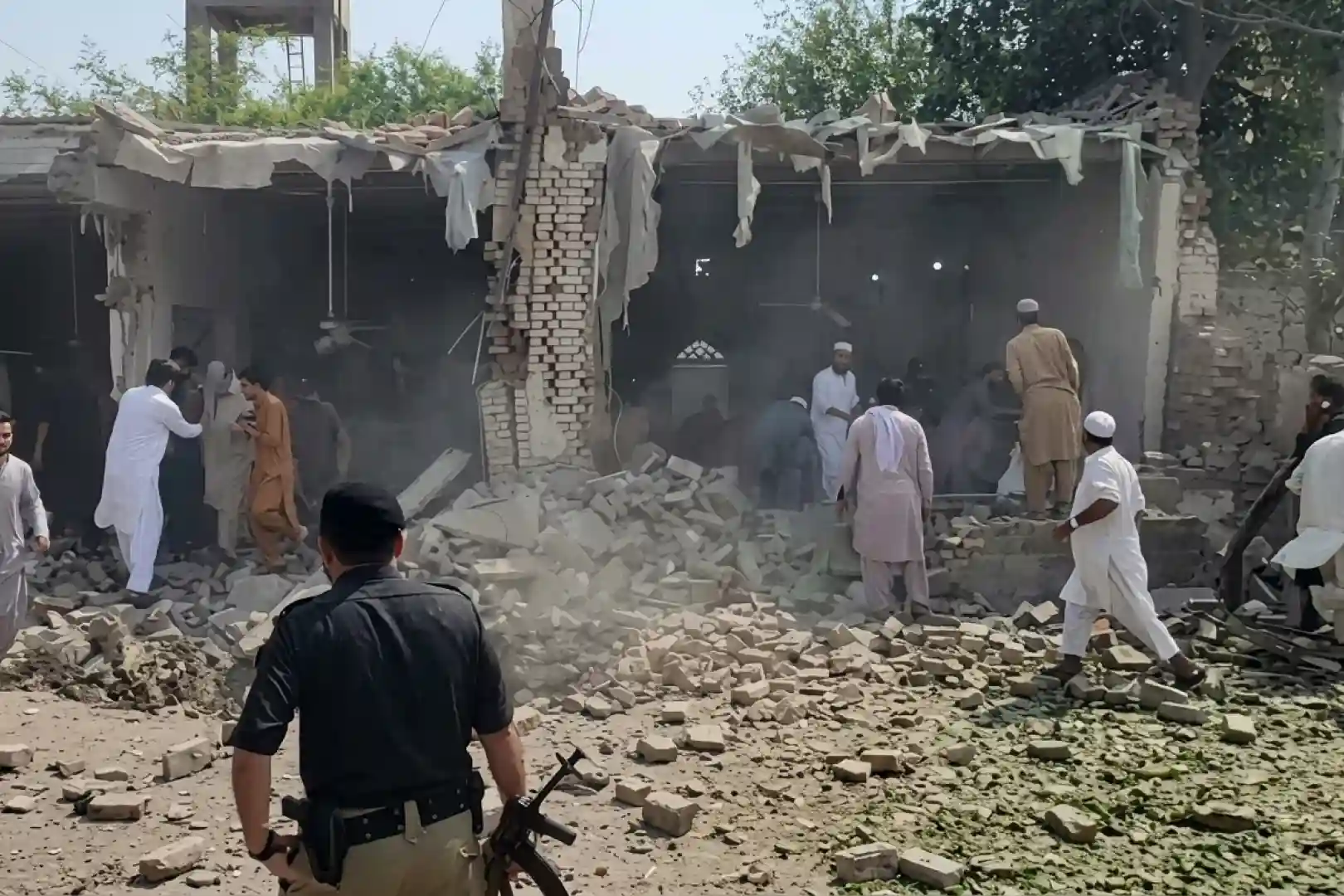
The political dispute is also being fought over KP's security record and the resources available to its police and Counter-Terrorism Department.
A white paper presented on 28 September was attributed by state broadcaster Radio Pakistan to the PML-N's Khyber Pakhtunkhwa chapter. Prime Minister's Coordinator Ikhtiar Wali Khan and PML-N MNA Samar Haroon Bilour presented allegations concerning security, policing, governance and the provincial government's priorities.
That attribution matters. The document should not be treated here as an independently verified assessment of KP's security performance. The figures below are claims attributed to the white paper or to those presenting it.
| Reported claim | Status |
|---|---|
| 122 police personnel were killed in KP in the first half of 2026, compared with 63 during the same period in 2025. | Attributed to the white paper and its presenters. |
| Police injuries increased from 84 to 175 over the same comparison. | Attributed to the white paper and its presenters. |
| 3,113 personnel were serving against 3,844 sanctioned CTD posts in December 2025. | Reported from the white paper; not independently verified here. |
| The CTD had nine M4 rifles against a stated requirement of 200 and 11 night-vision devices against a requirement of 35. | Attributed to the white paper and its presenters. |
| The Chief Minister chaired the first provincial Apex Committee meeting 112 days after taking office. | Attributed to the white paper; not independently verified here. |
The KP government rejects the allegations. Provincial Information Minister Shafi Jan said KP is itself a major victim of terrorism and accused federal ministers of blaming the provincial government for problems arising from broader security policy. The provincial side has also argued that KP should have a greater role in formulating counterterrorism policy.
Chief Minister Afridi says his government has substantially increased resources for policing. He has said Rs35 billion was diverted from the development budget for security and that the police budget for 2026-27 was increased by 103 per cent to about Rs191.4 billion.
The Rs191.4 billion allocation has separate support in reporting based on KP's 2026-27 budget documents. The description of that amount as a 103 per cent increase is Afridi's stated comparison and is not independently recalculated here on a like-for-like budget basis.
Federal Information Minister Attaullah Tarar and Minister of State for Interior Talal Chaudhry have accused the provincial government of failing to confront militants effectively. Tarar has also alleged that the provincial administration facilitated militants for political and financial gain. The KP government rejects those allegations. They remain political accusations, not findings established by this article.
One security figure remains inconsistent
Reports do not agree on the period covered by a frequently cited figure of about 680 terrorist incidents.
Some reporting on the white paper describes 680 attacks between January and September 2026. A separate account of Ikhtiar Wali Khan's press conference attributes roughly 680 terrorism-related incidents to the first six months of 2026, compared with 558 during the corresponding period of 2025.
Because the same figure is attached to different periods, this article does not use the 680 total as an established statistic.
What is established and what remains uncertain
- Article 232 and Article 234 provide separate constitutional mechanisms and should not be treated as interchangeable.
- Article 234 currently requires a report from the provincial Governor before the President can proceed through that route.
- An Article 234 proclamation requires parliamentary approval to continue beyond two months and cannot remain in force for more than six months.
- Article 232 contains separate provisions concerning a Provincial Assembly resolution for an internal-disturbance emergency and parliamentary approval if the President acts on his own. This article does not resolve the legal interpretation of how those provisos interact.
- Article 236(2) expressly restricts court challenges to Part X proclamations and orders, while historical litigation and the post-2025 judicial structure add legal questions that cannot be resolved simply from the text alone.
- The Rs191.4 billion KP police allocation for 2026-27 is supported by reporting based on provincial budget documents, while the claimed 103 per cent increase remains attributed to the Chief Minister.
- The security white paper should be attributed specifically to the PML-N's KP chapter and its presenters rather than treated as independently verified evidence.
- As of 29 September 2026, federal and provincial figures were still exchanging warnings and accusations, but no proclamation imposing governor's rule or an emergency in KP had been reported.