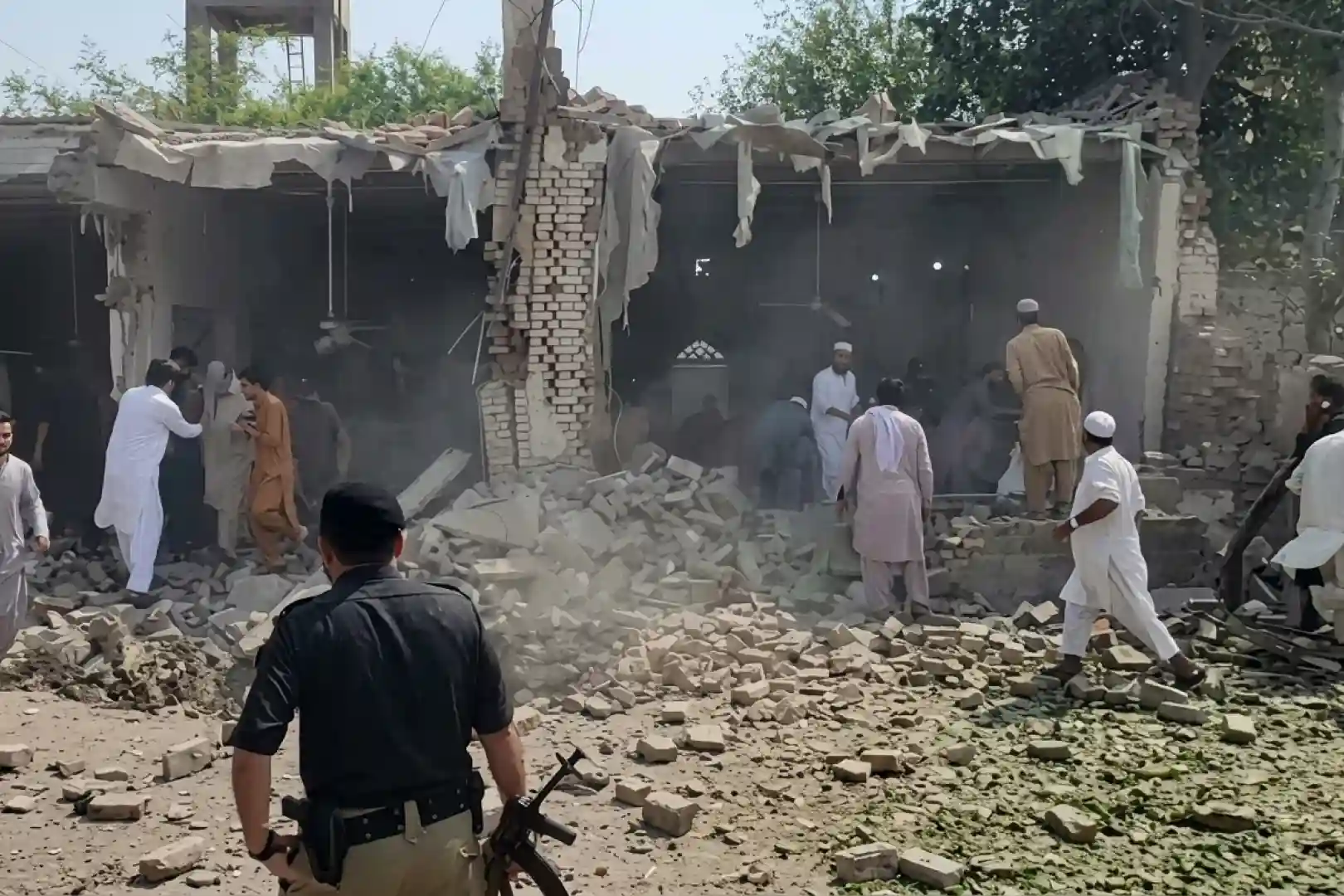
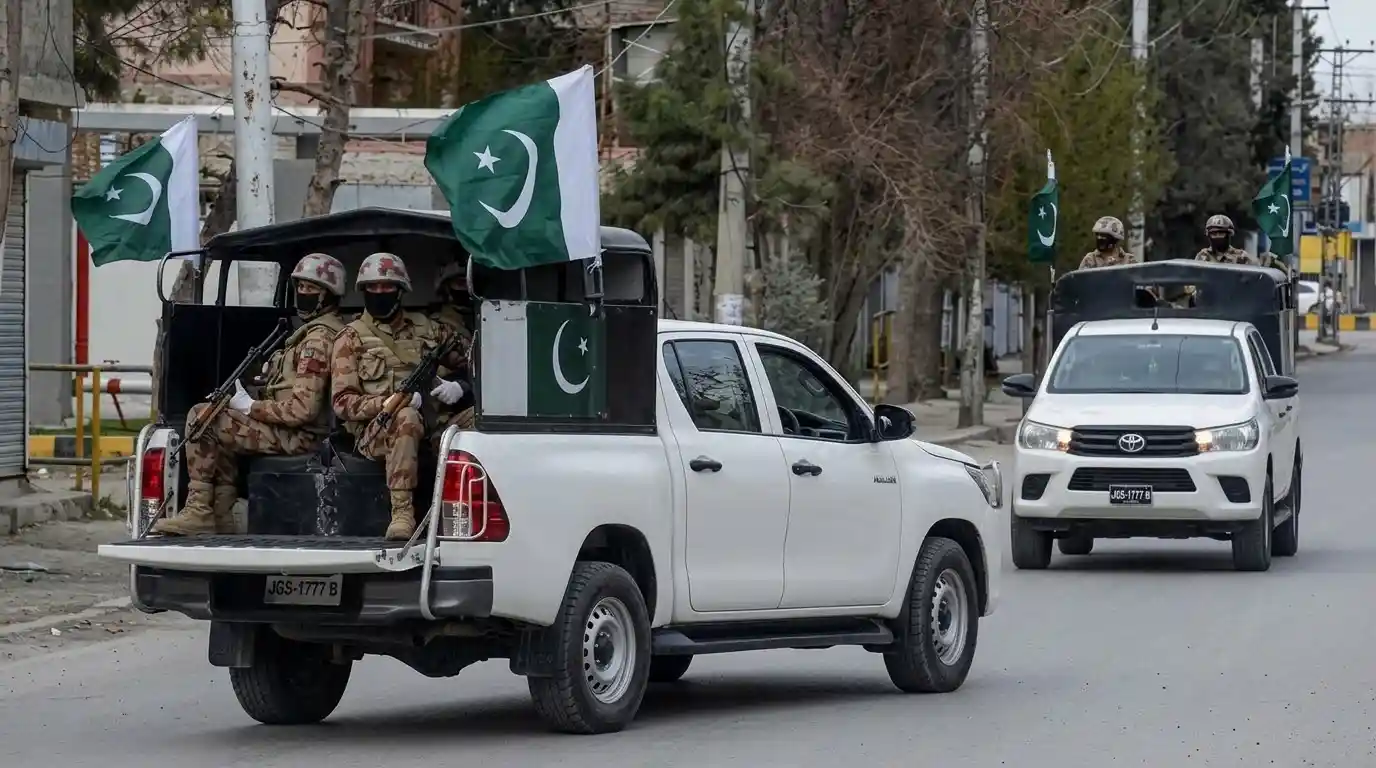
Pakistan's military says security forces have killed more than 71 militants in Balochistan over a 96-hour period, following a series of operations in Shaban and other parts of the province.
The Inter-Services Public Relations (ISPR) announced the latest figure on September 27, saying operations had targeted militants belonging to groups the Pakistani state refers to as Fitna al-Khawarij and Fitna al-Hindustan. The first term is used by the government for militants affiliated with the banned Tehreek-i-Taliban Pakistan (TTP), while the second is used for Balochistan-based armed groups that Pakistan accuses of receiving support from India.
ISPR said intelligence agencies had identified multiple militant hideouts in the Shaban area of Quetta district and that security forces had been carrying out operations in Shaban and surrounding areas as part of a wider counter-terrorism campaign.
The military also alleged that the militants were receiving external support, describing them as "Indian-backed Afghan proxies" and accusing the Afghan Taliban administration of allowing militant groups hostile to Pakistan to operate from Afghan territory. Those allegations are Pakistan's position and have not been independently established through the military's casualty statements.
How the reported toll developed
The latest sequence of military announcements began with operations launched from September 21 in the Shaban area and elsewhere in Balochistan. The September fighting forms part of the broader Operation Shaban campaign rather than marking the original start of the operation.
On September 23, ISPR said 19 militants had been killed in several operations. According to the military, 13 were killed during a clearance operation in Shaban, while another six were killed in separate intelligence-based operations in Kech district and Quetta West.
ISPR also reported the death of Subedar Muhammad Jamil, 39, from Taunsa Sharif in Dera Ghazi Khan district, during the fighting. Weapons and ammunition were recovered from the locations, according to the military.
Two days later, on September 25, ISPR raised its reported toll to 33 militants killed in Balochistan since September 21. It said five additional militants had been killed during continued operations in Shaban on September 24, taking the reported Shaban tally at that stage to 22.
In a separate intelligence-based operation in Nushki district on September 25, security forces killed another 11 militants after engaging a hideout, according to ISPR. Weapons, ammunition and explosives were also reported recovered during the operations.
By September 27, the military said more than 71 militants had been killed in Operation Shaban and other operations across Balochistan during the preceding 96 hours. ISPR said 33 militants had been killed during the latest Shaban operations and referred separately to another 23 killed as operations intensified over the preceding 72 hours. Reports citing the military also referred to 11 militants killed in Nushki and six in Mand.
Why the individual figures should not simply be added together
The figures released during the week are running operational totals issued at different stages of an evolving campaign. Some describe particular locations, while others cover broader time periods or subsequent phases of the operations.
For that reason, adding every number mentioned in successive ISPR statements would risk double-counting militants already included in earlier running totals. The clearest overall figure available from the September 27 statement is therefore the military's own reported total of more than 71 militants killed across Operation Shaban and other Balochistan operations during the preceding 96 hours.
Origin Pakistan could not independently verify the casualty figures or reconcile every reported death by location. Access to active conflict areas in Balochistan is limited, making independent assessment of individual military operations difficult.
Operation Shaban began before the latest September fighting
Operation Shaban itself is not a new campaign launched on September 21. Security forces had been conducting an operation under the same name in the Shaban area since July 2026.
The earlier campaign followed an attack connected to a police post at the Mangi Dam pumping station in the Ziarat area. During that episode, nine police personnel were killed and 18 others were abducted and subsequently killed, bringing the reported police death toll to 27.
Security forces, including the Pakistan Army, Frontier Corps and Balochistan Police, subsequently carried out joint operations in the mountainous Shaban area. By July 12, state media reported that 71 militants had been killed in Operation Shaban, while a larger figure was being reported for Operation Shaban and other intelligence-based operations across Balochistan.
The September 2026 announcements therefore represent a later phase of an operation whose name and broader campaign date back to July. This distinction is important because the latest figure of more than 71 deaths refers specifically to the recent 96-hour period and should not be confused with the separate casualty figures reported during the July phase.
What is Azm-e-Istehkam?
ISPR has placed the latest operations within Pakistan's wider Azm-e-Istehkam counter-terrorism framework. The initiative was approved through the Federal Apex Committee on the National Action Plan and is presented by the government as a coordinated effort involving security forces and law-enforcement agencies against militant networks and their support structures.
In its September 25 statement, ISPR said the counter-terrorism campaign under Azm-e-Istehkam would continue at full pace. Similar language appeared in the September 27 update, with the military saying security forces and law-enforcement agencies remained committed to eliminating what it described as foreign-sponsored terrorism.
Weapons and hideouts reported seized
Across the September announcements, ISPR said security forces had cleared multiple militant hideouts and recovered weapons, ammunition and explosives.
The military said clearance operations would continue until threats in the affected areas had been neutralised. The statements did not provide a complete public inventory of the recovered weapons or detailed information about every individual killed during the operations.
Pakistan's allegations of foreign support
A major theme in ISPR's statements has been the allegation that militant activity in Balochistan is receiving foreign backing.
Pakistan uses the term Fitna al-Khawarij for the TTP and associated militants. The government uses Fitna al-Hindustan for Baloch separatist groups it accuses of operating with Indian support.
ISPR's September 27 statement also alleged involvement by what it called "Indian-backed Afghan proxies" and accused the Afghan Taliban government of enabling militant activity that threatens Pakistan.
Those descriptions represent the Pakistani state's characterization of the groups and the alleged foreign links. India has repeatedly rejected Pakistani accusations that it sponsors militant activity in Balochistan. Afghanistan's Taliban government has also previously rejected Pakistani allegations that Afghan territory is being deliberately allowed to serve as a base for attacks against Pakistan.
A conflict that extends beyond the latest operation
The security situation in Balochistan involves several armed groups with different objectives. The TTP is primarily an Islamist militant organisation fighting the Pakistani state, while Baloch separatist organisations such as the Balochistan Liberation Army pursue a separate insurgency centred on political control, resources and Baloch nationalism.
The Pakistani government groups parts of these threats together when describing foreign-sponsored militancy, but the organisations should not be treated as a single movement. Their structures, stated objectives and areas of operation differ.
Baloch separatist groups have also issued their own claims about attacks and casualties involving Pakistani security forces. Such claims from armed groups are often difficult to verify independently and are not included in ISPR's reported casualty totals.
What is confirmed and what remains unverified
The sequence of official announcements establishes that Pakistan's security forces have been conducting sustained operations in several areas of Balochistan and that ISPR progressively raised its reported militant casualty figures during the week.
The September 27 figure of more than 71 killed over 96 hours remains an official military count. Independent confirmation of that total, the identities of all those killed and the precise breakdown between individual operations is not currently available.
That distinction matters when following a fast-moving security operation. The most reliable way to read the figures is as a timeline of claims made by Pakistan's military at different stages of the campaign, rather than as separate numbers that can automatically be combined into a single independently verified total.