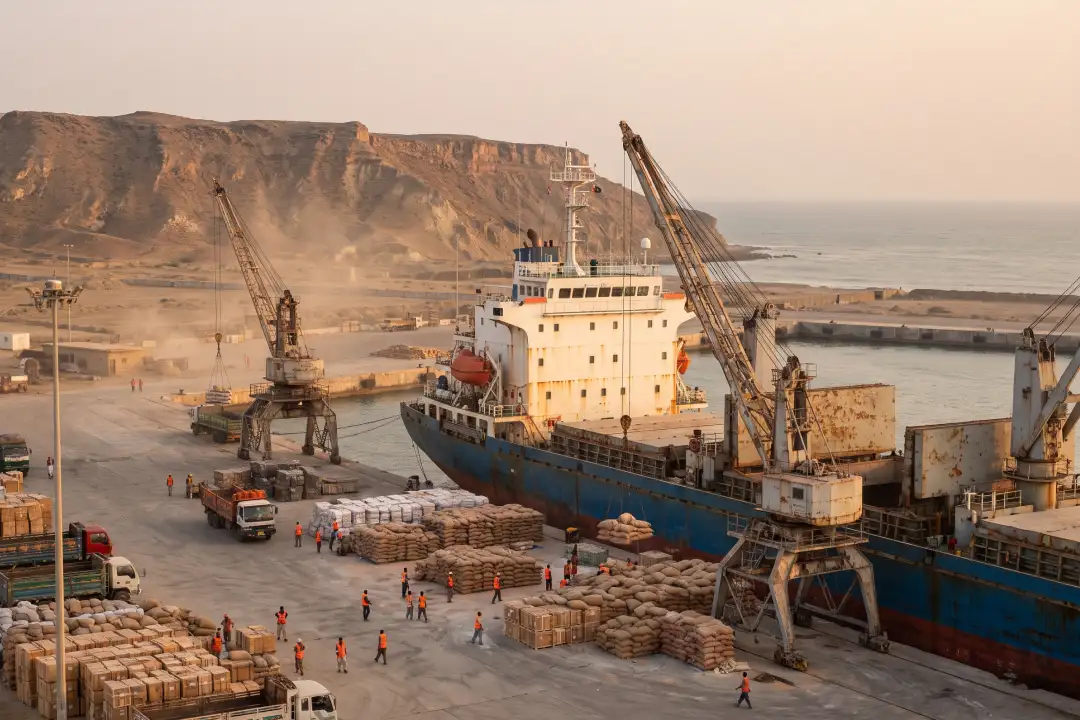
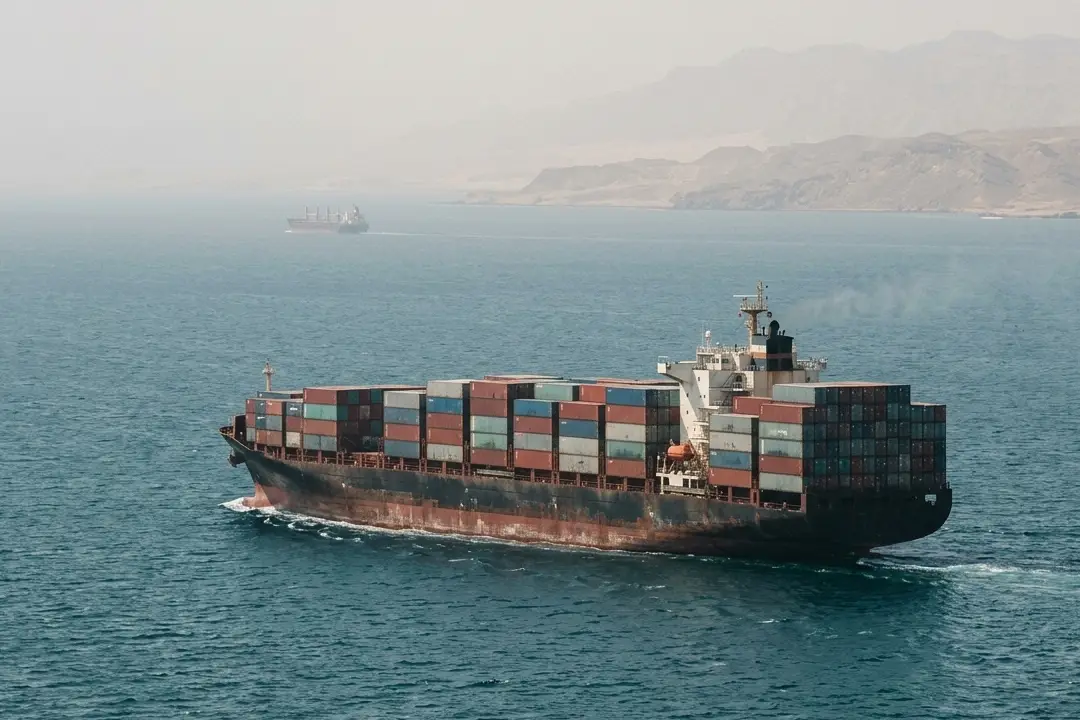
Some container services are returning to the Red Sea, but the change has not removed the shipping-cost and delivery risks facing Pakistani exporters as security conditions around Bab el-Mandeb remain uncertain.
The pressure is visible in carrier pricing. CMA CGM Pakistan announced in September that rates for Red Sea cargo would increase by $1,000 per unit from September 25, citing operational conditions and their associated cost impact in the region.
The increase does not represent a universal charge on Pakistani exports. It applies to the carrier's affected Red Sea cargo, and shipping costs can vary by carrier, route, equipment and commercial arrangement.
At the same time, some major container services are moving back from the longer Cape of Good Hope route to the Red Sea and Suez corridor. That creates an unusual situation for exporters: commercial traffic is increasing on the shorter route, but the security risk and its financial consequences have not disappeared.
Some shipping services are returning to the Red Sea
Hapag-Lloyd and Maersk have been moving selected Gemini services back to the Red Sea following security assessments.
Hapag-Lloyd said in a September 28 routing update that the NE4, SE1, SE2 and IEX services would transition to the Red Sea route instead of sailing around the Cape of Good Hope.
The shift shows that some carriers are again willing to use the shorter maritime connection between Asia and Europe. Hapag-Lloyd said it would continue monitoring the security situation and inform affected customers if further changes became necessary.
Traffic data also show increased use of Bab el-Mandeb. Lloyd's List Intelligence recorded a preliminary 290 cargo-vessel transits through the strait from September 21 to 27, compared with 264 in the previous week. Its preliminary four-week average was 280 weekly transits.
Those figures show that vessels are using the route in greater numbers than the previous week, but they should not be interpreted as proof that the underlying security problem has been resolved. Carrier decisions remain service-specific and subject to security assessments.
Why security risk still affects freight costs
Bab el-Mandeb connects the Gulf of Aden with the Red Sea and forms part of the maritime route toward the Suez Canal. For trade moving between Asia and Europe, avoiding the corridor can require vessels to sail around southern Africa instead.
The longer Cape of Good Hope route can increase sailing distance, fuel consumption and vessel time while complicating schedules and reducing the effective capacity available from a ship over a given period.
Security conditions can also affect costs even when a vessel is not rerouted. Shipping companies may adjust freight rates or introduce security-related charges to account for changing operating conditions.
For Pakistani exporters, that means the commercial impact of Red Sea insecurity cannot be measured only by whether ships are physically passing through Bab el-Mandeb. Routing decisions, carrier pricing and schedule reliability can change independently.
Pakistani exporters have faced carrier-specific cost increases
CMA CGM Pakistan provides a recent example of how regional conditions have translated into a shipping-cost adjustment.
In a September 18 customer advisory, the carrier said rates for Red Sea cargo would rise by $1,000 per unit from September 25 because of current operational conditions and associated costs in the region.
The adjustment should not be treated as an industry-wide $1,000 surcharge on every Pakistani shipment. It is a CMA CGM rate increase applying to the cargo covered by its advisory.
Other carriers have also used security-related surcharges during the wider Middle East disruption. In March, MSC introduced an Emergency War Surcharge for cargo moving from India, Pakistan, Sri Lanka and Bangladesh to specified destinations in East Africa, Somalia, Mozambique and Indian Ocean islands.
MSC set that surcharge at $500 per TEU for dry cargo and $1,000 per TEU for reefer cargo. The company linked the measure to security conditions affecting maritime traffic around the Strait of Hormuz and Bab el-Mandeb.
The MSC figures are an earlier 2026 example of how security risk has been priced into specific shipping routes. They should not be interpreted as the current surcharge applying to every Pakistan-origin shipment.
What a $1,000 increase can mean for an exporter
A carrier-specific increase can become substantial when applied across multiple affected units.
For illustration, 10 units subject to CMA CGM's announced $1,000-per-unit increase would result in an additional $10,000 in carrier charges.
This is an Origin Pakistan calculation based solely on CMA CGM's announced rate increase. It is an illustration, not an estimate of the average additional freight cost being paid by Pakistani exporters.
Actual shipping costs depend on factors including the carrier, route, container type, destination, contract and the charges applicable to a particular shipment.
Textile exporters face a second problem: delivery reliability
Higher freight costs are only part of the problem raised by Pakistan's export industry. Less predictable delivery schedules can also affect relationships with overseas buyers.
All Pakistan Textile Mills Association Chairman Kamran Arshad, citing textile exporters' data, reported that freight charges on Karachi-to-New York shipments had increased from around $2,000 to as much as $9,000 per container, an increase of 350%.
That figure describes exporter-reported rates on a particular route and should not be interpreted as an average 350% increase across Pakistan's exports.
Arshad warned that overseas buyers could defer, reduce or shift orders to competing sourcing markets if landed costs rise and delivery schedules become less reliable. The reporting did not establish a quantified nationwide total of orders already lost or diverted because of the disruption.
Pakistani manufacturer Interloop separately reported higher freight charges and less reliable schedules. According to the same October 2 report, the company said transit times to the US East Coast had increased from around 28 days to 40-42 days, while also saying it had not experienced foreign order cancellations.
That distinction is important. The evidence establishes higher costs, longer transit times and concern about future sourcing decisions, but it does not establish a quantified nationwide loss of Pakistani export orders.
The impact can also differ depending on the commercial terms of a sale. Interloop said most of its exports are sold on a free-on-board basis, meaning buyers generally arrange and pay for the main sea journey once goods are loaded aboard. In those transactions, higher international freight costs do not necessarily appear directly on the Pakistani exporter's own freight bill.
Pakistan is considering a dedicated container ship
The government is examining whether a dedicated container vessel could help exporters facing higher costs and longer shipping routes.
Maritime Affairs Minister Muhammad Junaid Anwar Chaudhry said Pakistan could consider leasing or purchasing a container ship if exporters could guarantee enough cargo to make the operation commercially viable, according to a report citing a ministry statement.
A working group involving the Ministry of Maritime Affairs, Pakistan National Shipping Corporation and exporters was established to examine the proposal and other options for reducing transport costs and improving access to overseas markets.
The proposal remains under consideration. The available reporting does not establish that a vessel has been purchased or leased, or that a route or launch timetable has been finalised.
The conditional nature of the proposal is important because operating a dedicated container service requires sufficient and consistent cargo volumes. The government's consideration of the idea nevertheless shows how shipping disruption has become a competitiveness issue for Pakistan's export sector.
More vessels are using Bab el-Mandeb, but security remains fragile
The increase in vessel traffic and the return of selected container services illustrate the difference between route utilisation and full security normalisation.
Carriers can decide that particular voyages are manageable while still subjecting individual services to security assessments and retaining contingency plans if conditions deteriorate.
Hapag-Lloyd's current approach illustrates that distinction. The company has moved selected services toward Red Sea routing while continuing to monitor security conditions and saying it will inform affected customers if further relevant changes become necessary.
Lloyd's List Intelligence also reported that commercial vessels were seeking naval escorts while the EU's Operation Aspides faced insufficient warship capacity to meet demand. That provides additional context for why higher transit numbers should not be treated as evidence that maritime-security concerns have disappeared.
This helps explain why increasing vessel traffic and continued cost pressure can exist at the same time. Commercial use of a route can increase before the risks associated with using it have disappeared.
Freight rates are not moving in one direction
The continued pressure reported by Pakistani exporters does not mean every international container rate is currently increasing.
Freightos reported on October 6 that Asia-to-Northern Europe container prices had fallen 3% over the previous week to about $3,260 per forty-foot equivalent unit, while Asia-to-Mediterranean prices declined 2% to about $3,555.
Freightos said increased effective capacity from more vessels using the shorter Red Sea route was likely one contributor to declining Asia-Europe rates, alongside other market conditions.
The figures underline why global freight benchmarks and the costs faced by an individual Pakistani exporter should not be treated as interchangeable. An exporter may face a carrier-specific rate adjustment, route disruption or delivery problem even while a broader international freight index is declining.
Likewise, falling benchmark rates do not by themselves establish that the security risk around Bab el-Mandeb has ended.
What the disruption means for Pakistan's exporters
For Pakistan, the commercial exposure from Red Sea disruption has three connected dimensions: shipping cost, delivery reliability and export competitiveness.
The available evidence does not establish a nationwide additional freight bill caused by Bab el-Mandeb insecurity, nor does it establish how many Pakistani export orders have been lost because of the disruption. There is also no verified national figure for contractual late-delivery penalties resulting from the current shipping situation.
What can be established is that Pakistani exporters have reported higher costs on particular routes, carriers have imposed security-related or operational charges affecting Pakistan-origin or relevant regional cargo, and industry representatives are concerned that unreliable schedules could influence overseas sourcing decisions.
At the same time, the shipping picture is changing. Bab el-Mandeb traffic increased in the latest cited weekly comparison, selected container services are returning to the Red Sea and some Asia-Europe benchmark freight rates have eased.
That does not make the earlier disruption irrelevant. Instead, the evidence shows that route utilisation, security conditions and freight pricing can change at different speeds.
For Pakistani exporters, more commercial traffic is returning to the Red Sea, but current evidence does not support treating the security risk, additional carrier costs or delivery uncertainty as fully resolved.