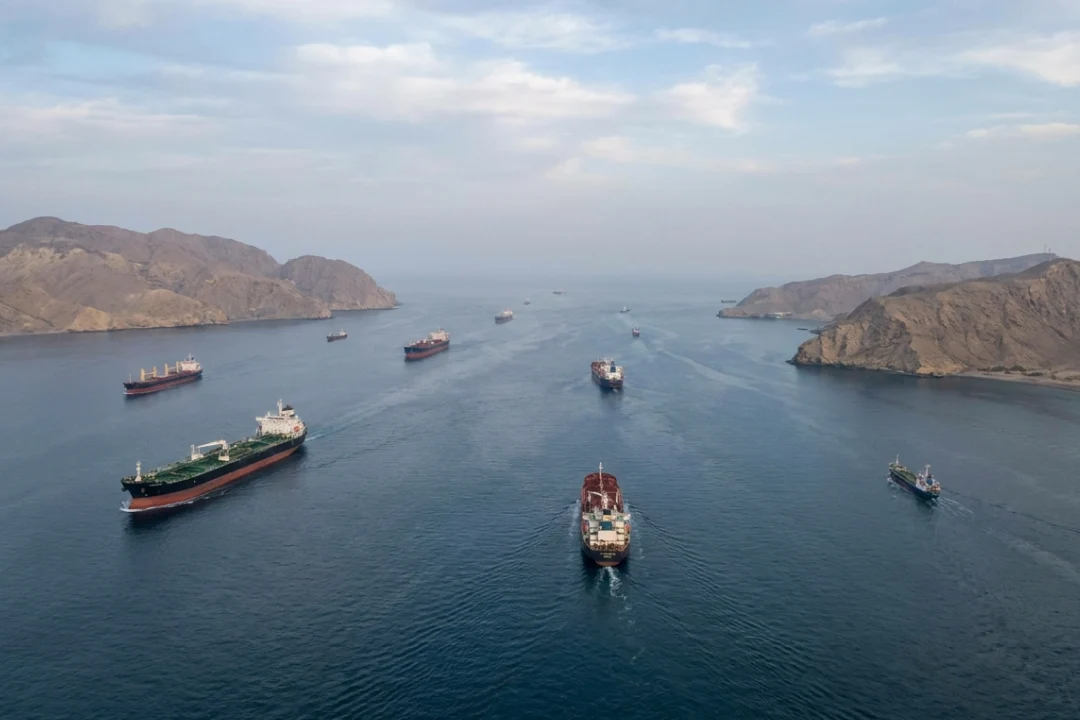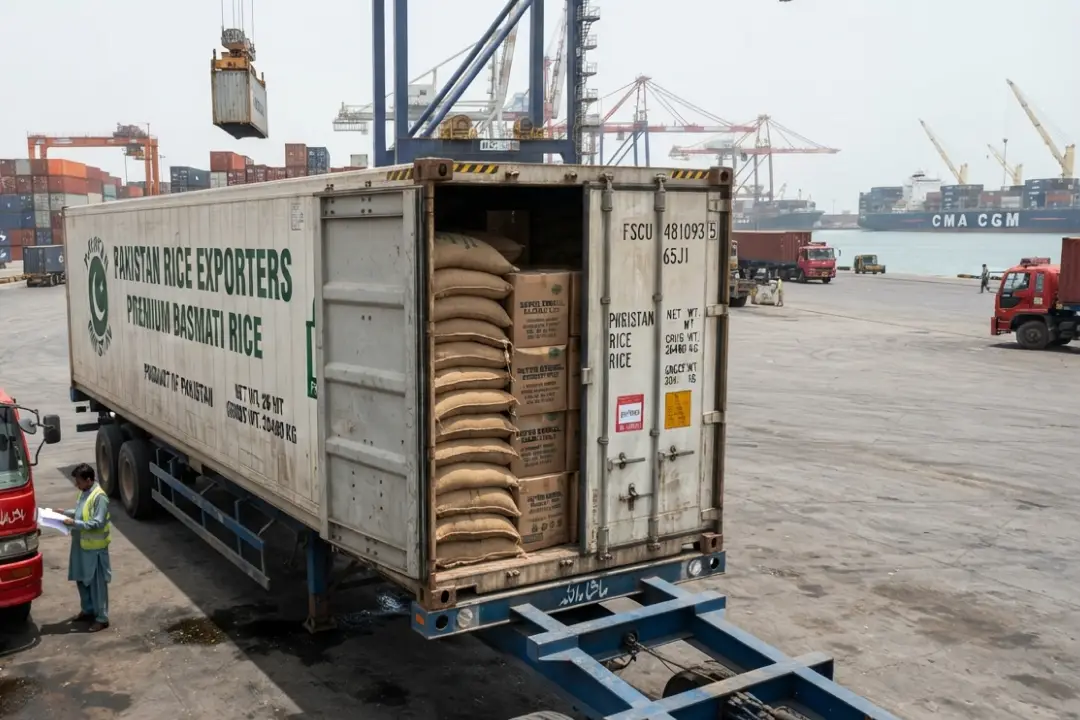
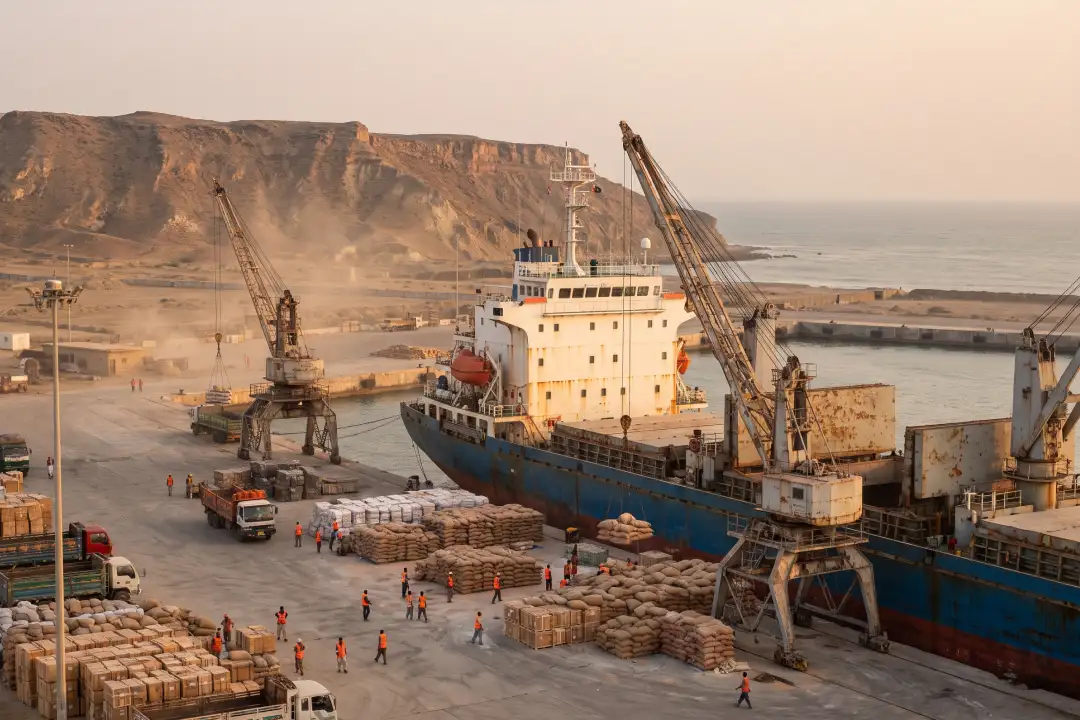
Gwadar Port has handled a series of commercial and transshipment cargo operations in 2026, but the amount of cargo moving through the port does not by itself show how much economic value is being retained locally.
The Gwadar Port Authority currently displays 10 berthed vessels representing 194,304 metric tonnes of cargo handled, with the listed berthings running from March 29 through July 1. The cargo includes steel billets, machinery and equipment, general transshipment cargo and fertilizer.
Commercial activity continued beyond those 10 listed berthings. On July 18, the Bangladesh-flagged M/V Jahan Brothers II arrived at Gwadar carrying 53,064.660 metric tonnes of prime steel billets, according to an official Balochistan government report. The cargo was destined for Al Hamriyah Port in the United Arab Emirates and was to be temporarily unloaded and stored at Gwadar before onward shipment.
The later operation is important because it shows that the GPA vessel table's 194,304-tonne figure should not be treated as Gwadar's complete cargo throughput for 2026. A complete updated cumulative total is not established by the current official vessel table.
What Gwadar's cargo figures actually show
The GPA vessel record shows multiple commercial cargo calls rather than a single isolated shipment. Its 10 listed berthings include different types and volumes of cargo handled between late March and July 1.
The 194,304-tonne figure is therefore best understood as the total currently displayed alongside those 10 vessels, not as a complete calendar-year total.
The July 18 arrival of M/V Jahan Brothers II provides additional evidence that cargo activity continued after the period covered by those listed berthings. It should be treated separately rather than simply added to the GPA figure and presented as an official cumulative total.
Much of the recent activity involves transshipment
Several vessel operations also show why cargo handled at Gwadar should not automatically be treated as goods entering Pakistan's domestic market.
A government statement on a May transshipment operation described 16,077 metric tonnes of cargo comprising 13,059 packages of Chinese-origin industrial equipment and pipes that had been destined for Kuwait.
In another operation, the Ministry of Maritime Affairs said MV Yuan Hang Wei Ye carried approximately 34,000 tonnes of cargo comprising around 20,000 pieces, with consignments destined for Abu Dhabi and Kuwait.
Later in May, the government said MV Bi Jia Shan brought approximately 53,277 metric tonnes of prime steel billets from China to Gwadar for transshipment after the shipment was originally scheduled for Sohar Port in Oman.
The July 18 steel shipment followed the same broad transshipment model. Its cargo was destined for the UAE and was to be unloaded and temporarily stored at Gwadar before being reloaded for onward shipment.
These operations create activity at the port, but they should not automatically be counted as Pakistani imports, locally produced exports or evidence that the value of the cargo itself is being retained in Gwadar.
Where Gwadar can capture local value
Transshipment can still generate economic activity around a port because cargo requires services before it continues its journey. These can include berthing, unloading, storage, stevedoring, transportation, vessel coordination and onward shipment.
Gwadar Port Authority has also identified local participation as part of its approach. The authority reported that its chairman said priority would be given to local people in port-related sectors including handling, stevedoring and transportation.
The port's free-zone information identifies activity across sectors including warehousing, fisheries processing, edible-oil processing, manufacturing, trade and logistics.
Gwadar also has cargo-handling and storage infrastructure that can support a wider range of maritime services. The port authority lists three multi-purpose berths as well as container and general-cargo equipment, storage yards, a transit shed and customs-clearance facilities.
These services and facilities show where a broader commercial ecosystem can develop. They do not establish that the recent increase in cargo has already produced a measurable rise in local employment, business revenue or value-added production.
Lower charges are being used to attract more traffic
The government has also adjusted charges as part of efforts to make Gwadar more competitive for transit and transshipment business.
In May, the Ministry of Maritime Affairs announced a 25% reduction in berthing fees for container vessels and ships carrying transit or transshipment cargo, a 40% reduction in charges on international transshipment container cargo and a 31% reduction for transit container cargo. The measures also included one month of free storage for general cargo.
The changes lower some of the costs associated with using Gwadar. The longer-term commercial test, however, is whether shipping traffic can be retained and whether port activity supports a wider network of services and businesses around Gwadar.
Cargo growth and a durable trade hub are not the same thing
The vessel activity documented during 2026 demonstrates Gwadar's ability to handle commercial and transshipment cargo operations. Establishing a durable trade hub requires a different test: whether shipping traffic continues and whether more of the economic activity surrounding that cargo is captured through local services, businesses and processing.
An analysis by the Pakistan Institute of Development Economics has argued that disruption-driven cargo alone is not enough to establish Gwadar as a sustained transshipment hub, pointing to commercial competitiveness and shipping connectivity among the issues affecting long-term viability.
That distinction matters because several of the cargo movements handled in 2026 involved goods being diverted to or routed through Gwadar before continuing to markets elsewhere.
More vessel calls can create demand for handling, storage and transportation, but evidence of a deeper local value chain would require measurable activity in areas such as local employment, procurement, logistics, processing and sustained business participation.
What the next stage would need to show
The available records establish increased commercial use of Gwadar Port during 2026, including cargo activity beyond the 10 vessels in GPA's currently displayed vessel table. They do not establish a complete current annual throughput figure or quantify how much of the activity is being retained in Gwadar's local economy.
Future evidence on sustained vessel traffic, local employment, business participation, processing activity and other port-related services would provide a clearer measure of whether greater port use is developing into a durable commercial ecosystem.
For now, Gwadar's cargo activity demonstrates greater commercial use of the port. Turning that activity into sustained local economic value remains the more important test.