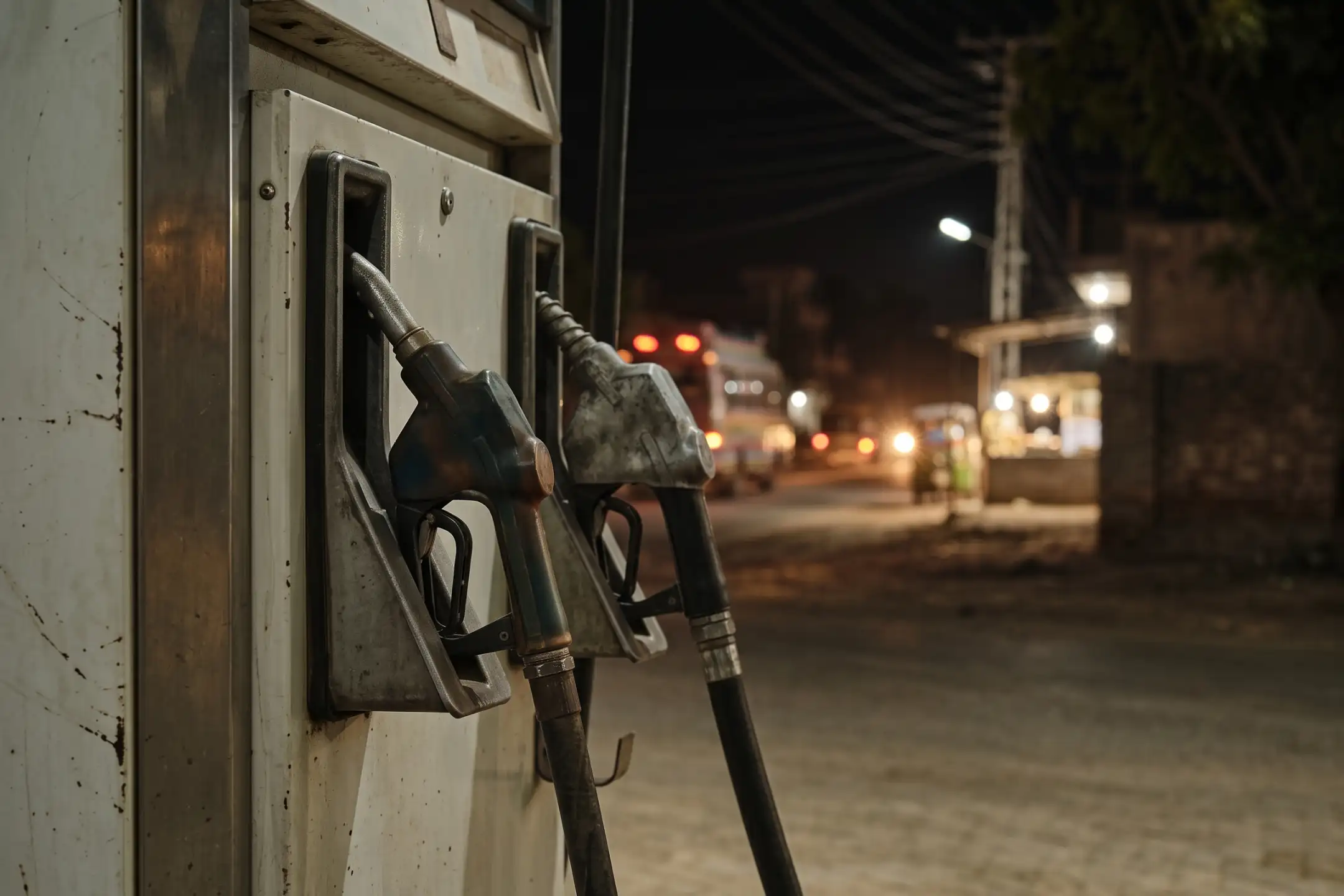
Petrol became Rs0.88 per litre more expensive in Pakistan's October 6 fuel price revision while high-speed diesel became Rs1.88 cheaper, even though the Petroleum Levy remained unchanged and the Inland Freight Equalisation Margin increased for both fuels.
The new petrol price is Rs393.64 per litre, up from Rs392.76, while high-speed diesel, or HSD, is Rs397.76 per litre, down from Rs399.64.
The contrasting movements show why changes at the pump cannot be explained by looking at a single tax or freight-related component. The latest price breakdown shows different movements in the underlying import or ex-refinery costs of petrol and diesel, while several other components remained unchanged.
Petroleum Levy remained unchanged
Pakistan's Petroleum Levy remained Rs80 per litre on both petrol and HSD in the October 6 revision, according to a detailed price breakdown reported by Business Recorder.
The Climate Support Levy also remained Rs5 per litre on both fuels. Dealer margin stayed at Rs9.98 per litre and the oil marketing company margin at Rs7.87 per litre.
This means the latest increase in petrol and decrease in diesel should not be described as the result of a change in the Petroleum Levy.
What changed for petrol
According to the October 6 price breakdown reported by Business Recorder, petrol's import or ex-refinery cost increased from Rs281.89 to Rs282.77 per litre, while its IFEM rose from Rs7.91 to Rs8.02 per litre.
An Origin Pakistan calculation based on those figures shows that the Rs0.11 increase in petrol IFEM was approximately 1.4%. The Rs0.88 increase in its import or ex-refinery cost was approximately 0.31%.
The reported component figures show that petrol's import or ex-refinery cost and IFEM both increased. The final retail price, however, reflects the complete notified price build-up rather than the movement of any single component.
What changed for high-speed diesel
The same breakdown shows HSD's import or ex-refinery cost declining from Rs292.04 to Rs290.16 per litre, while its IFEM increased from Rs4.19 to Rs4.75 per litre.
An Origin Pakistan calculation shows that the Rs0.56 IFEM increase was approximately 13.4%, while the import or ex-refinery cost declined by approximately 0.64%.
Despite the higher IFEM, the final HSD price fell by Rs1.88 per litre. That provides a useful illustration of why an increase in the freight equalisation component does not automatically mean the final pump price will increase.
What IFEM means in Pakistan's fuel prices
The Inland Freight Equalisation Margin is part of Pakistan's petroleum pricing framework. OGRA's petroleum pricing portal publishes notified petroleum prices and related pricing information, including IFEM notifications and price computations.
IFEM is used within the pricing system to equalise specified inland transportation costs. It is one component of the overall fuel price rather than a standalone measure of how much consumers will ultimately pay.
The October 6 figures make that distinction particularly clear. IFEM increased for both petrol and HSD, but petrol became more expensive while diesel became cheaper.
Petrol and diesel components moved differently
A comparison of the latest figures shows the different movements:
- Petrol final price: up Rs0.88 per litre to Rs393.64.
- HSD final price: down Rs1.88 per litre to Rs397.76.
- Petrol import or ex-refinery cost: up Rs0.88 per litre.
- HSD import or ex-refinery cost: down Rs1.88 per litre.
- Petrol IFEM: up Rs0.11 per litre.
- HSD IFEM: up Rs0.56 per litre.
- Petroleum Levy: unchanged at Rs80 per litre on both fuels.
- Climate Support Levy: unchanged at Rs5 per litre on both fuels.
The comparison also explains why describing the revision simply as a freight-driven or levy-driven price change would be misleading. Several components form the retail price, and those components did not all move in the same direction.
How Pakistan's fuel pricing mechanism is changing
The federal government has moved petroleum pricing toward a more frequent mechanism. The Press Information Department previously said the transition involved technical work on components including IFEM, while a later government explanation confirmed the use of a seven-day rolling-average pricing system.
That makes the underlying price components increasingly important when interpreting individual revisions. A change in the final petrol or diesel price does not, by itself, show whether taxes, freight equalisation or underlying fuel costs were responsible.
For the October 6 revision, the clearest conclusion from the available breakdown is narrower: the Petroleum Levy did not change, IFEM increased for both fuels, and the reported import or ex-refinery costs of petrol and HSD moved in opposite directions.