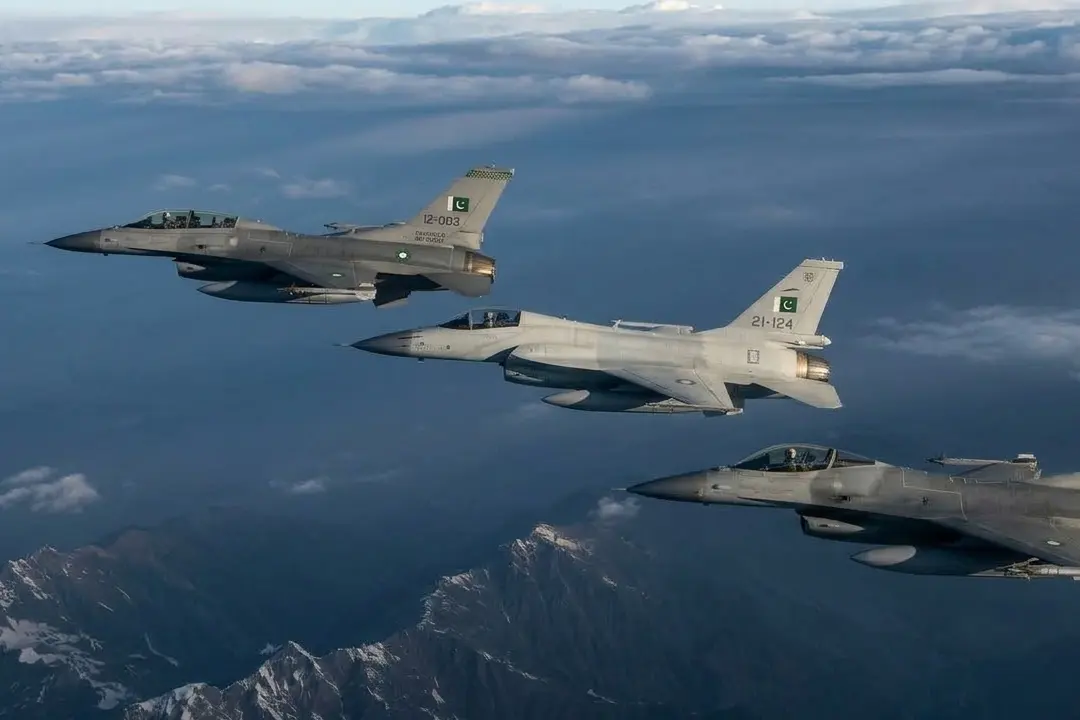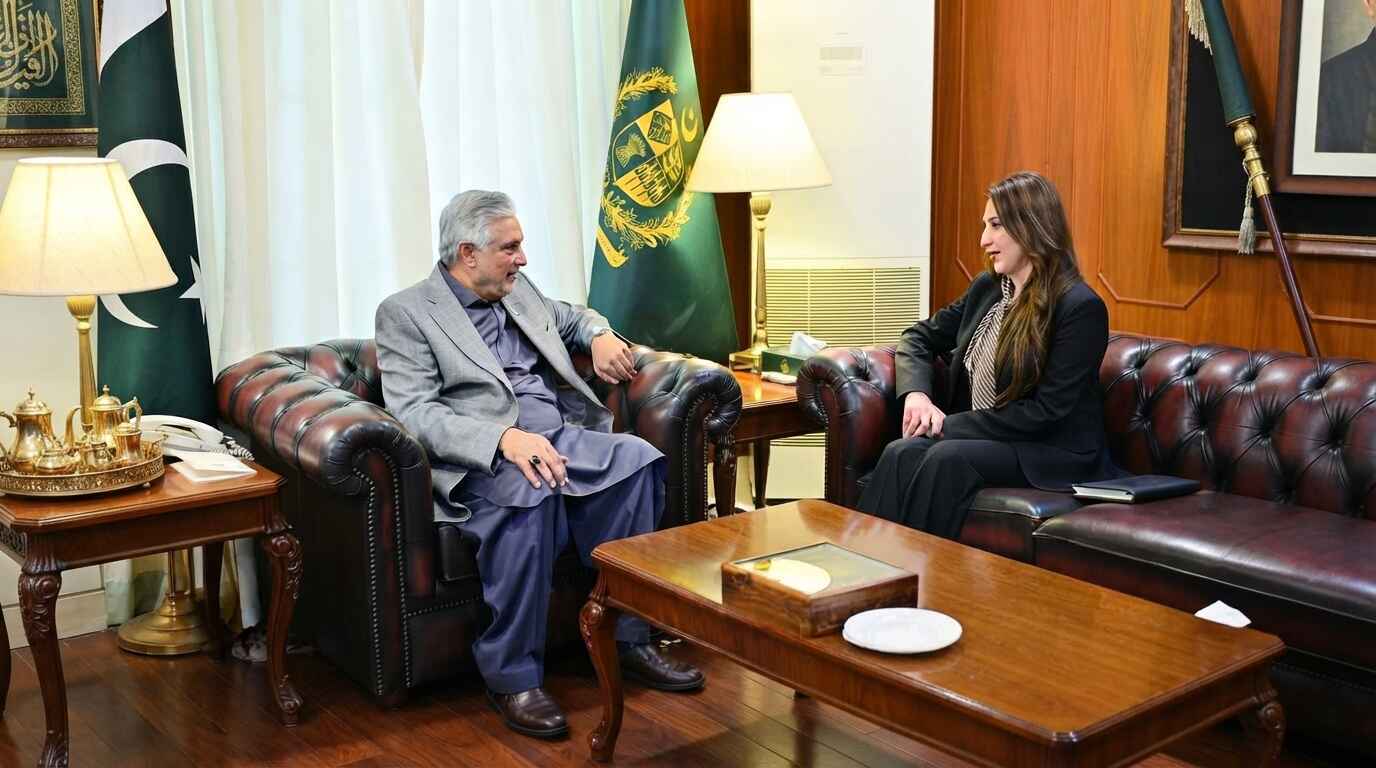
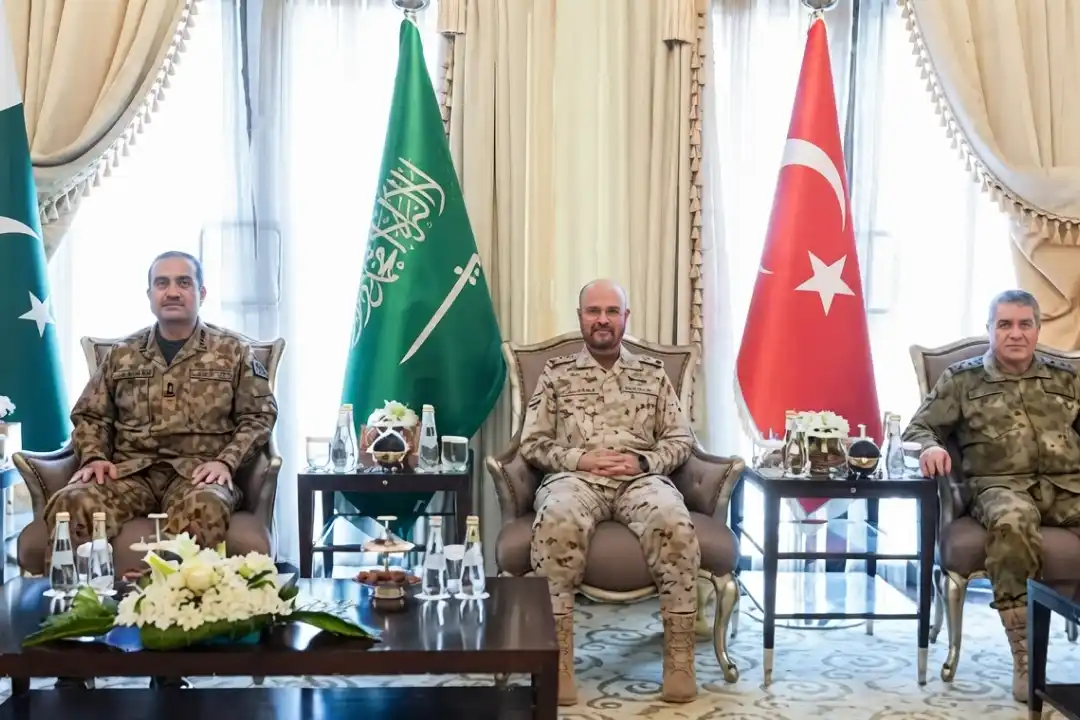
Pakistan's Chief of Defence Forces and Army Chief, Field Marshal Syed Asim Munir, met his Saudi and Turkish counterparts in Riyadh on Friday, September 25, 2026, as the three countries discussed deeper military cooperation under the Makkah Joint Defence Agreement signed in August. The meeting brought together Munir, Saudi Chief of General Staff General Fayyadh bin Hamed Al-Ruwaili and Turkish Chief of General Staff General Selçuk Bayraktaroğlu.
Official statements said the three military chiefs reviewed the security situation and threats facing Saudi Arabia and discussed ways to strengthen intelligence sharing, military coordination and capability integration. They also condemned attacks targeting the holy city of Makkah and Saudi civilian and economic infrastructure, while praising the Saudi armed forces for their response.
The participants said the Riyadh meeting reflected their intention to translate commitments under the defence agreement into practical military cooperation and strengthen collective deterrence and defence. The public statements, however, did not announce any troop deployment, combat operation or specific military response.
The pact behind the meeting
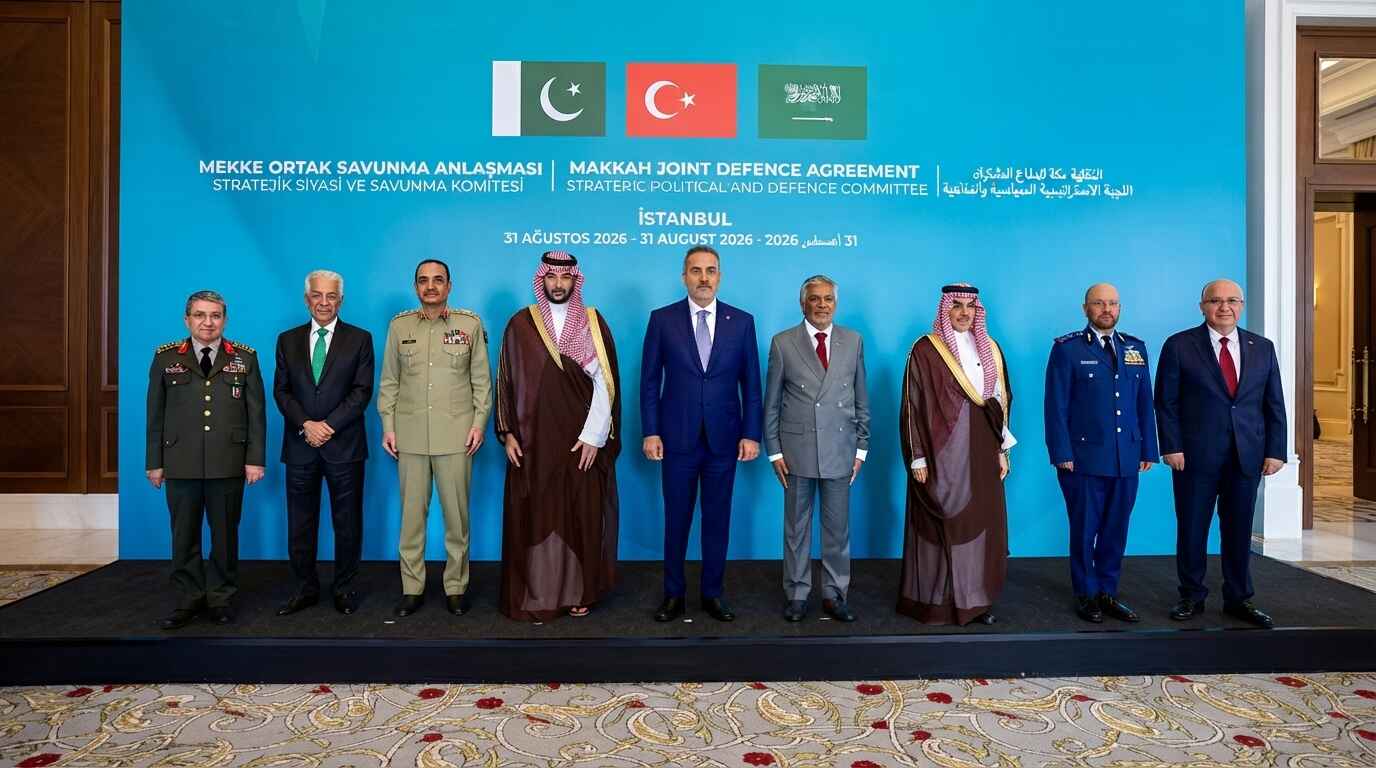
The talks were held under the Makkah Joint Defence Agreement, signed by Saudi Arabia, Türkiye and Pakistan on August 7, 2026, at Al-Safa Palace in Makkah. Saudi Crown Prince and Prime Minister Mohammed bin Salman, Turkish President Recep Tayyip Erdoğan and Pakistani Prime Minister Shehbaz Sharif signed the agreement during the Makkah Al-Mukarramah Summit for Joint Defence.
The agreement provides that an armed attack against any one of the three countries will be regarded as an attack against all three. It also calls for stronger defence cooperation and collective deterrence while presenting the arrangement as defensive in nature.
The trilateral agreement followed the Strategic Mutual Defence Agreement signed separately by Pakistan and Saudi Arabia in September 2025. The two arrangements are distinct, although both form part of the broader defence relationship involving Islamabad and Riyadh.
Why the meeting matters now
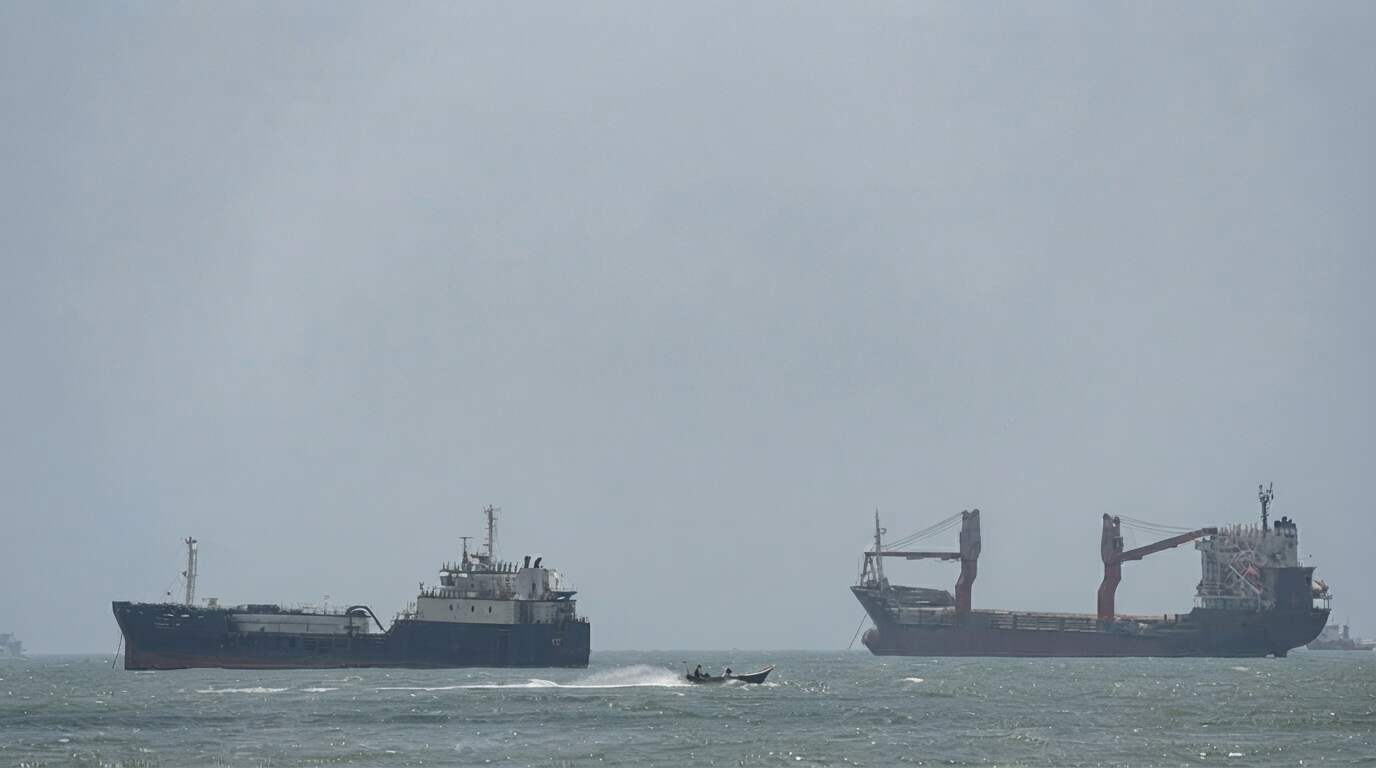
The Riyadh talks took place against a wider regional conflict that began after US and Israeli strikes on Iran on February 28, 2026. The fighting has disrupted regional security and energy routes, while Houthi forces in Yemen have stepped up attacks on Saudi cities and infrastructure.
Recent Houthi attacks have included strikes and attempted strikes against Saudi territory and energy facilities. Reuters reported attacks around Riyadh and a separate strike claimed against an Aramco oil facility in Yanbu, adding to concerns over the security of Saudi infrastructure and regional shipping routes.
The growing pressure on Saudi Arabia has also tested how the new trilateral agreement might work in practice. On September 10, Pakistan's Foreign Ministry said no military response under the Makkah agreement was being discussed at that time, although it said Pakistan would act under the agreement if circumstances required it.
What the commitment actually covers
Pakistani officials have consistently described the Makkah agreement as defensive and not directed against any particular country. Islamabad has said its purpose is to strengthen collective deterrence against external aggression while supporting sovereignty, territorial integrity and regional stability.
The three governments have also been working to build the agreement's institutional structure. Foreign and defence officials agreed in August to establish a General Secretariat in Saudi Arabia and develop committees and working groups to support implementation of the pact.
On September 25, the foreign ministers of Pakistan, Saudi Arabia and Türkiye separately reviewed progress on those institutional arrangements in New York and discussed plans for an urgent meeting of the military chiefs to examine ways of assisting Saudi Arabia under the agreement.
What Friday's meeting did and did not establish
The Riyadh meeting showed that the three countries are moving beyond political declarations toward closer military coordination. Intelligence sharing, coordination between armed forces and capability integration were all specifically identified as areas for deeper cooperation.
At the same time, the statements released after the meeting stopped short of announcing a combat mission or specifying what military assistance Pakistan or Türkiye would provide if attacks on Saudi Arabia continue. That distinction remains important because collective-defence commitments do not automatically reveal how each government will respond in a particular crisis.
For now, the clearest outcome is a commitment to accelerate military cooperation while the three governments continue building the institutional framework needed to implement the Makkah Joint Defence Agreement.