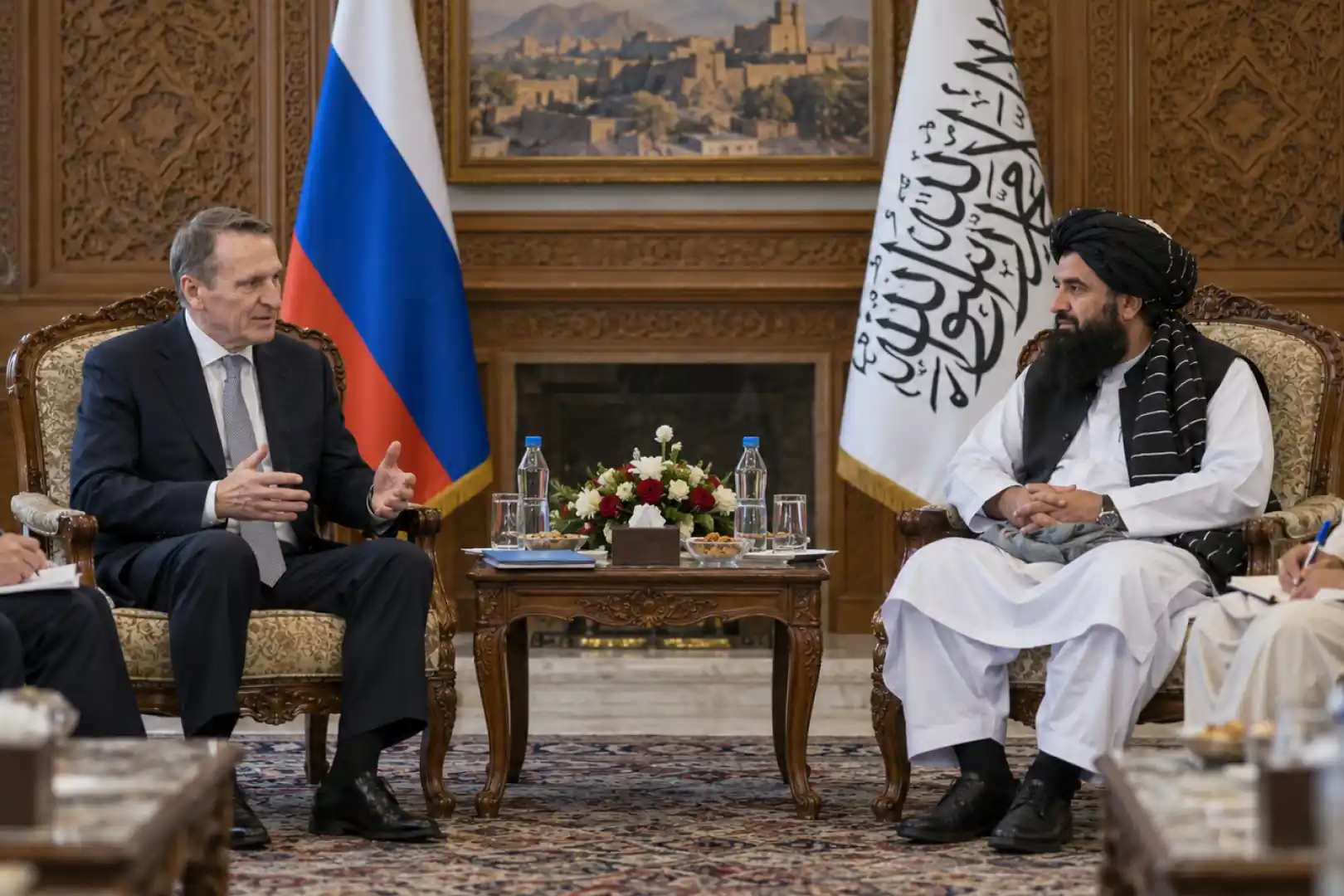
Russia's foreign intelligence chief Sergei Naryshkin visited Kabul and met Abdul Haq Wasiq, the head of the Taliban administration's intelligence agency, on Wednesday, October 14, according to Afghan media reports. The visit follows months of closer Russian-Taliban diplomatic and security contact. Russia formally recognised the Taliban government in July 2025.
According to Hasht-e Subh, the Taliban-run Bakhtar News Agency reported on October 14 that the two officials had discussed matters of mutual importance. Its brief account did not give a detailed agenda or announce an outcome. No separate, detailed statement from Russia's Foreign Intelligence Service or the Taliban intelligence directorate was independently verified for this article.
What is known about the Russian intelligence chief's meeting?
Naryshkin directs Russia's Foreign Intelligence Service, known as the SVR, which gathers information about developments outside Russia. Wasiq heads the intelligence service run by the Taliban administration in Afghanistan. Their meeting brought the two governments' senior intelligence officials into direct contact at a time when the countries are already holding talks on security and other issues.
TOOS News reported, citing an account attributed to the BBC, that a Kabul-based source said the sides had discussed closer ties, exchanging intelligence and working together on security. Origin Pakistan could not independently inspect the original BBC report. The account must therefore be treated as an attributed description, not an official announcement of a new agreement or joint operation.
There is no independently verified announcement that the October 14 meeting resulted in a new intelligence-sharing deal, military deployment or any agreement concerning a third country. Accounts of unspecified "important" discussions should not be treated as confirmation of those outcomes.
How did Russia's relationship with the Taliban develop?
The Taliban returned to power in Afghanistan in August 2021. In July 2025, Russia became the first country to formally recognise their government, after earlier removing the Taliban from its list of prohibited organisations. That gave Moscow and Kabul a more formal basis for direct government-to-government contacts, although the Taliban administration still faces international criticism over severe restrictions on women and girls.
On October 5, 2026, Moscow hosted regional talks on Afghanistan attended by Taliban Foreign Minister Amir Khan Muttaqi and representatives from countries including Pakistan, China, Iran and India. Russian Foreign Minister Sergei Lavrov welcomed the Afghan delegation, and the meeting covered regional security, trade and Afghanistan's relations with neighbouring countries. The Associated Press reported that Russia also expressed its willingness to help ease tensions between Pakistan and Afghanistan if both sides sought its assistance.
A day later, Muttaqi met Russian Security Council Secretary Sergei Shoigu in Moscow. According to the Taliban foreign ministry, the two discussed closer political, economic and security contacts, including regular consultations. KabulNow covered that separate October 6 meeting. Shoigu and Naryshkin hold different positions, and their meetings with Taliban officials should not be confused.
Why does Moscow want closer security contact with Kabul?
Russian officials have publicly described armed groups, drug trafficking and instability in and around Afghanistan as regional security concerns. Moscow is particularly attentive to security in Central Asia, where several countries have longstanding political and security relationships with Russia.
At the October 5 Moscow gathering, Lavrov praised what he described as the Taliban's efforts against extremist groups and drug trafficking. He also referred to ongoing military-technical cooperation between Russia and Afghanistan, according to The Associated Press. Afghanistan International reported that Russia's foreign ministry supported expanding cooperation with the Taliban administration. These statements came from the earlier Moscow talks; they do not establish what, if anything, Naryshkin and Wasiq agreed in Kabul.
Official interest in intelligence contacts should also not be confused with proof of a new Russian military base, a joint intelligence operation or unrestricted Russian support for all Taliban policies. No such outcome has been established by the reporting on this visit.
What does the visit mean in the context of Pakistan-Afghanistan tensions?
The visit took place against a tense regional backdrop. Pakistan has accused militants, particularly the Tehreek-e-Taliban Pakistan (TTP), of planning or launching attacks from Afghan territory. The Taliban authorities deny providing safe haven to fighters targeting Pakistan. An Associated Press report on October 12 documented the opposing positions amid border clashes and strikes.
Pakistan also took part in the October 5 Moscow talks. At that separate meeting, Russia's envoy for Afghanistan, Zamir Kabulov, said Moscow was willing to help ease tensions if both Pakistan and the Taliban administration requested assistance. No verified statement has linked Naryshkin's October 14 visit to that proposal.
Nothing publicly verified about the October 14 intelligence meeting shows that Naryshkin was sent to negotiate a Pakistan-Afghanistan ceasefire, convey a Pakistani request or organise an operation directed at Islamabad. Any such explanation would go beyond the available evidence.
What remains unclear after the Kabul visit?
Afghan reports identify the two intelligence chiefs and the date of their meeting, but the available accounts provide only limited detail about what they discussed. Neither a complete official agenda nor a verified document setting out any new agreement was obtained for this article. A subsequent statement from Russia's SVR or the Taliban authorities could clarify the outcome.
For now, the significance of the visit lies in its place within a documented series of Russian-Taliban diplomatic and security contacts. The exact result of the October 14 meeting remains unknown, and claims about secret arrangements or effects on Pakistan should not be presented as facts without new evidence.