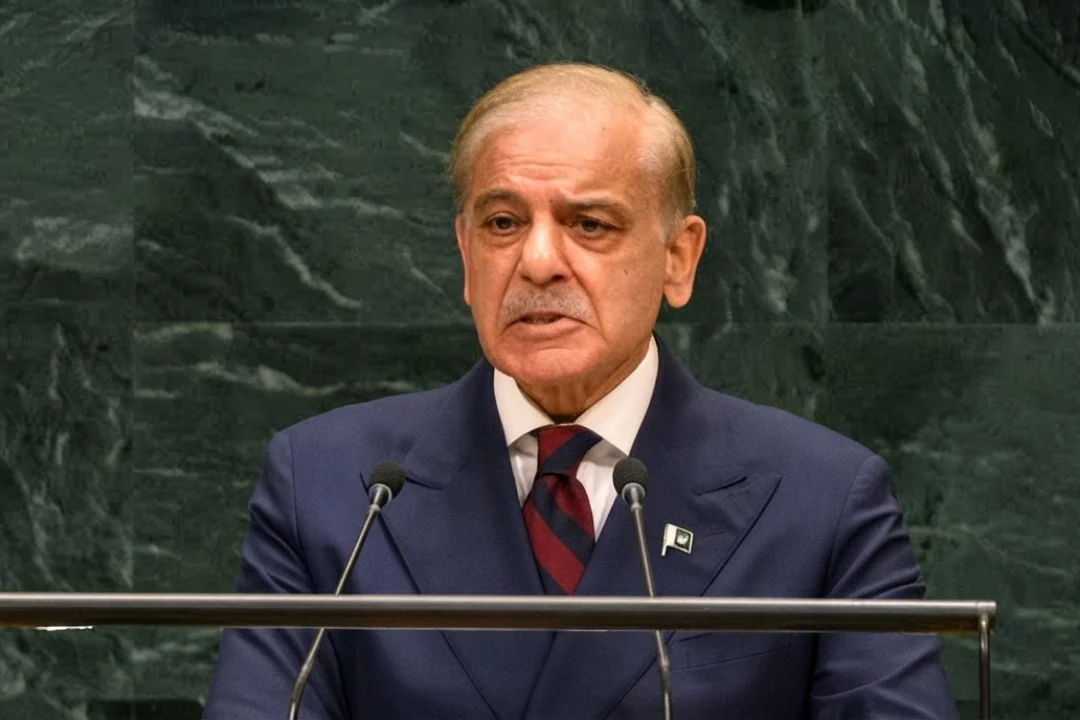
Prime Minister Shehbaz Sharif told the United Nations General Assembly on September 25, 2026, that any attempt by India to stop, impede or divert Pakistan's share of the Indus river waters would be treated as an "act of war." In the same address, he said any threat to the safety and sanctity of the Haramain Sharifain, the holy sites in Makkah and Madinah, was a "red line that must never be crossed." The remarks came during Pakistan's address to the General Debate of the 81st UN General Assembly in New York.
The water warning to India
Sharif described the shared waters of the Indus river system as vital to Pakistan and the wider region and challenged India's decision to hold the Indus Waters Treaty in abeyance, saying the move had no legal basis. He warned that Pakistan would regard an attempt to stop, impede or divert its share of the waters as an act of war.
The 1960 Indus Waters Treaty governs the use of the Indus river system by India and Pakistan. India placed the treaty in abeyance in April 2025 after the Pahalgam attack in Indian-administered Kashmir, in which 26 people were killed, citing what it described as cross-border links to the attack and wider concerns over terrorism. Pakistan denied involvement in the attack and rejected India's decision on the treaty.
The legal dispute has since moved through the treaty's arbitration process. On August 31, 2026, a Court of Arbitration constituted under the treaty concluded that the grounds cited for suspending or terminating the agreement did not justify doing so and found that the treaty remained in force. India rejected the award, saying it does not recognise the tribunal's jurisdiction and maintaining that its decision to hold the treaty in abeyance remains in force.
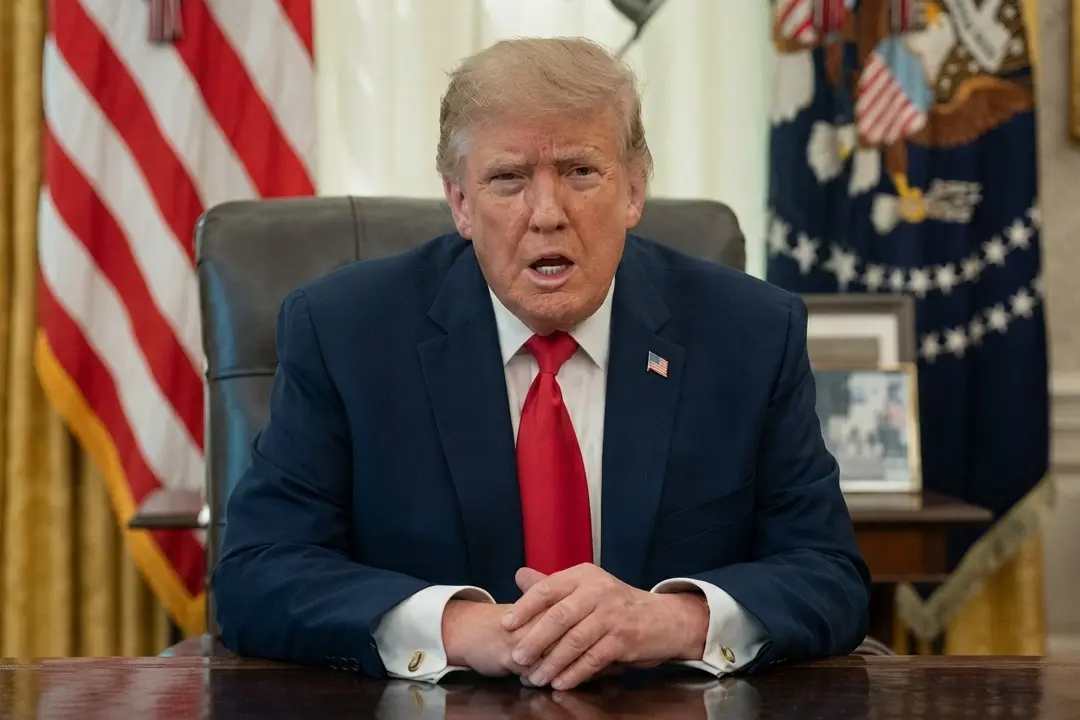
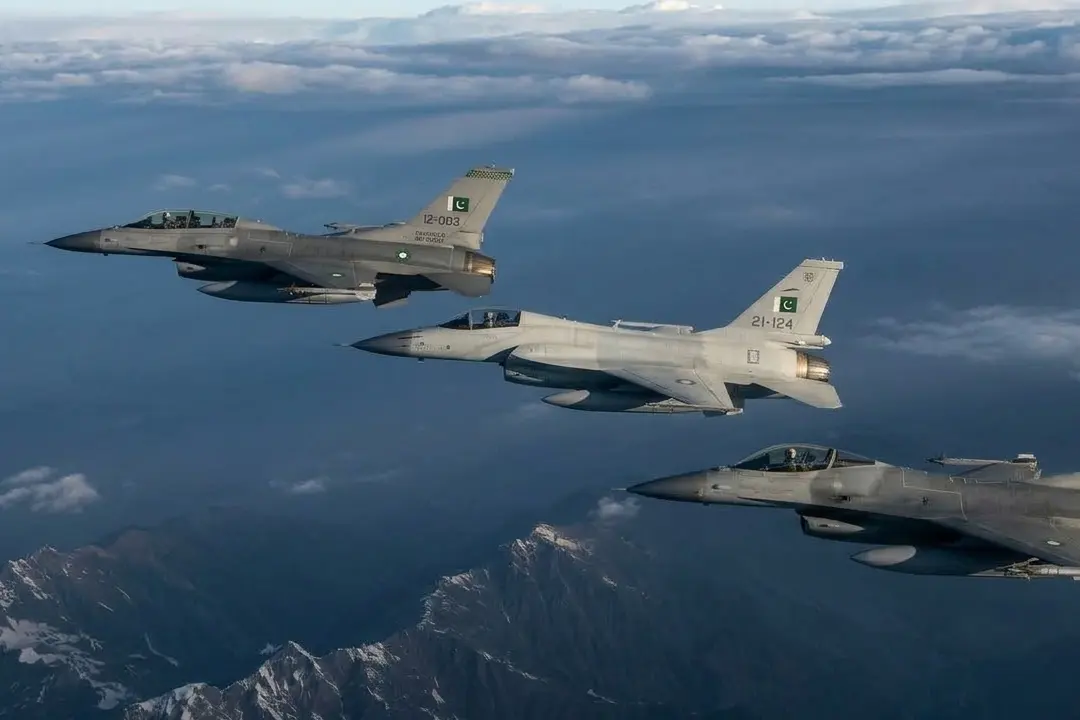
Sharif also returned to the Kashmir dispute and the four-day India-Pakistan military confrontation of May 2025. He praised Pakistan's armed forces and Field Marshal Asim Munir for their response and again credited US President Donald Trump's intervention with helping halt the escalation. India has disputed that account, maintaining that the cessation of military action was arranged directly between the two countries through established military channels rather than through US mediation.
Haramain declared a 'red line'
Turning to the Middle East, Sharif condemned recent Houthi attacks on Saudi Arabia and referred to an attempted drone strike toward Makkah. Saudi Arabia said its air defences intercepted and destroyed a drone before it entered restricted airspace around the holy city. The Houthis have denied targeting Makkah and rejected Saudi accusations that they intended to threaten Islamic holy sites.
Sharif said any threat to the safety and sanctity of the Haramain Sharifain was a red line and reaffirmed Pakistan's solidarity with Saudi Arabia. His wording covered both Makkah and Madinah rather than Makkah alone.
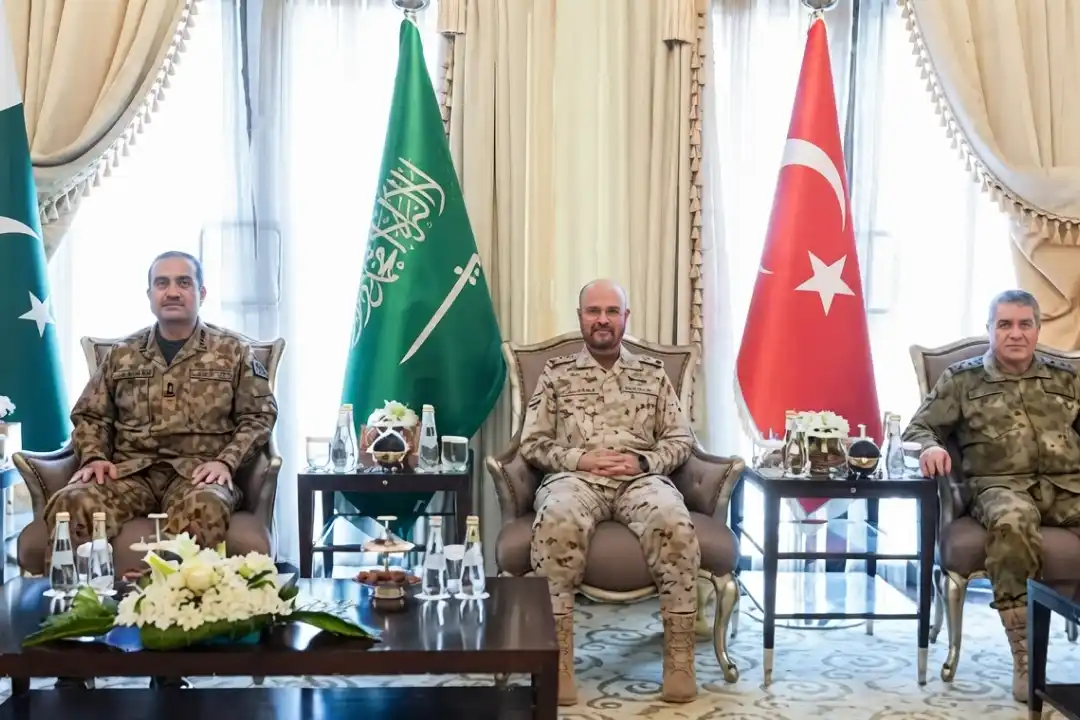
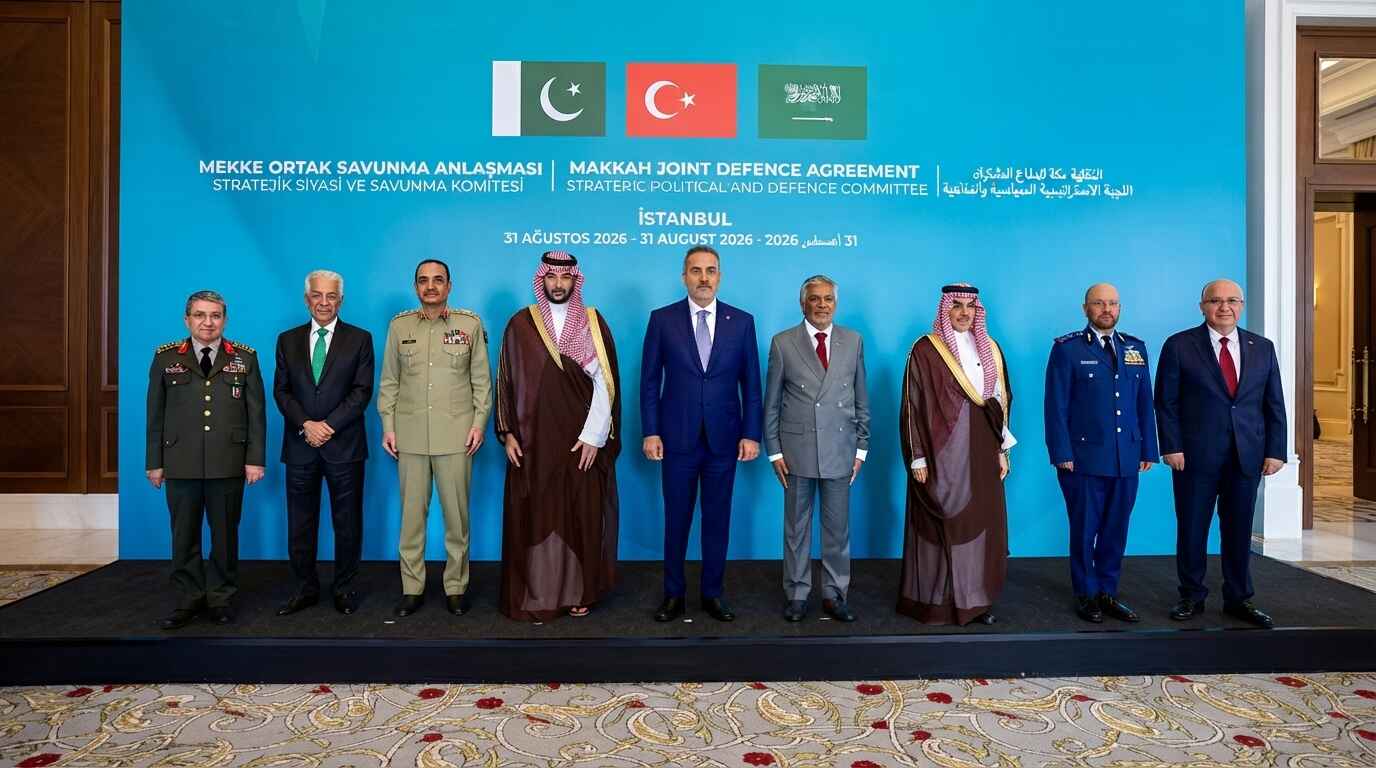
He also referred to the Makkah Joint Defence Agreement signed by Pakistan, Saudi Arabia and Türkiye on August 7, 2026. Sharif said the alliance was not directed against any country and described it as a collective commitment to regional defence, stability and peace.
The trilateral agreement provides that an armed attack against one of the three countries will be regarded as an attack against all three. It followed the Strategic Mutual Defence Agreement signed by Pakistan and Saudi Arabia in Riyadh on September 17, 2025, which had similarly expanded bilateral defence cooperation and joint deterrence.
Sharif did not present his warning to India over the Indus waters as an invocation of the Makkah agreement. The water dispute and the trilateral defence pact were addressed as separate issues during the speech.
Diplomacy on the US-Iran conflict
Sharif also highlighted Pakistan's diplomatic role in efforts to reduce tensions between the United States and Iran. He said Islamabad had helped bring representatives of Washington and Tehran together for talks that led to the Islamabad Memorandum of Understanding in June 2026.
The agreement followed Pakistani efforts to create space for negotiations during the conflict in the Gulf. Sharif credited Field Marshal Asim Munir and Deputy Prime Minister and Foreign Minister Ishaq Dar for their roles in those diplomatic efforts. Earlier during UNGA week, Sharif also met Iranian President Masoud Pezeshkian, with the two sides discussing implementation of the Islamabad understanding and further efforts toward regional de-escalation.
What changed from last year's UNGA speech
There was significant continuity between Sharif's 2025 and 2026 UNGA addresses. At the 80th session in September 2025, he had already warned over the Indus Waters Treaty, saying a violation of the agreement would represent an act of war. He also spoke extensively about the May 2025 confrontation with India, declared that Pakistan had "won the war" and said it now wanted to pursue peace through dialogue.
The 2025 address also devoted substantial attention to Gaza. Sharif accused Israel of carrying out what he described as a genocidal campaign against Palestinians and invoked the suffering of children in calling for a ceasefire and a Palestinian state.
The 2026 speech retained the water dispute, Kashmir and the May 2025 conflict as major themes, but placed them alongside a changed regional security environment. The newly signed Makkah Joint Defence Agreement, escalating Houthi-Saudi tensions and Pakistan's diplomatic role between Washington and Tehran gave the address a broader Middle East security dimension that was not present in the same form a year earlier.