
Pakistan has simplified property-document requirements for housing finance under the Prime Minister's Apna Ghar programme, with banks instructed to follow standardised rules for establishing property ownership and securing housing loans.
The Ministry of Housing and Works said on October 18 that mandatory property documents had been reduced to five on the directions of Prime Minister Shehbaz Sharif, following complaints about extensive paperwork faced by borrowers.
The announcement follows an October 9 circular from the State Bank of Pakistan (SBP) amending Prudential Regulation HF-7, which covers property-title documents and security arrangements for housing finance.
The change is intended to simplify documentation, but it does not mean every applicant needs only five documents for an entire housing-loan application. The property records required depend on the ownership category and type of property. Banks must still assess an applicant's eligibility, income, repayment capacity and other applicable requirements.
Which five property documents may be required?
The revised documentation framework includes separate lists for different kinds of property. For an open plot under an urban development authority or urban housing society, the published Annexure B lists the following five title and mortgage-related documents:
- Allotment or transfer letter: The record showing the original allotment of the plot or its subsequent transfer to the present owner.
- Possession certificate or letter: Confirmation from the relevant authority or society that possession of the plot has been granted.
- Site plan: A document identifying the plot's location and surrounding area.
- Permission to Mortgage (PTM): Permission from the relevant authority or society allowing the property to be used as security for financing.
- Lien-marking letter: A document showing the lender's interest recorded against the property, where required by the applicable process.
This five-item list is an example for a particular category of open plot. It is not a universal checklist for houses, apartments, rural properties or every plot in Pakistan.
In the Housing Ministry's October 18 announcement, officials also referred to transfer and possession records, site plans, mortgage permission and mortgage registration documents as part of the simplified requirements.
Mortgage registration and lien marking should not be treated as identical procedures. The method of securing a housing loan depends on the applicable property and lending rules.
Are the requirements different for DHA plots and completed houses?
Yes. The revised Annexure B distinguishes between open plots intended for construction, houses under construction and completed housing units. It also sets out requirements for different systems of property ownership and registration.
These categories include urban development authority properties, urban housing societies, private housing schemes, Defence Housing Authority (DHA) properties, revenue and freehold land, cantonment properties, rural revenue land, government housing schemes and Evacuee Trust properties.
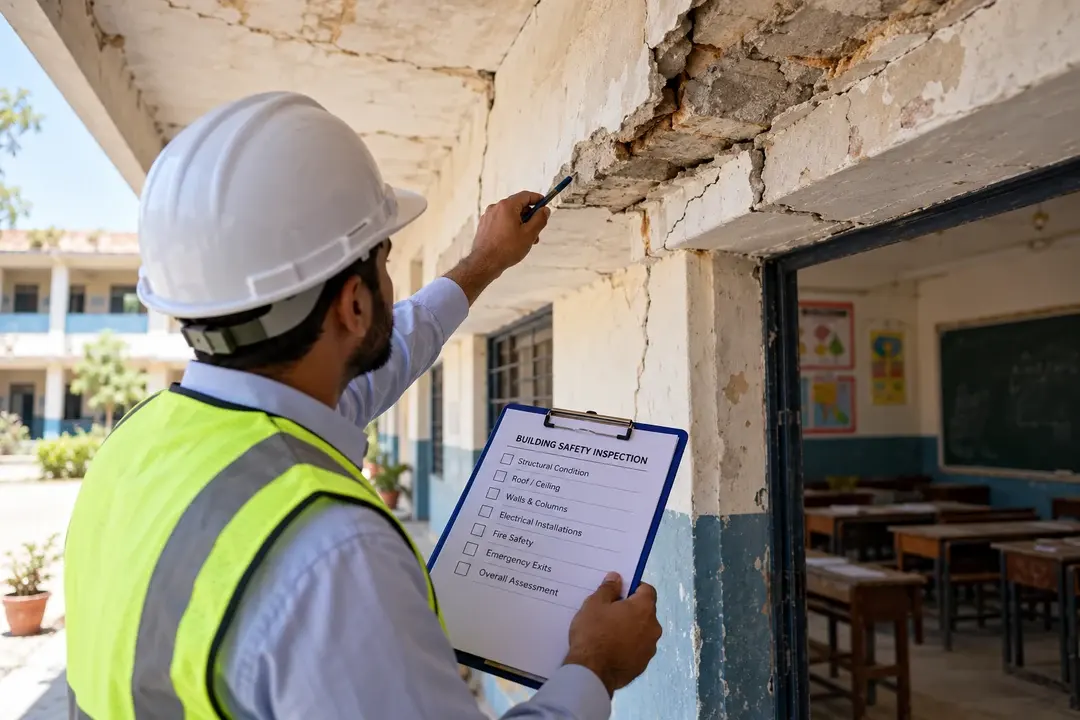
For example, an under-construction or completed house may need an approved building plan, while a completion certificate may be required for a finished property where applicable. Some revenue-record properties require a registered title deed, current ownership record, land map or other prescribed records.
Applicants should therefore obtain the checklist for their exact property category from their bank rather than rely on a general five-document list circulated online.
An October 19 report by Dawn also highlighted a provision concerning Green Property Certificates issued by the Punjab government or equivalent certificates from competent authorities in other provinces.
Where an accepted certificate comprehensively verifies title, ownership and possession, the revised framework says additional ancestral ownership-history documents are not required. This does not remove other applicable bank checks or loan conditions.
What does the State Bank's new circular require?
SBP's SH&SFD Circular No. 06 of 2026 amends the general housing-finance documentation framework. It requires banks and development finance institutions to obtain only the title and ownership-related property documents listed in Annexure B for securing a housing loan.
Although the government's announcement focuses on Apna Ghar, the circular itself revises a broader housing-finance regulation applicable to the institutions it addresses.
The circular also requires lenders to give borrowers a signed acknowledgement listing the property documents received. This provides a written record of the documents handed over to the bank.
Property financed through a housing loan must be secured through the applicable mortgage arrangement. The circular allows banks and development finance institutions to use a lien recorded with the relevant land-record authority for housing financing of up to Rs 5 million.
That lien option is permitted under the regulation; it does not mean every qualifying borrower must be offered the same security arrangement.
The Rs 5 million threshold applies to this particular security option and should not be confused with the Apna Ghar programme's maximum financing limit of Rs 10 million.
The central bank also states that its other applicable instructions remain unchanged. Banks may therefore continue to require information needed for identity verification, income assessment, credit evaluation and other lawful aspects of the application.
Does the 15-working-day rule guarantee loan approval?
No. A separate SBP circular issued on April 28, 2026 instructed banks and the House Building Finance Company (HBFC) not to take more than 15 working days for the credit-approval process under the Apna Ghar scheme, counting from receipt of the application with complete information.
The deadline applies to processing a complete application. It does not require banks to approve every borrower or guarantee that approved financing will be disbursed within 15 working days.
Property verification, execution of mortgage arrangements and the lender's disbursement conditions can still affect when money is released.
The April instructions also require a borrower's total monthly repayment obligations, including the proposed housing loan and other consumer financing, to remain within the prescribed debt-burden limit of 65% of net disposable income.
Who can apply for Apna Ghar, and how much is available?
The federal Wazir-e-Azam Apna Ghar Programme, also called Ghar Ho Tu Apna, is intended for eligible first-time homeowners. Its published conditions generally require applicants to hold a valid CNIC and meet the programme's property-ownership and other eligibility requirements.
According to the official programme terms, key financing features include:
- Maximum housing financing of Rs 10 million.
- Repayment tenure of up to 20 years.
- Concessional markup of 5% for the first 10 years, followed by market-linked rates for the remaining period.
- Financing of up to 90% of the eligible property value, with a 10% borrower contribution.
- Eligible house purchase or construction of up to 10 marla, and apartments of up to 1,500 square feet.
- Financing for an eligible plot purchase combined with house construction.
The official terms state that no processing fee or prepayment penalty applies under the programme. Applicants should nevertheless confirm any other applicable property, valuation, legal or financing costs with their participating institution.
The scheme is separate from the Punjab government's Apni Chhat Apna Ghar programme, which operates under different arrangements.
How many housing loans have been approved?
At a meeting chaired by Prime Minister Shehbaz Sharif on October 14, officials reported that 75,198 Apna Ghar loans worth Rs 448 billion had been approved.
The Ministry of Information and Broadcasting reported on October 15 that Rs 76 billion had been disbursed to 14,000 recipients. The government also outlined a financing target of Rs 700 billion for 125,000 housing units during the current year.
These are government-reported figures. Approval is not the same as disbursement: the larger amount represents financing approved, while the smaller amount refers to funds reported as released to borrowers.
How can borrowers apply under the simplified rules?
Prospective applicants can visit the official Apna Ghar website or approach a participating commercial bank, Islamic bank, microfinance institution or HBFC branch.
Before submitting property documents, applicants should ask the lender which Annexure B category applies to their plot, house or apartment. They should also confirm whether mortgage permission, lien marking, registration or other prescribed property records are needed.
Borrowers should retain the signed acknowledgement for the property papers received by the bank and ask when their application will be regarded as complete for the 15-working-day credit-approval process.
The simplified framework may reduce unnecessary property paperwork, but final housing finance remains subject to the applicant's eligibility, property verification and the lending institution's assessment.