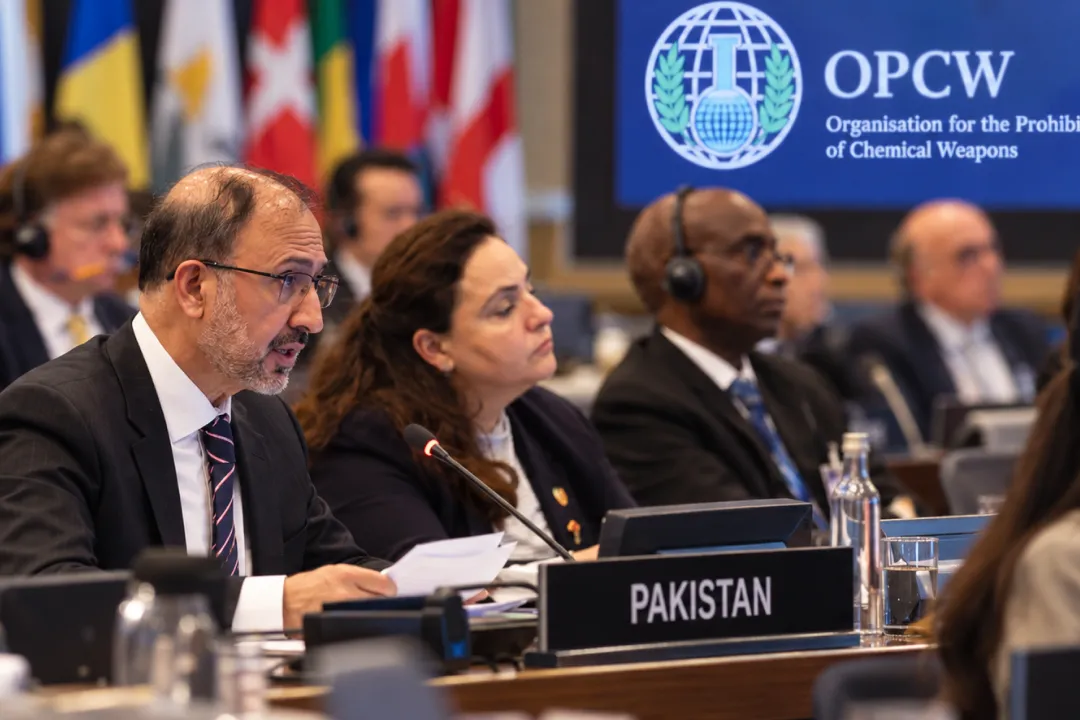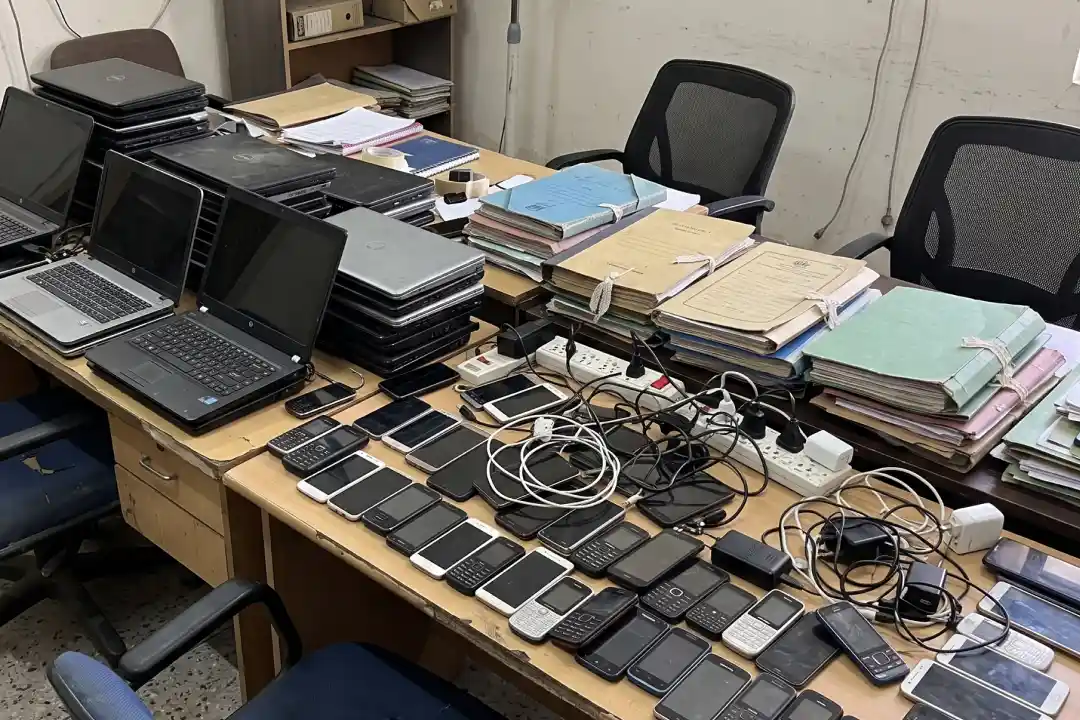

Pakistan is considering whether new criminal laws are needed to address offences involving artificial intelligence (AI), after FBI alerts prompted separate investigations by the National Cyber Crime Investigation Agency (NCCIA) into two teenagers' conversations with an AI chatbot.
Federal Law Minister Azam Nazeer Tarar confirmed the government's consideration of AI-specific legal provisions in an interview with Arab News published on October 15, 2026. He said existing cybercrime and general criminal laws already cover some offences but could require changes as AI technology develops.
The discussions follow investigations in Bahawalpur and Karachi involving two 17-year-olds whose interactions with Anthropic's Claude chatbot reportedly raised safety concerns. According to accounts provided by Pakistani investigators, information reached the FBI before being passed to local authorities.
Neither the minister's interview nor the available official records establish that a new AI-specific criminal bill has been finalized, introduced in parliament or enacted.
What happened in the two NCCIA investigations?
In Bahawalpur, NCCIA arrested a 17-year-old student in September over allegations that he had attempted to poison his father. Investigators said the teenager had used Claude to research harmful substances and that a warning originating from the FBI helped them identify the case.
According to an October 2 Arab News report based on an FIR, the information reached NCCIA through Pakistan's Foreign Office. The agency registered the FIR on September 23 and later reported recovering a mobile phone and chemicals during its investigation.
The FIR alleges that the teenager had attempted to harm his father. Investigators also described chatbot records they considered relevant to the alleged conduct. The student denied the allegations during questioning, according to the report.
Geo/The News reported on September 29 that the teenager had been granted bail after his father forgave him. That reported development does not establish a final criminal conviction or resolve every question about the proceedings.
A separate investigation in Karachi involved another 17-year-old whose chatbot conversations reportedly concerned a violent scenario involving someone who had insulted his father.
The teenager told investigators that he was writing a fictional crime story rather than planning an actual attack. ARY News reported on September 29 that he was questioned and subsequently released.
However, Arab News quoted an NCCIA official on October 2 as saying that the inquiry remained ongoing and no FIR had been registered at that stage. The reports therefore do not establish a final judicial outcome in the Karachi matter.
The cases differ significantly. The Bahawalpur investigation involved allegations supported by what investigators described as additional physical and digital evidence, while the Karachi teenager maintained that his questions were fictional. Neither an AI safety alert nor an investigator's allegation is, by itself, a criminal conviction.
Does Pakistan already have laws covering AI-assisted crime?
Pakistan's existing criminal framework includes the Prevention of Electronic Crimes Act, 2016 (PECA), and the Pakistan Penal Code.
The Bahawalpur FIR cited Section 15 of PECA, concerning information systems, data or devices intended for use in electronic offences, and Section 324 of the Pakistan Penal Code, which addresses attempted intentional killing.
These provisions apply according to their legal requirements and the evidence in a particular case. Using an AI chatbot does not automatically establish a separate crime, nor does a conversation alone necessarily prove criminal intent.
Pakistan has previously considered broader AI regulation. Senator Dr. Afnan Ullah Khan introduced the Regulation of Artificial Intelligence Bill, 2024, but the Senate's official record shows that the proposal was disposed of after the committee neither passed nor rejected it. The bill did not become law through that process.
In July 2025, Pakistan approved the National Artificial Intelligence Policy 2025. The policy addresses issues including AI adoption, skills, innovation, security and responsible use. It is distinct from the criminal legislation now being considered.
Can private AI conversations reach the FBI or NCCIA?
The investigations raise questions about whether conversations that users consider private can be disclosed to law-enforcement agencies when a platform identifies a possible safety threat.
According to NCCIA officials quoted in the published investigations, concerning activity on Claude was flagged and information was passed to the FBI, which subsequently alerted Pakistani authorities.
Those accounts describe the reported referral process but do not independently establish every step of Anthropic's internal safety system, precisely which information was disclosed or the legal basis used in each case.
In its published policy on government requests for user information, Anthropic states that it generally requires valid legal process before disclosing user information in response to government requests.
The company also describes an exception for emergencies in which disclosure could help prevent imminent physical harm or death. Its public policy does not confirm which, if any, of these procedures applied in the two Pakistani investigations.
The available reporting does not establish that the FBI or NCCIA has unrestricted access to all users' Claude conversations or can continuously monitor every chatbot account.
A reported safety warning may prompt an investigation, but understanding the context of a conversation and examining supporting evidence are essential when assessing whether someone intended to commit a crime.
Is asking an AI chatbot about a crime itself illegal?
There is an important difference between discussing criminal conduct and taking steps that satisfy the legal elements of an offence.
A novelist developing a crime story, a student researching a legal issue and someone genuinely preparing to harm another person may ask superficially similar questions. Their intentions and actions can be very different.
Investigators examining possible criminal conduct may need to consider the wider context, including any threats, relevant actions, physical evidence and other records. The evidentiary requirements depend on the offence under investigation.
An automated safety warning is not a judicial determination of guilt. It may indicate a concern that requires assessment, but it does not establish by itself that a crime has occurred.
Legal experts disagree on the need for new AI offences
Usama Khilji, director of the digital-rights organization Bolo Bhi, told Arab News that existing laws already address offences such as conspiracy and attempted murder. He argued that using AI to obtain information does not necessarily justify creating separate criminal offences.
Khilji also called for AI companies to strengthen safeguards against misuse and said Pakistani investigators could pursue cooperation with foreign technology companies.
Minahil Ali, a High Court advocate specializing in AI and legal technology, raised concerns about gaps in the legal system's ability to address increasingly complex AI-assisted activity.
She called for clearer procedures for establishing criminal intent, stronger digital-forensics capabilities within NCCIA and updated evidence rules. She also supported structured cross-border arrangements for obtaining relevant information from foreign AI providers.
Ali emphasized that chatbot histories should be supported by evidence of real-world conduct rather than relying solely on isolated prompts or automated safety warnings that may produce false positives.
Both perspectives address the same challenge: how to respond to credible threats while distinguishing genuine criminal preparation from legitimate creative, academic or hypothetical discussions.
What happens next in Pakistan's AI law debate?
Tarar's October 15 remarks establish that the government is considering more specific AI-related criminal provisions. They do not provide the wording of a proposed bill, a list of offences, new penalties or a timeline for parliamentary consideration.
A formal legislative proposal would clarify whether the government intends to create new offences, amend existing laws or strengthen investigation and evidence procedures.
Until those details emerge, the NCCIA cases leave Pakistan facing a broader legal question: how should authorities investigate potentially dangerous AI conversations without treating unverified alerts as proof of guilt or overlooking the privacy and legal rights of users?