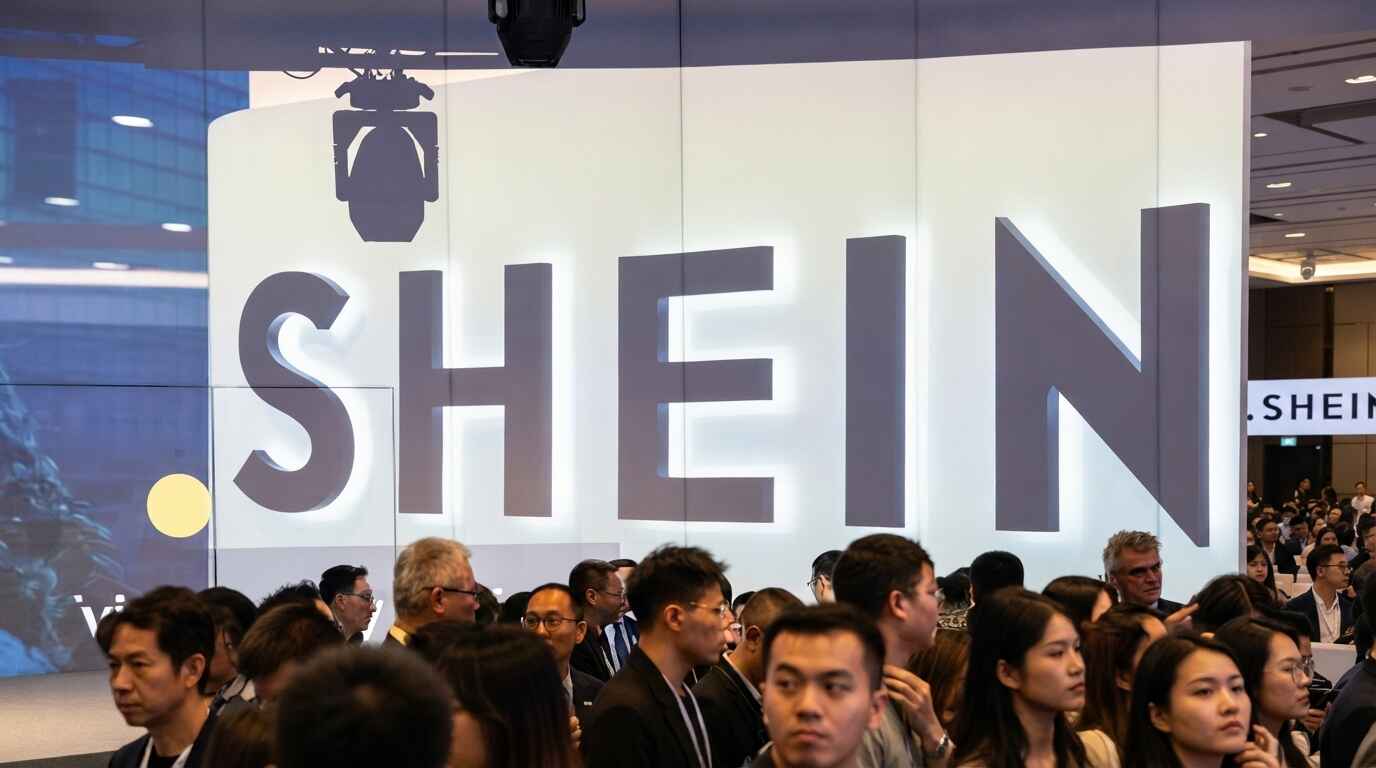
Shein made its long-awaited stock market debut in Hong Kong on Tuesday, and it was a rocky one. Shares in the fast-fashion retailer fell as much as 10% after opening, extending the weak sentiment that had already dragged the stock down in gray-market trading the day before.
The company's shares opened at their IPO price of HK$48.56 before slipping through the session, touching HK$43.80 at one point, a decline of about 10%, while the wider Hang Seng Index was down roughly 0.7%. Other tallies of the debut put the intraday drop closer to 7-8%, depending on when it was measured during the trading day.
A steep valuation cut from Shein's 2022 peak
Shein sold 280 million shares at HK$48.56 each, raising HK$13.6 billion, or roughly $1.7 billion, according to an exchange filing. The offering valued the company at just over $26 billion.
That marks a steep comedown from the private-market valuation Shein once commanded. The company had been valued at nearly $100 billion at its 2022 peak and around $64 billion in its 2023 Series D+ funding round. Its IPO valuation of about $26.5 billion is nearly a quarter of that earlier peak.
The shares sold in the IPO represent about 6.6% of Shein's enlarged share capital. Cornerstone investors took roughly one-fifth of the offering and are locked up for six months, leaving only about 5% of the stock freely tradeable. The retail portion of the IPO was subscribed 5.63 times, while the international tranche was subscribed 2.59 times — solid demand, but well short of the blowout subscription levels some Hong Kong IPOs have drawn from the city's retail investors.
Slowing growth and a swing to losses
Shein reported net revenue of $41.8 billion in 2025, up from $38.7 billion the year before, but the pace of growth has cooled sharply. Revenue growth fell to 8% in 2025 from 20.7% the previous year, and slowed further to just 1.1% in the first quarter of 2026.
Shein posted a $99 million net loss in that first quarter, reversing a $395 million profit from the same period a year earlier. The reversal followed the United States' decision to eliminate a duty exemption on small packages from China, and U.S. revenue fell 14.3% in the quarter compared with a year earlier. The European Union has since followed the U.S. in imposing fees on low-value packages.
Shein has said it expects its first-half operating margin to come in slightly lower than in the first quarter, hurt by higher customs duties, tariffs, fees and logistics costs in Europe and the Middle East.
Why the IPO happened now
Shein's Hong Kong listing follows earlier, unsuccessful attempts to go public in New York and London. The company, founded in China, moved its headquarters to Singapore in 2022. It first sought a confidential U.S. listing before turning to London, where Chinese regulators withheld approval over risk disclosures tied to Shein's China supply chain, effectively blocking that route. Beijing approved the Hong Kong offering on July 10.
The listing has also served to settle Shein's capital structure, with the company agreeing to cash payments and share adjustments for some early investors who bought in at much higher valuations. Shein has said it plans to use 40% of the IPO proceeds to build up its technology capabilities and another 40% to boost brand awareness and expand globally, with the remainder going toward corporate responsibility initiatives and general corporate purposes.
Governance and competition concerns
Shein arrives on the exchange with a governance structure that keeps control firmly with its founders. The four co-founders are set to retain about 90% of voting rights, while publicly offered shares carry far fewer voting rights, according to the IPO prospectus.
The company also faces growing competition from rivals Temu and AliExpress, at a time when investors in China's equity markets have increasingly favoured technology, AI and robotics listings over consumer names.
At the opening ceremony, Shein chief financial officer Leigh Gui struck an upbeat tone.
As a new company listed in Hong Kong, we will continue to innovate, optimise, and cooperate with our supply chain partners for mutual benefit and win-win results.
Founder and chief executive Sky Xu attended the ceremony but did not speak publicly.