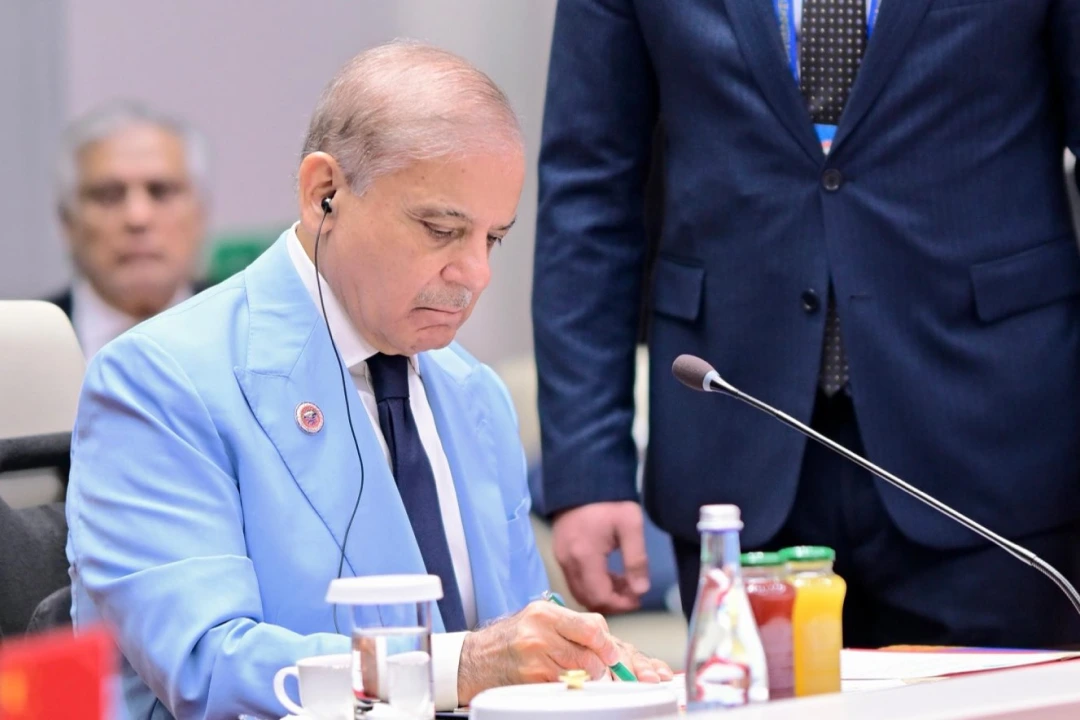
ISLAMABAD: President Asif Ali Zardari approved emergency measures and governor's rule in Khyber Pakhtunkhwa (KP) on Sunday, October 11, 2026, following advice from Prime Minister Shehbaz Sharif and recommendations from the federal cabinet.
The government invoked Articles 232 and 234 of Pakistan's Constitution, citing deteriorating security conditions and what it described as a breakdown in cooperation with the Pakistan Tehreek-e-Insaf (PTI)-led provincial administration over counterterrorism.
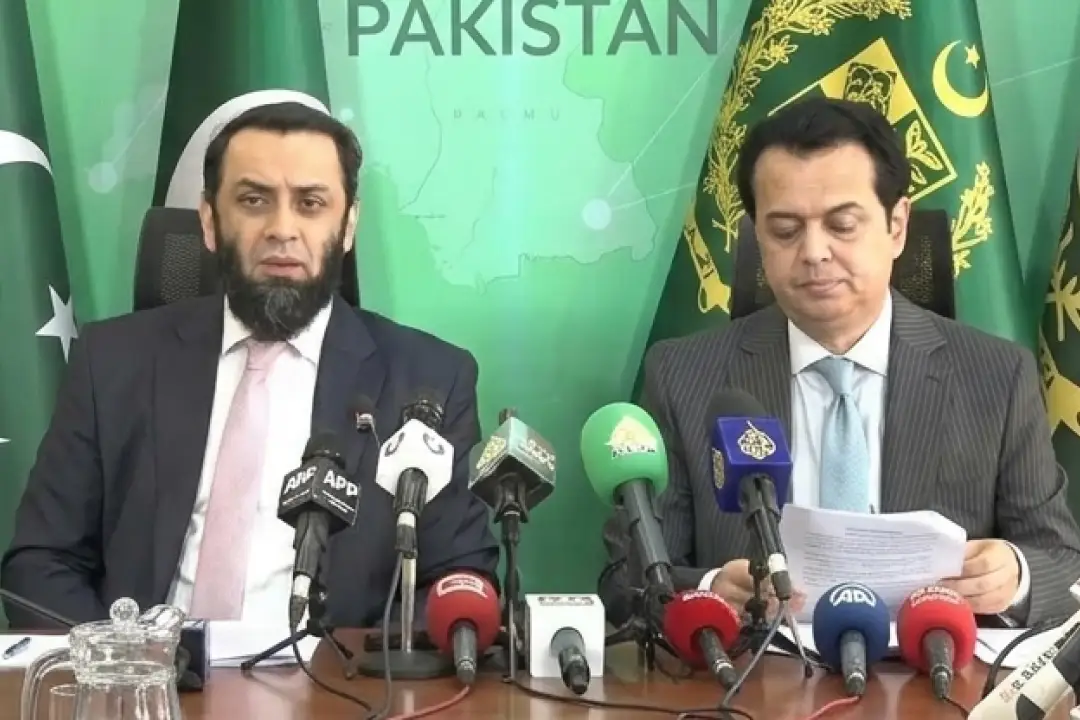
The measures involve two related but distinct arrangements: governor's rule affecting provincial governance across KP, and a separately announced administrative arrangement covering 12 districts. Federal Law Minister Azam Nazeer Tarar said a dedicated secretariat would oversee those districts under the governor and chief secretary. The precise geographical and legal scope of the emergency measures remains subject to the official proclamations.
Governor Faisal Karim Kundi has assumed provincial executive responsibilities under the announced arrangement, supported by an 11-member advisory council. The decision has displaced the elected chief minister-led administration from its normal executive role and triggered strong objections from PTI.
Why Pakistan Imposed Governor's Rule in Khyber Pakhtunkhwa
The federal cabinet recommended intervention after reviewing the security situation in KP and the relationship between federal and provincial authorities.
According to the government announcement reported by Radio Pakistan, President Zardari acted on the prime minister's advice under Articles 232 and 234.
The Prime Minister's Office said the cabinet had examined the provincial administration's cooperation in counterterrorism operations and concluded that extraordinary constitutional measures were necessary.
Law Minister Azam Nazeer Tarar cited government figures indicating a sharp increase in terrorism and extremism incidents in KP over the preceding two and a half years. Those figures represent the federal government's assessment and should not be treated as independently verified statistics.
Information Minister Attaullah Tarar also made allegations concerning links between elements of the PTI-led administration and militant groups. Those allegations have not been independently established, and PTI disputes the federal government's account of its counterterrorism performance.
The dispute follows disagreements over military operations, security coordination and the provincial government's role in decisions affecting areas bordering Afghanistan.
The decision also comes amid demonstrations by PTI supporters demanding the release of former prime minister Imran Khan, adding a political dimension to the constitutional confrontation.
What Article 232 Means for KP's Emergency
Article 232 of Pakistan's Constitution provides for a proclamation of emergency when the security of Pakistan, or any part of the country, is threatened by war, external aggression or internal disturbances beyond the power of a provincial government to control.
Where an emergency is declared because of internal disturbances, the Constitution provides for a resolution from the relevant provincial assembly.
It also establishes an alternative procedure requiring approval by both houses of Parliament within ten days where the president acts without such a resolution under the relevant constitutional provision.
Other parliamentary procedures govern the continuation of an emergency proclamation.
Article 232 can expand federal authority over matters ordinarily handled at the provincial level, subject to the Constitution and the terms of the proclamation.
However, an emergency declaration does not automatically suspend every fundamental right or close the courts. Article 233 provides separate rules concerning restrictions on specified rights during an emergency.
The exact powers exercised in KP depend on the signed proclamation, its stated grounds and any subsequent constitutional orders.
How Article 234 Changes Provincial Government
Article 234 addresses a separate constitutional situation involving the failure of provincial constitutional machinery.
Under this provision, the president may act after receiving a report from the provincial governor and being satisfied that the government of the province cannot be carried on in accordance with the Constitution. The article also provides for action where the relevant resolutions are passed separately by both houses of Parliament.
The proclamation may authorise the president to assume specified provincial government functions or direct the governor to exercise those functions on the president's behalf.
It may also provide for provincial assembly powers to be exercised by or under the authority of Parliament.
Importantly, Article 234 does not authorise the president or governor to assume the constitutional powers of the High Court or suspend constitutional provisions relating to the High Court.
Governor's rule therefore changes the exercise of provincial executive authority, but it does not automatically dissolve the provincial assembly or eliminate judicial oversight.
Governor's Rule Across KP and the Separate 12-District Arrangement
One important distinction concerns the geographical scope of the measures announced by the federal government.
Governor's rule under Article 234 concerns the exercise of provincial government functions across Khyber Pakhtunkhwa.
Separately, Law Minister Azam Nazeer Tarar announced a dedicated administrative secretariat for 12 districts that the federal government considers particularly affected by security threats.
According to the minister, the secretariat will operate under the governor and chief secretary and oversee administrative matters in the designated districts while coordinating with federal authorities.
Geo News reported a distinction between province-wide governor's rule and emergency arrangements affecting 12 districts.
However, the full text of the signed proclamations is necessary to establish whether the Article 232 emergency is legally limited to those districts or applies more broadly, and exactly which powers have been transferred.
The existence of a 12-district administrative secretariat should not, by itself, be interpreted as proof that every constitutional emergency power is restricted to those districts.
Who Will Govern KP Under Governor's Rule?
Law Minister Azam Nazeer Tarar said the chief minister-led administration had ceased exercising provincial executive functions under the new arrangement.
Governor Faisal Karim Kundi has been assigned those responsibilities, with assistance from an 11-member advisory council announced by the federal government.
The council is intended to support provincial administration across portfolios including finance, law, education, health, home affairs and other government functions.
Governor Kundi also chaired the advisory council's first meeting on Sunday, according to Dawn's live coverage.
In another administrative change, Dr Muhammad Fakhr Alam Irfan was appointed chief secretary of Khyber Pakhtunkhwa, according to Dawn's reporting on the government decision.
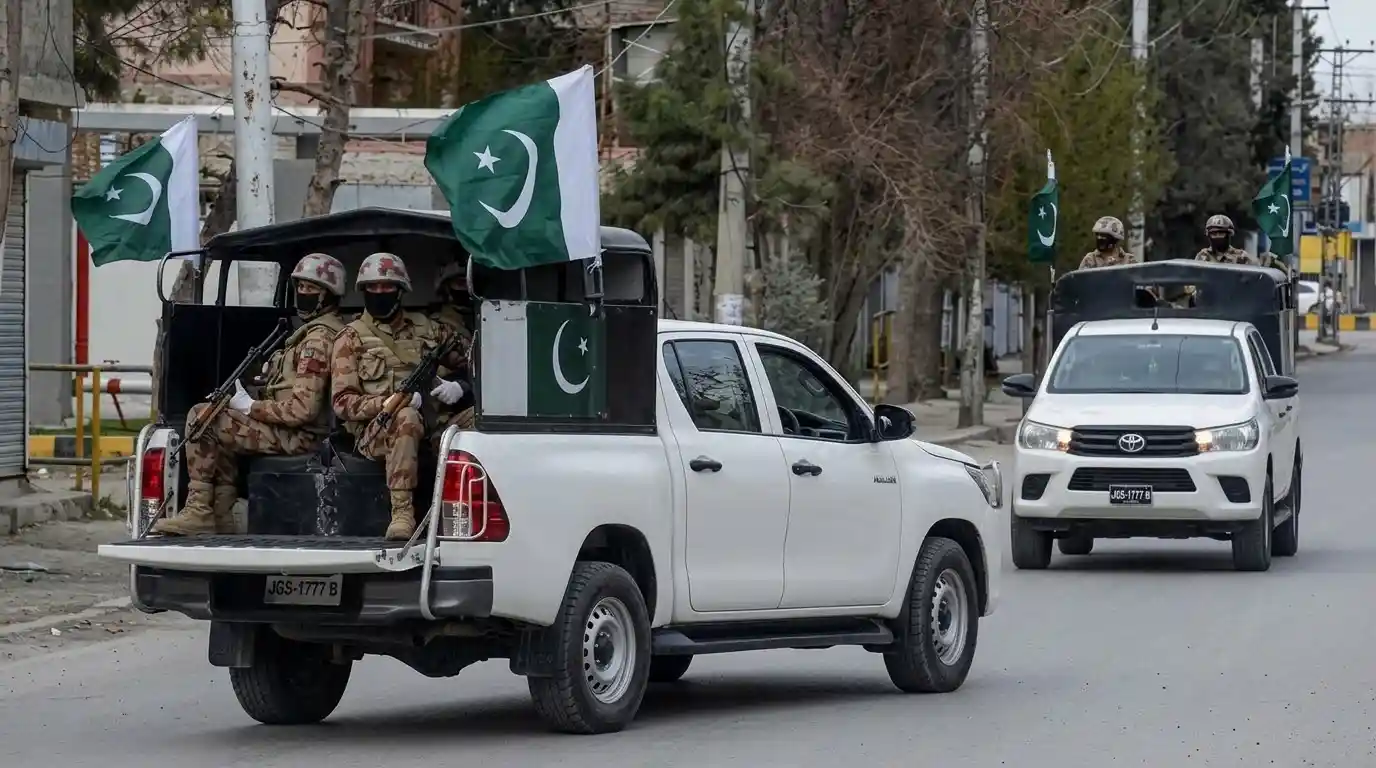
The federal government also authorised the deployment of Pakistan Army troops and assets in aid of civil power under Article 245.
The Interior Ministry's directive and subsequent announcements provide the basis for that assistance, while the precise deployment locations and operational arrangements depend on the relevant official orders.
What Happens to the KP Assembly and Chief Minister?
The federal government's announcement removes the PTI-led chief minister and cabinet from their normal executive responsibilities under the governor-led arrangement.
However, the status of the provincial assembly is a separate constitutional question.
Article 234 allows a proclamation to provide for provincial legislative powers to be exercised by or under Parliament's authority. It does not automatically require dissolution of the assembly.
Whether the assembly can continue meeting, which legislative functions have been transferred and how those powers may be exercised must be determined from the actual proclamation and any subsequent constitutional decisions.
The announcement should therefore not be treated as independent confirmation that the Khyber Pakhtunkhwa Assembly has been dissolved.
PTI Rejects Governor's Rule and Signals Opposition
PTI has rejected the federal government's intervention, arguing that it undermines the electoral mandate of the provincial administration.
Party chairman Barrister Gohar Ali Khan condemned the decision as undemocratic and argued that weakening provincial autonomy would not bring lasting peace.
PTI representatives have also indicated that the party intends to contest the measures through legal and parliamentary channels.
The party maintains that federal authorities have excluded the province from important security decisions and failed to provide sufficient support for counterterrorism.
The federal government disputes those claims and maintains that the provincial administration did not cooperate adequately with efforts to address militant violence.
The political dispute also concerns PTI demonstrations and a planned march towards Islamabad demanding Imran Khan's release.
Reports concerning the detention of former chief minister Sohail Afridi and other PTI figures have circulated following the decision. PTI representatives alleged that arrests had taken place, while early reporting did not establish independent police confirmation of every claim.
Any detention allegations should be distinguished from independently verified arrests and updated when official confirmation becomes available.
The competing positions underline the political controversy surrounding the emergency. Neither the government's allegations against PTI nor PTI's claims about the government's motives should be presented as established judicial findings.
How Long Can Governor's Rule Remain in Force?
Law Minister Azam Nazeer Tarar said the governor-led arrangement was intended to operate for an initial period of six months.
However, Article 234 establishes constitutional conditions for the continuation of a proclamation.
Under the article, a proclamation ordinarily ceases to operate after two months unless it is approved by a joint sitting of Parliament.
Once approved, it may be extended through further resolutions for periods of up to two months at a time, subject to a maximum total duration of six months.
The government's announced timeframe therefore does not remove the constitutional requirement for parliamentary approval.
The emergency proclaimed under Article 232 is subject to its own approval and continuation procedures, which must be considered separately from those governing Article 234.
The precise legal basis and procedural compliance of both measures depend on the official proclamations and subsequent parliamentary proceedings.
What Emergency Rule Means for KP Residents
For residents of Khyber Pakhtunkhwa, the most immediate administrative change is the transfer of provincial executive responsibilities to the governor-led arrangement announced by the federal government.
Provincial departments may receive new administrative directions, while security measures could vary by district and locality.
Following the announcement, Dawn reported internet and mobile communications disruptions in parts of Peshawar and selected areas of other cities.
Telecommunications sources cited by the newspaper indicated that mobile network and data services had been slowed or shut down in certain locations. However, the reporting did not establish a province-wide internet or mobile data shutdown.
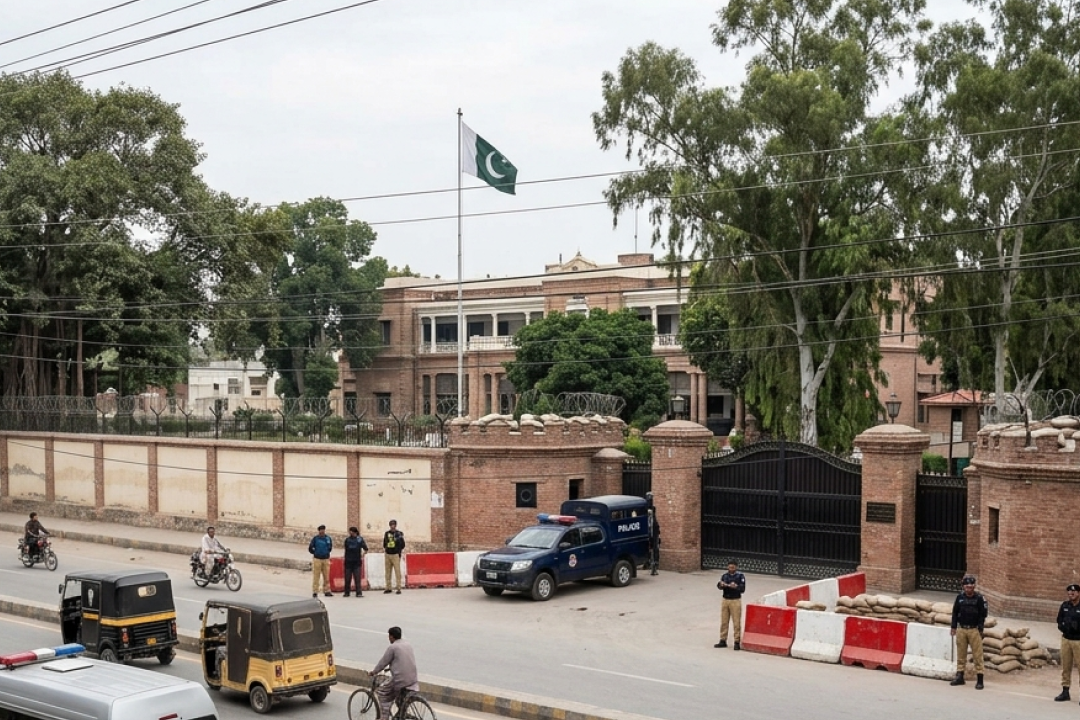
Road restrictions were also reported in Peshawar, where shipping containers were placed at several locations and police deployment was increased.
These developments should not be interpreted as evidence that the same restrictions apply throughout KP.
Similarly, the declaration of governor's rule does not automatically establish that schools, hospitals, courts or other public institutions have closed.
Any curfews, restrictions on gatherings, communication limitations or changes to public services must be assessed against specific official orders and their geographical scope.
Residents should follow verified district-level announcements for information about transport, public services and security arrangements.
What Happens Next: Parliamentary Approval and Legal Challenges
The next major developments will concern parliamentary scrutiny of the emergency and governor's rule proclamations, the implementation of the new administrative arrangements and possible legal challenges.
Articles 232 and 234 establish different grounds and approval procedures, including requirements relating to parliamentary oversight and the duration of federal intervention.
PTI has opposed the decision and indicated that it will challenge the measures through available political and legal mechanisms.
Any constitutional challenge may raise questions about whether the conditions required under the two articles were satisfied and whether the necessary procedures were followed.
The federal government maintains that the intervention is constitutionally authorised and necessary to address the security situation. PTI disputes the justification and political consequences.
Although the October 11 government announcement confirms that emergency measures and governor's rule have been imposed, the complete signed proclamations remain essential to establishing their exact legal scope and the basis for the 12-district arrangement.
For now, Khyber Pakhtunkhwa is operating under a governor-led provincial administration, with additional security and administrative measures announced for designated districts and a continuing political dispute over the intervention.
Frequently Asked Questions
Has the Khyber Pakhtunkhwa Assembly been dissolved?
Governor's rule does not automatically dissolve a provincial assembly. Article 234 allows provincial legislative powers to be exercised under Parliament's authority, depending on the proclamation. A separate dissolution should not be assumed without an official order.
Is the emergency imposed across all of KP or only 12 districts?
The government announced governor's rule affecting provincial administration across KP and a separate secretariat for 12 districts. Reports have distinguished the 12-district emergency arrangements from province-wide governor's rule. The signed proclamations are necessary to confirm the exact legal and geographical scope of each measure.
How long can governor's rule continue in KP?
Article 234 ordinarily requires approval by a joint sitting of Parliament within two months. Approved extensions may last up to two months at a time, subject to a maximum total duration of six months.
Who is running Khyber Pakhtunkhwa now?
According to the federal government's October 11 announcement, Governor Faisal Karim Kundi is overseeing provincial executive affairs with an 11-member advisory council. Dr Muhammad Fakhr Alam Irfan has also been appointed chief secretary.
Does the emergency suspend all fundamental rights?
No. An emergency declaration does not automatically suspend every fundamental right. Any restrictions on the enforcement of specified rights must follow the applicable constitutional provisions and official orders.
Has internet access been shut down across KP?
No province-wide internet shutdown was established in the initial reporting. Dawn reported mobile and internet disruptions in selected areas, including parts of Peshawar. Conditions may change depending on subsequent official orders.